Kimi Agent Swarm and Claw Groups Explained
Kimi Agent explained: what Agent Swarm and Claw Groups reveal about multi-agent execution, skill-based workflows, and managed AI work.
Table of Contents
A Kimi AI agent is an autonomous worker inside Moonshot AI's Kimi K2.6 model that can plan a task, run steps on its own, and stop for a human when a decision matters. Agent Swarm and Claw Groups (both Moonshot AI features in Kimi K2.6) are the two ways many of these agents work together. This piece is about what they mean if you don't plan to run a swarm yourself.
Key takeaways
- Kimi K2.6, released April 20, 2026, runs an Agent Swarm of up to 300 sub-agents across 4,000 coordinated steps.
- Agent Swarm splits one task across many specialized sub-agents running in parallel, not one model working in sequence.
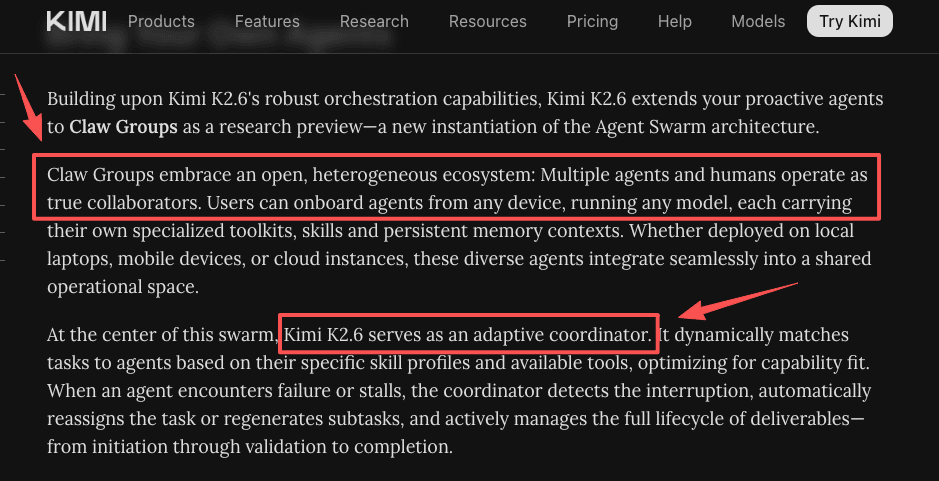
- Claw Groups is a Moonshot AI research preview for cross-device, cross-model, human-and-agent collaboration in a shared space.
- You don't manage each sub-agent by hand. The model coordinates them.
- For a lot of solo work, a single managed assistant does the job without the swarm overhead.
It's Vera. I keep reading about swarms. Three hundred agents, four thousand steps, a model running its own team. Then I counted how many times last month my work needed three hundred of anything. The number was zero. That gap is why I wrote this: to be clear about what swarms solve and what they don't, for someone whose work looks more like mine than a research lab's.
Quick Answer
A Kimi agent is one autonomous unit. Agent Swarm is many of them on one job at once. Claw Groups, the Moonshot AI research preview, is the next step out: agents from different devices and models, plus a human, in one shared workspace. Kimi K2.6 is open-weight, published on Hugging Face under a Modified MIT license. None of it asks you to babysit individual agents. To distinguish agent communities from task-running assistants, see our Moltbook guide.
What Kimi Agent Means by Agent Swarm and Claw Groups
Three parts, in plain terms.
Task decomposition
A swarm starts by breaking one large task into smaller pieces. One agent reads, another searches, another drafts, another checks. You describe the outcome. The model decides the split. This is what makes a Kimi AI agent feel less like a chatbot and more like a manager handing out work.
Parallel execution
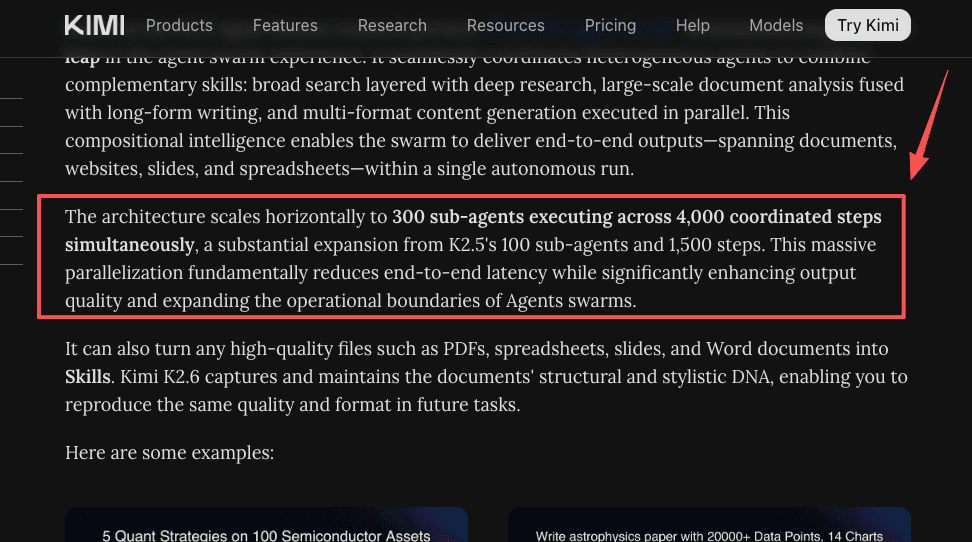
Then the pieces run at once. According to Moonshot AI's official release materials, Kimi K2.6 can run an Agent Swarm of up to 300 sub-agents across 4,000 coordinated steps. Moonshot's own example: one CV matched against a hundred job listings, sub-agents each tailoring a resume. The point is throughput. Many similar things finished together, not one after another.
Where a human comes in
A swarm can run a task to the end on its own. The place a person stays in the loop is Claw Groups, Moonshot AI's research preview: agents from different devices and models share one workspace, Kimi K2.6 coordinates, and a human works alongside them as a real collaborator, not just a rubber stamp at the end. How a handoff or review gets triggered isn't spelled out in the official materials, so treat the exact mechanism as undocumented. What's clear is the intent, keeping a person in control of the outcome without watching every step.
Why Multi-Agent Swarms Matter for Skill-Based Workflows
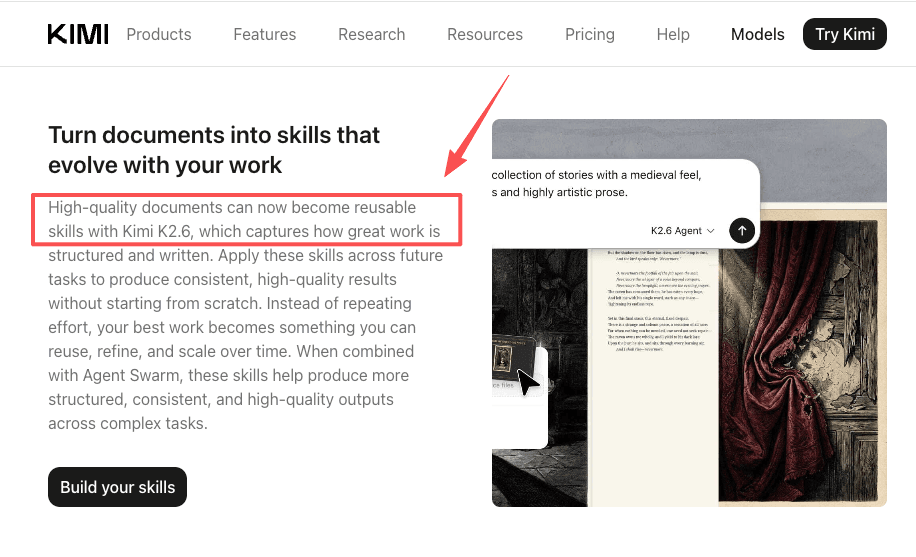
A swarm gets useful when the sub-agents carry reusable skills, not just instructions. Kimi K2.6 lets you turn a process into a reusable skill that agents can run again later. So a multi-agent setup is many agents each holding a specific competence. For multi-agent workflows, that's the difference between a crowd and a team.
I'll be honest. I don't have agents running skills in a swarm of my own, just two small templates I reuse by hand. So this is the shape of where it goes, not stable data yet.
Where This Helps Non-Technical Teams Understand AI Workflows
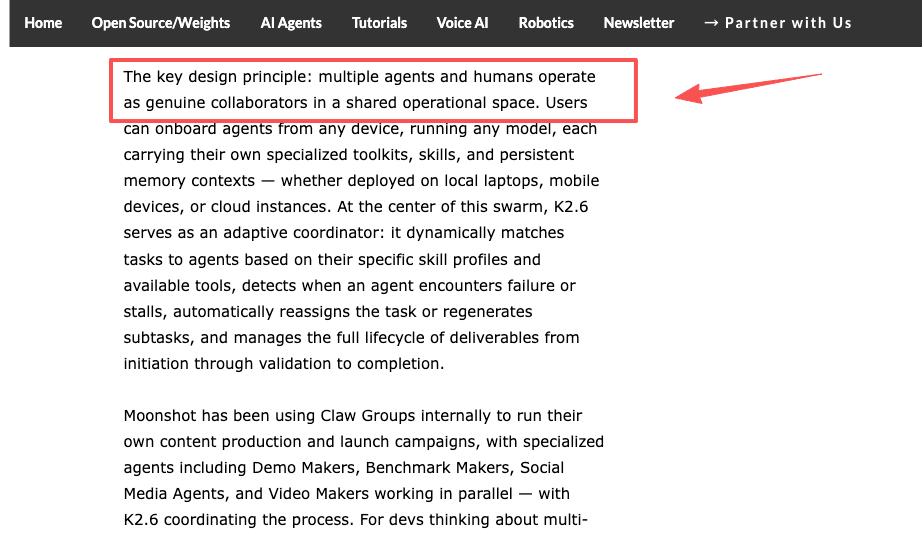
If you're not technical, the takeaway isn't "go build a swarm." It's a mental model: work splits into pieces, pieces run in parallel, a person reviews at set points. Once you see a workflow that way, you can look at your own week and ask which parts are decomposable and which need you. MarkTechPost's breakdown frames the swarm as agents and humans working as genuine collaborators in one space.
Where Swarm-Style Agents Can Become Too Complex
Now the part the launch posts skip. A swarm is overhead. Three hundred agents is three hundred things that can drift, and you still have to define the task well enough that the split makes sense. For a lot of solo work, that's effort spent managing a system instead of doing the work.
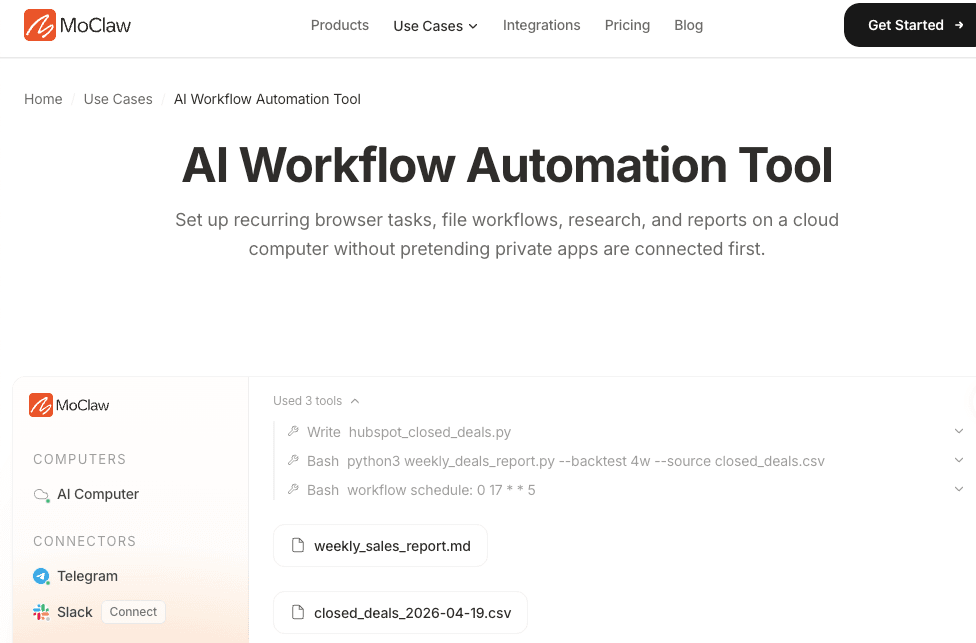
My baseline for any background tool is: set it once, then stop thinking about it. A swarm doesn't clear that bar yet for my tasks. What clears it is a single managed assistant that runs on its own and reports back. I send one message and close my phone. So for monitoring and recurring research I lean on a single managed assistant for that, specifically Zentor's workflow automation, rather than a multi-agent setup. One thing to talk to, no fleet to coordinate.
That's not a verdict on swarms, it's a frequency call. My volume doesn't justify the coordination cost. Yours might.
FAQ
What kinds of tasks actually justify running a Kimi Agent Swarm?
Tasks where you have many similar items to process at once, not tasks where you have one item to think through carefully. The canonical example from Moonshot AI is matching one CV against a hundred job listings simultaneously. If your work looks like that, high volume, parallel, similar structure across items, a swarm earns its overhead. If your work is one research task or one recurring report, the coordination cost outweighs the speed gain.
Is Kimi K2.6 free to use or run yourself?
The model weights are open and published on Hugging Face under a Modified MIT license, so you can run it yourself if you have the infrastructure. Using it through Kimi's own products is a separate question with its own pricing. For current access options and any restrictions in the Modified MIT license, check the official Hugging Face model card directly, since those terms are what actually govern use.
How does a human stay involved when a Kimi swarm is running?
Mainly through Claw Groups, Moonshot AI's research preview, where a person works in the shared workspace as a real collaborator rather than an approver at the end. The base Agent Swarm is built to run autonomously through a single pass, so human involvement sits in the Claw Groups layer, not as a fixed checkpoint inside every swarm. Moonshot hasn't published the rules for when work gets handed to a person, so the trigger mechanism isn't documented yet.
Can a swarm replace the kind of recurring monitoring or research I do every week?
It can run the task, but a swarm is overhead for steady-volume recurring work. Three hundred agents is worth the coordination cost when you have three hundred similar things to process at once. For a weekly research summary or a monitoring job that runs on a schedule, a single managed assistant is less to set up and less to maintain. The swarm is a throughput tool, not a scheduling tool.
Choosing a Kimi AI Agent Swarm or a Single Assistant, by Volume
The Kimi AI agent story is real, and Kimi K2.6 makes the swarm version concrete: task decomposition, parallel execution, human review, with Claw Groups pointing at where collaboration goes next. The decision isn't whether the technology works. It's whether your volume needs it. Hundreds of similar things at once, a swarm fits. One person handing off recurring work, a single assistant is less to manage. You know your own numbers.
Continue Reading
More Research
Claude Red Team Skills: Inside Claude-Red
alphaXiv OpenResearch: Local-First Agent Lab
Claude Code Deep Research With Hyperresearch

CloddsBot: An Open-Source AI Trading Agent
Is Context-Mode Open Source? The License
Sprix SAGE Router: Rerouting Agents Mid-Task
The Zentor editorial team writes about workflow automation, AI agents, and the tools we build. Default byline for industry overviews, listicles, and collaborative pieces.
Turn insights into action.
MoClaw automates the recurring work your analysis points to. No engineering required.
References: Kimi-K2.6 model card (Hugging Face, Modified MIT license) · Moonshot AI / Kimi official blog · Kimi K2.6 release post · Kimi K2.6 model page · Moonshot AI releases Kimi K2.6 with Agent Swarm scaling to 300 sub-agents (MarkTechPost)