Grok 4.5 vs GPT-5.5 for Agent Tasks

Grok 4.5 vs GPT-5.5 for agent tasks: coding fit, real cost per task including tool fees, region risk, and why GPT-5.6 Sol, Terra, and Luna change the call.
Table of Contents
Grok 4.5 vs GPT-5.5 is a workflow comparison for agent tasks, not a fandom scoreboard: the right choice depends on coding behavior, tool costs, retries, region access, and fallback planning.
Key takeaways:
- Grok 4.5 and GPT-5.5 both target coding, agentic tasks, and knowledge work, but new OpenAI planning should also include GPT-5.6.
- Grok 4.5 has lower headline API pricing than GPT-5.5, but tool calls, retries, long context, and review time can change cost per completed task.
- GPT-5.6 changes the comparison because Sol, Terra, and Luna split OpenAI workloads by capability and cost.
- Benchmark claims help screen models, but team evals should use the same tasks, sources, tools, and review rubric.
- The safest model comparison for agents ends with a fallback plan, not a single universal winner.
I'm Vera. I would test this with a boring recurring workflow before trusting any benchmark claim. For example, I used to spend four to six hours a week building competitor briefs in plain chat, fighting hallucinations, stale numbers, and output that changed shape every run. In an agent setup, the real cost was not one answer. It was source discovery, retries, citation cleanup, and human review. That is exactly where Grok 4.5 vs GPT-5.5 becomes practical.
Quick Verdict by Use Case
Use Grok 4.5 first when the task is cost-sensitive, tool-heavy, and benefits from web search, X search, code execution, structured outputs, and a 500K context window. xAI positions Grok 4.5 for coding, agentic tasks, and knowledge work, with grok-4.5 as the model name and reasoning effort controls.
Use GPT-5.5 as the OpenAI baseline if your current prompts, Codex workflows, or eval history were built around GPT-5.5. OpenAI introduced GPT-5.5 as a model for agentic coding, knowledge work, and scientific research, so it remains a valid comparison point for existing OpenAI users.
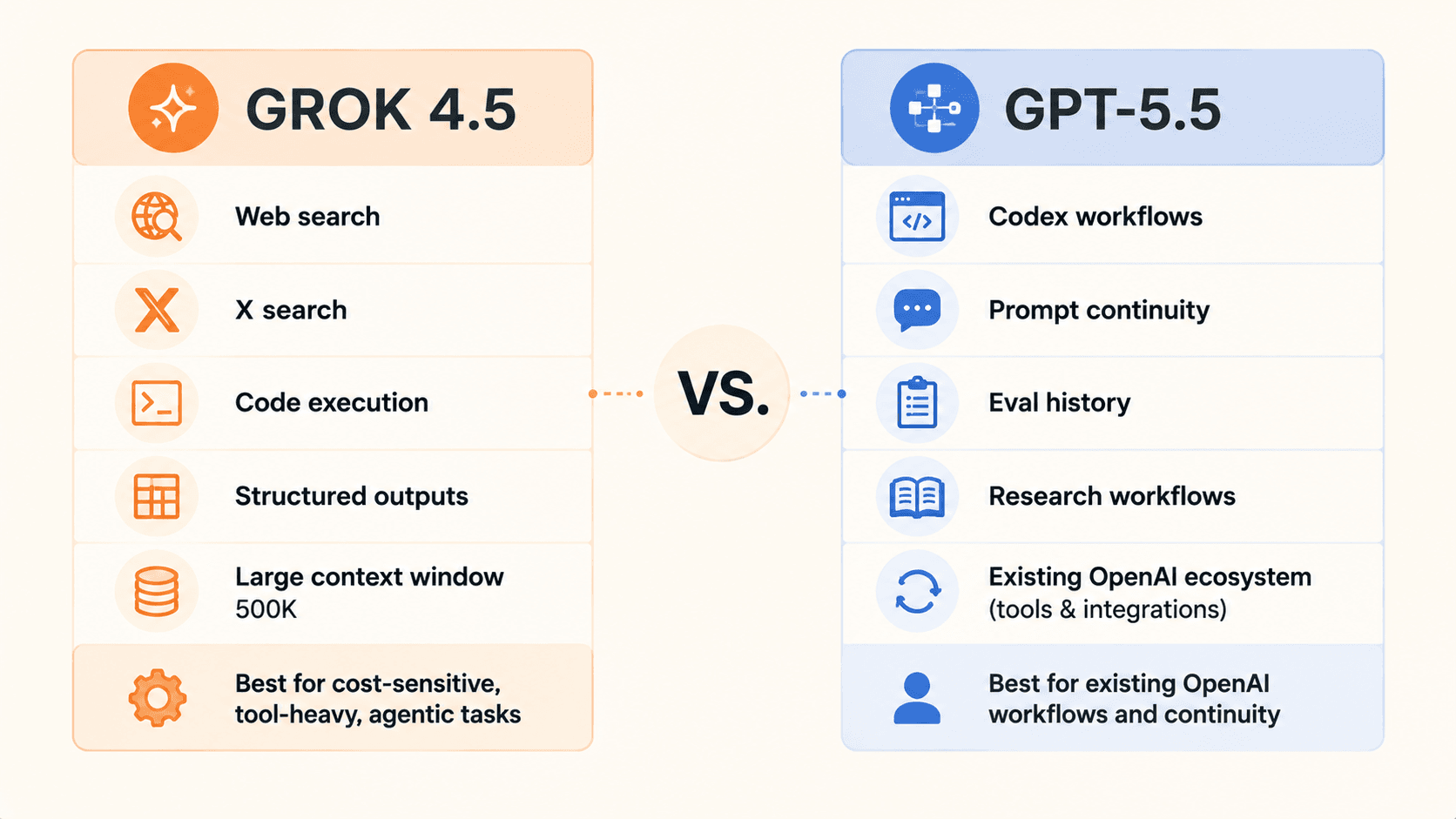
For new planning, include GPT-5.6. OpenAI now lists GPT-5.6 Sol for frontier work, Terra for balanced cost and intelligence, and Luna for high-volume cost-sensitive workloads. This resolves the first decision: do not compare Grok 4.5 only against GPT-5.5 if the team is choosing a new OpenAI default. It does not resolve which model wins your workflow, because your tools, sources, and review rules still matter.
| Use case | First models to test |
|---|---|
| Low-cost tool-heavy agent | Grok 4.5, GPT-5.6 Luna |
| Complex coding review | GPT-5.6 Sol, GPT-5.5, Grok 4.5 |
| Live research with X context | Grok 4.5 plus citation audit |
| OpenAI-native Codex workflow | GPT-5.6 family, GPT-5.5 baseline |
| Provider fallback planning | Grok 4.5 and GPT-5.6 on the same eval set |
Benchmark Claims to Verify
Benchmark claims answer "what looked strong in a controlled setup." They do not answer "what will be cheaper and safer inside our agent workflow."
The hidden mechanism is the harness. Agent scores can change when a provider changes tool access, retry limits, reasoning effort, context compaction, shell permissions, or stopping rules. A grok 4.5 vs GPT-5.5 coding comparison should therefore record the exact setup: model ID, effort setting, tools enabled, source files, timeout, and reviewer rubric.
This section resolves what public benchmarks are good for: shortlisting. It does not resolve production fit. A team still needs three internal tests: one bug fix, one codebase investigation, and one research synthesis. Use the same repo snapshot, same source packet, same allowed tools, and same pass/fail rules.
A useful benchmark note sounds like this: "Model A fixed 7 of 10 bugs with two reviewer edits per task, while Model B fixed 6 of 10 but used fewer tokens and preserved file paths better." A weak note sounds like this: "Model A ranked higher, so switch everything."
Coding and Agent Task Fit
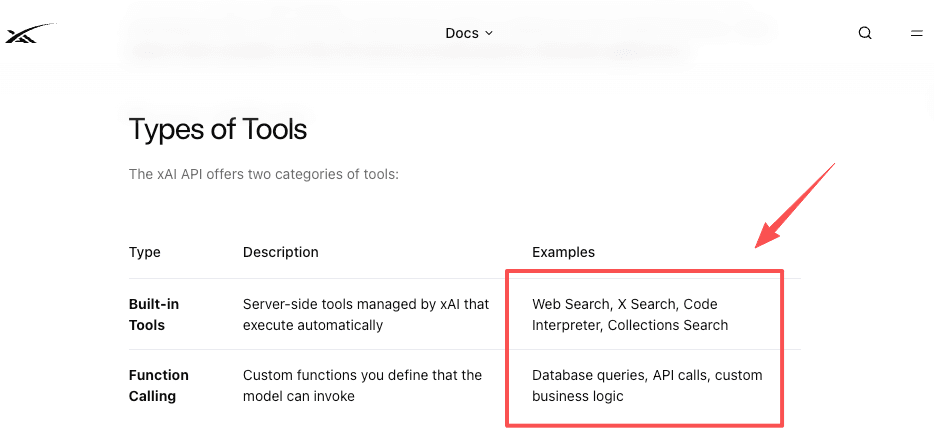
For coding agents, Grok 4.5 has the right ingredients: function calling, structured outputs, reasoning, web search, X search, and code execution. xAI describes its tool layer around web search, X search, code execution, uploaded collections, and custom functions, which makes Grok relevant for bug investigation, repo research, source checking, and coding-agent loops.
GPT-5.5 fits teams already invested in OpenAI coding agents, especially Codex. It was built for long-running work patterns: inspect, plan, edit, test, and explain. GPT-5.6 adds a more current OpenAI comparison point. The GPT-5.6 alias routes to Sol, while Terra and Luna offer lower-cost OpenAI options for model comparison for agents.
For Grok vs OpenAI coding agents, I would test five signals:
| Signal | Why it matters |
|---|---|
| Diff quality | Smaller, focused patches are easier to review |
| Test relevance | Passing irrelevant checks is not progress |
| Exact references | File paths, symbols, and commands must survive |
| Tool discipline | Fewer pointless searches and shell runs save money |
| Recovery behavior | Agents must handle failed checks without spiraling |
This resolves the fit question at a category level: Grok 4.5 is plausible for tool-heavy coding and research, while GPT-5.5/GPT-5.6 are strong OpenAI-native agent candidates. It does not resolve your team's answer until the same task runs through both providers.
Pricing and Cost per Task
Headline pricing is only the first layer. xAI prices Grok 4.5 at $2.00 per 1M input tokens, $0.30 cached input, and $6.00 output under 200K prompt tokens. At 200K prompt tokens or above, long-context rates become $4.00 input, $0.60 cached input, and $12.00 output. xAI also charges server-side tools separately, so web search, X search, code execution, file attachments, and collections search should be part of the calculator.
OpenAI pricing changes the comparison. GPT-5.5 launched at $5 input and $30 output per 1M tokens. GPT-5.6 now puts Sol at $5 and $30, Terra at $2.50 and $15, and Luna at $1 and $6, each per 1M tokens. OpenAI discounts cached input by 90 percent as well, at $0.50 for GPT-5.5 and Sol, $0.25 for Terra, and $0.10 for Luna, which matters once a recurring agent task starts reusing the same system prompt and source packet.
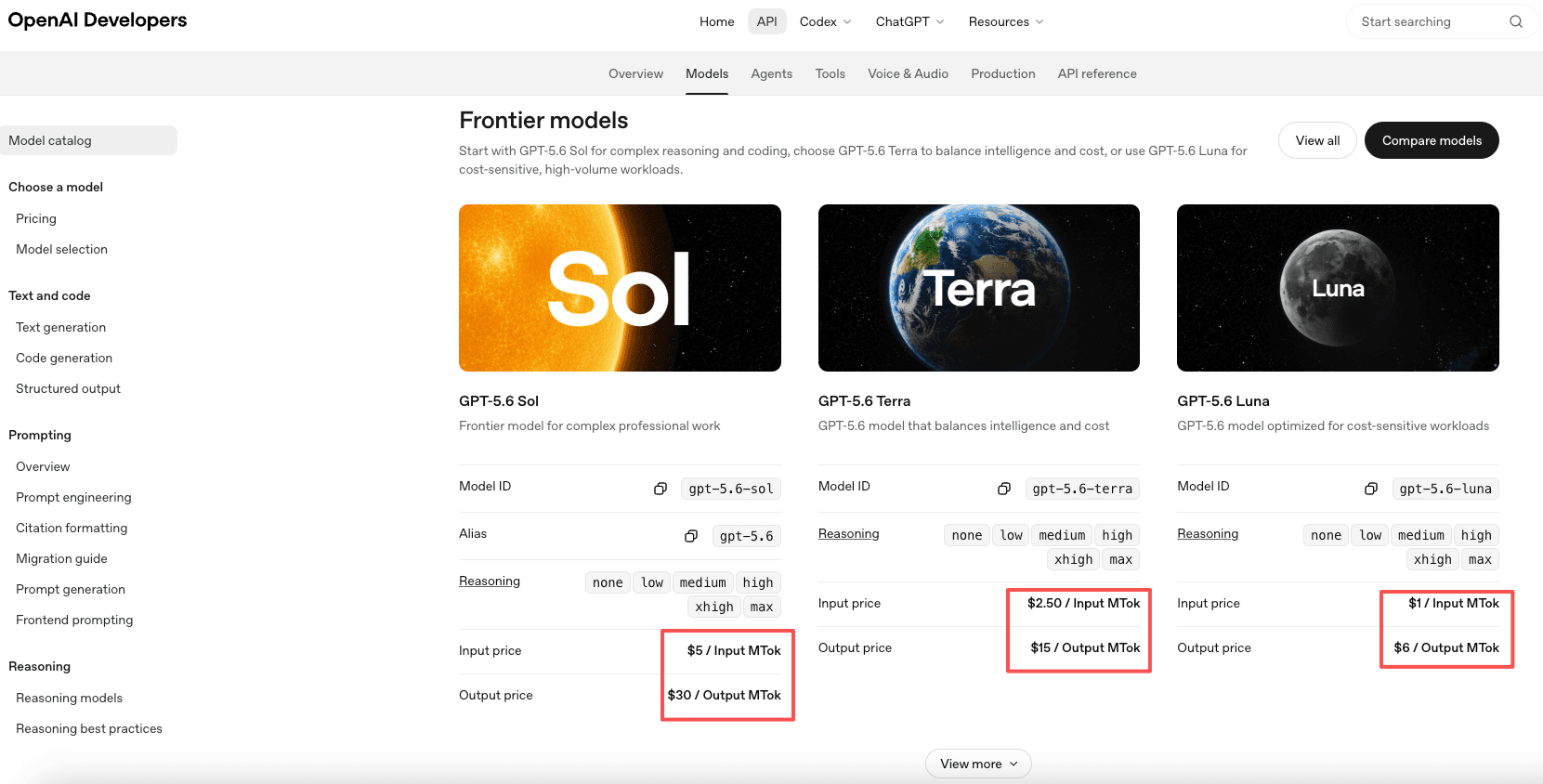
Here is a simplified cost model for one agent task: 120K fresh input tokens, 40K cached input tokens, and 20K output tokens. Every row applies each provider's own cached-input rate to those 40K tokens, so the comparison uses one basis rather than crediting the discount to a single vendor. Server-side tools sit outside the table because both providers meter them separately. The model also excludes taxes, gateway markup, cache writes, and human labor.
| Model path | Rough API/task cost, token-only |
|---|---|
| Grok 4.5, short context | about $0.37 |
| GPT-5.5 | about $1.22 |
| GPT-5.6 Sol | about $1.22 |
| GPT-5.6 Terra | about $0.61 |
| GPT-5.6 Luna | about $0.24 |
Tool calls land on top of those numbers. xAI charges $5 per 1,000 web search or code execution calls and $10 per 1,000 file attachment calls, so the 5 tool calls in this task add about $0.03 to the Grok row. OpenAI meters its own tool usage separately, which is why a token-only table is the only honest way to line the five paths up.
This resolves one important point: Grok 4.5 is cheaper than GPT-5.5 on headline token pricing, while GPT-5.6 Luna can be cheaper than both for high-volume tasks. It does not resolve total cost. If Grok needs two retries, GPT-5.6 Luna loses citations, or GPT-5.5 saves twenty minutes of review, the real winner changes.
Availability and Region Risk
Agent workflows fail when availability is assumed too broadly. A model can be visible in one product surface and unavailable in another. Grok 4.5 may appear through the xAI API, Cursor, Office add-ins, or gateways, but teams still need to verify region, rate limits, billing, logging, and data policy in the exact channel they use.
OpenAI has the same practical issue. GPT-5.5, GPT-5.6 Sol, Terra, and Luna can differ by API access, ChatGPT plan, Codex behavior, workspace policy, and rate limits. GPT-5.6 guidance also introduces features such as Programmatic Tool Calling, multi-agent beta, explicit prompt caching, and persisted reasoning, so a Grok 4.5 vs GPT 5.6 comparison should verify which of those features is actually enabled in the target environment.
This section resolves the rollout question: check by channel, not by vendor headline. It does not resolve compliance or production readiness until the team confirms account access, data handling, logs, and fallback routing.
Workflow Fallback Planning
Fallback planning is where high-rated agent comparisons become useful. The hidden mechanism is provider-specific drift: the same business task may need different prompts, tool schemas, cache behavior, and citation handling across providers.
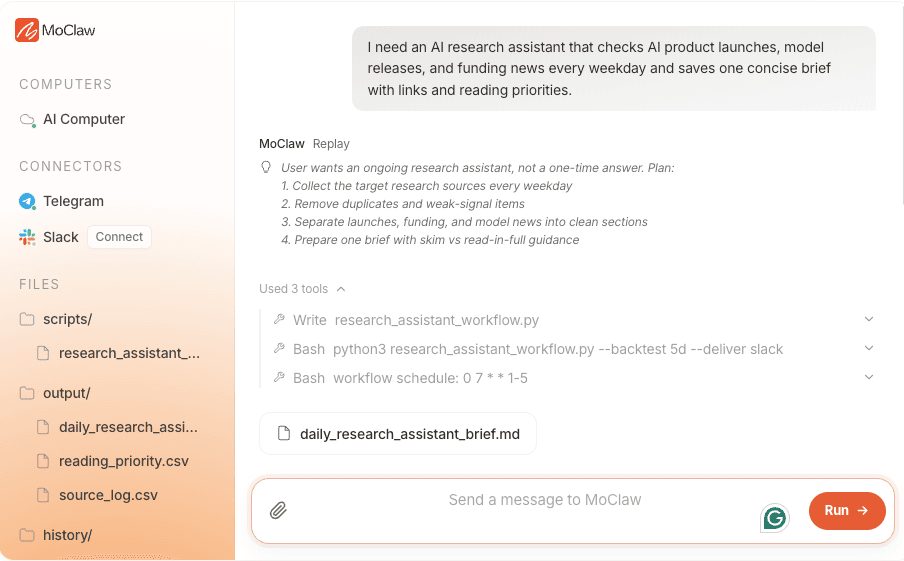
Zentor fits here as the adjacent execution layer, not as a Grok or OpenAI replacement. For recurring agent workflows, Zentor's AI workflow automation is relevant because it focuses on browser work, files, reports, logs, delivery, and review records. For research-heavy fallback planning, Zentor's AI research assistant helps frame source tracking and recurring brief outputs.
A practical fallback record should preserve model ID, prompt version, source packet, tool log, output artifact, cost record, and reviewer decision. That way, if Grok 4.5 fails in one channel or GPT-5.6 changes behavior after an update, the team can rerun the task without reconstructing context from memory.
This resolves operational continuity: keep task records neutral enough to switch providers. It does not resolve provider equivalence, because each model may still need its own prompt and tool configuration.
FAQ
Should teams use the same eval set for both models?
Yes. Use the same repository snapshot, source files, prompts, tools, expected outputs, and review rubric. If Grok 4.5 gets web search and GPT-5.5 does not, the test compares workflow setup rather than model behavior.
How should outputs be compared across providers?
Compare task success, citation accuracy, review time, cost per completed task, revision behavior, and format stability. For coding, include diff size and test relevance. For research, include unsupported claims and source preservation across revisions.
Can one workflow keep provider-specific prompts?
Yes. Keep a shared task contract above provider-specific prompts. The shared layer should define goal, sources, allowed tools, output format, review rules, and stop conditions. Provider-specific prompts can handle model quirks without changing the business workflow.
What records matter after changing models?
Keep model ID, model version or alias, prompt version, source packet, tool calls, token usage, cost, output samples, reviewer notes, and approval date. These records help explain whether a future failure came from the model, the prompt, the source set, or tool access.
Grok 4.5 vs GPT-5.5 Should End in a Measured Agent Pilot
Grok 4.5 vs GPT-5.5 should not end with a universal winner claim. Grok 4.5 has strong pricing and tool-oriented positioning. GPT-5.5 remains an important OpenAI baseline, while GPT-5.6 is now the current OpenAI family for new planning. The strongest decision is a measured pilot: run the same tasks, use the same sources, keep the same tool permissions, compare cost per completed task, and preserve fallback records before changing a production agent workflow.
Continue Reading
More Comparison
Autonomous AI Agents: Self-Host vs Managed

Cursor Projects vs Background Agents

PILOT AI Chief of Staff vs Always-On Agent

Hermes Desktop vs Bot Mode: Sessions or Bots?

OpenCode vs Claude Code: What Actually Differs

Lindy vs MoClaw: Teammate or Cloud Computer?
The Zentor editorial team writes about workflow automation, AI agents, and the tools we build. Default byline for industry overviews, listicles, and collaborative pieces.
Choosing between tools? Let MoClaw run the work.
Always-on AI assistant on its own cloud computer. No switching required, no setup.
References: Grok 4.5 model overview · xAI tools overview · xAI API pricing · Introducing GPT-5.5 · OpenAI model catalog and pricing