OpenCode vs Claude Code: What Actually Differs

OpenCode is MIT and runs 75+ providers; Claude Code is Anthropic's, on five surfaces. What actually differs, checked against both projects' docs.
Table of Contents
Every few weeks someone in a terminal-heavy Slack asks the same question, and the answers never agree. The honest framing of opencode vs claude code isn't "which one is better." It's "which constraint are you actually trying to escape?" One of them is a 204,722-star MIT project you can read line by line and point at any model you like. The other is Anthropic's own agent, tied to Anthropic's own models and subscription, with a lot of polish bought at the cost of that tie. Pick based on which of those sentences describes your week.
Numbers here were checked against the GitHub API and the two projects' own docs on 6 September 2026.
The short answer on OpenCode vs Claude Code
OpenCode is an open source AI coding agent that runs in your terminal, as a desktop app, or as an IDE extension, and it will talk to roughly any model provider you can get credentials for. Claude Code is an agentic coding tool from Anthropic that runs on more surfaces than OpenCode does, including a browser and a phone, and that mostly assumes you're paying Anthropic.
If you want to swap models the way you swap linters, OpenCode wins by construction. If you want the agent to keep working after you close the laptop, neither terminal tool solves that on its own, which is the part most comparisons skip.
MoClaw
A hosted cloud AI computer that keeps running when your terminal session ends. Free trial: 3 days and 1,000 credits. Subscriptions start at $20/month for 1,000 credits.
The repo moved, and your bookmark is probably stale
Here's a detail that trips people up before they get to any real comparison: the canonical repo is now anomalyco/opencode, not sst/opencode. Query the GitHub API for the old path and you get a 301 to repository ID 975734319, which is the same object the new path returns. Same repo, same 30 April 2025 creation date, different org. Anomaly's site sits at anoma.ly.
Nothing about your install breaks, since the installer and the npm package name (opencode-ai) didn't change. But if you have a fork, a submodule pin, or a CI job that clones the old path, you're relying on GitHub's redirect to keep working forever. Worth ten seconds of git remote set-url.
The license is MIT, verified from the LICENSE file rather than the API's summary, which matters because the API sometimes reports NOASSERTION for perfectly ordinary licenses.
Models: one vendor's family versus seventy-five providers
This is the difference that actually changes how you work.
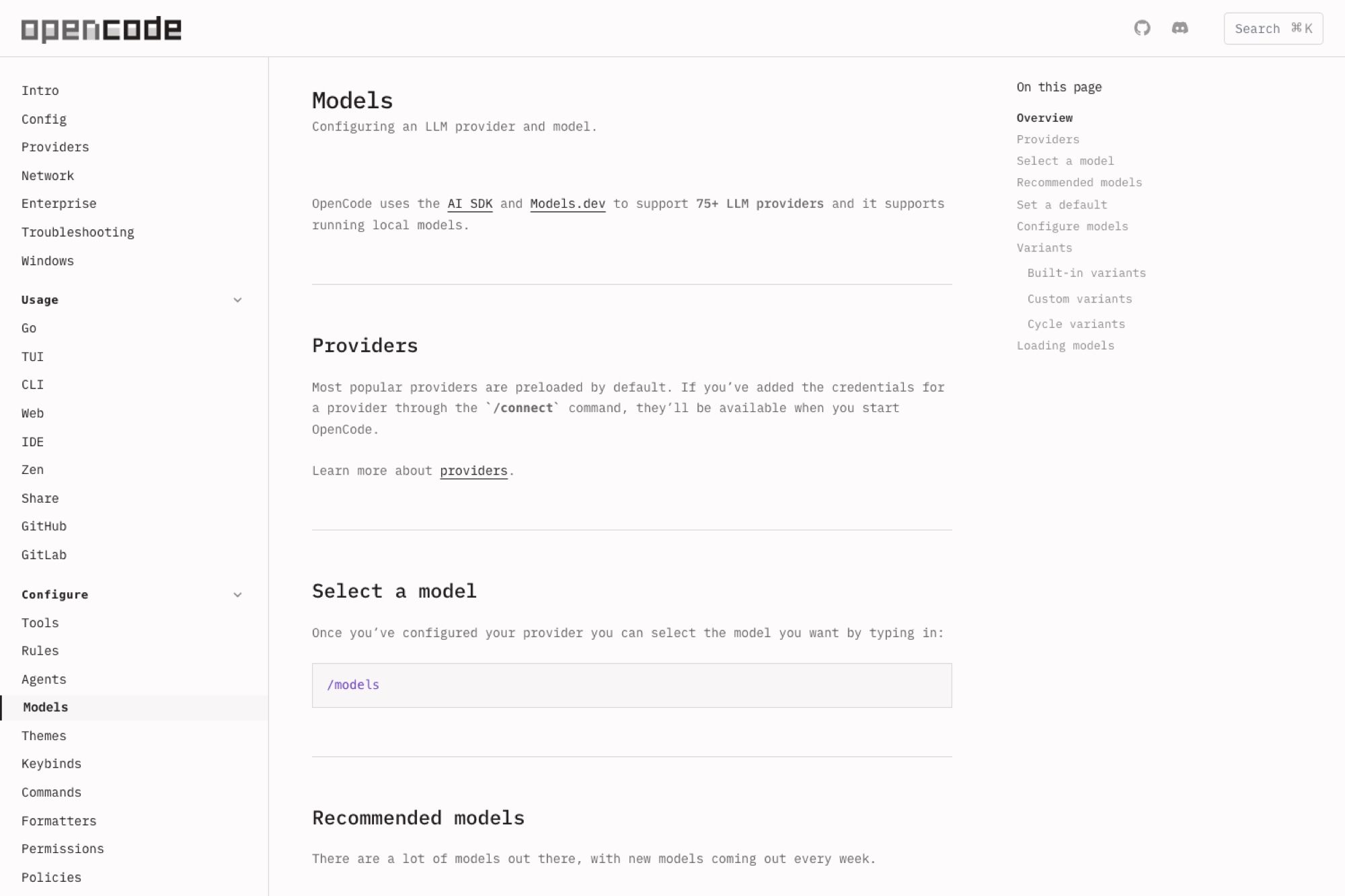
OpenCode's own models documentation puts it plainly: it "uses the AI SDK and Models.dev to support 75+ LLM providers and it supports running local models." You add credentials with /connect, then pick a model with /models. Ollama, LM Studio and llama.cpp are all on the provider list, so a fully local setup is a config change rather than a fork.
Claude Code goes the other way. Anthropic's Claude Code overview says most surfaces "require a Claude subscription or Anthropic Console account," and notes that the Terminal CLI, VS Code and JetBrains additionally support third-party providers. So it isn't hermetically sealed, but the default path is Anthropic's models on Anthropic's billing, and the product is designed around that assumption.
Which one you want depends on something boring: whether your employer has already signed a contract. Teams with an Anthropic agreement get less out of provider flexibility than a solo developer burning through personal credits does.
Where each one runs
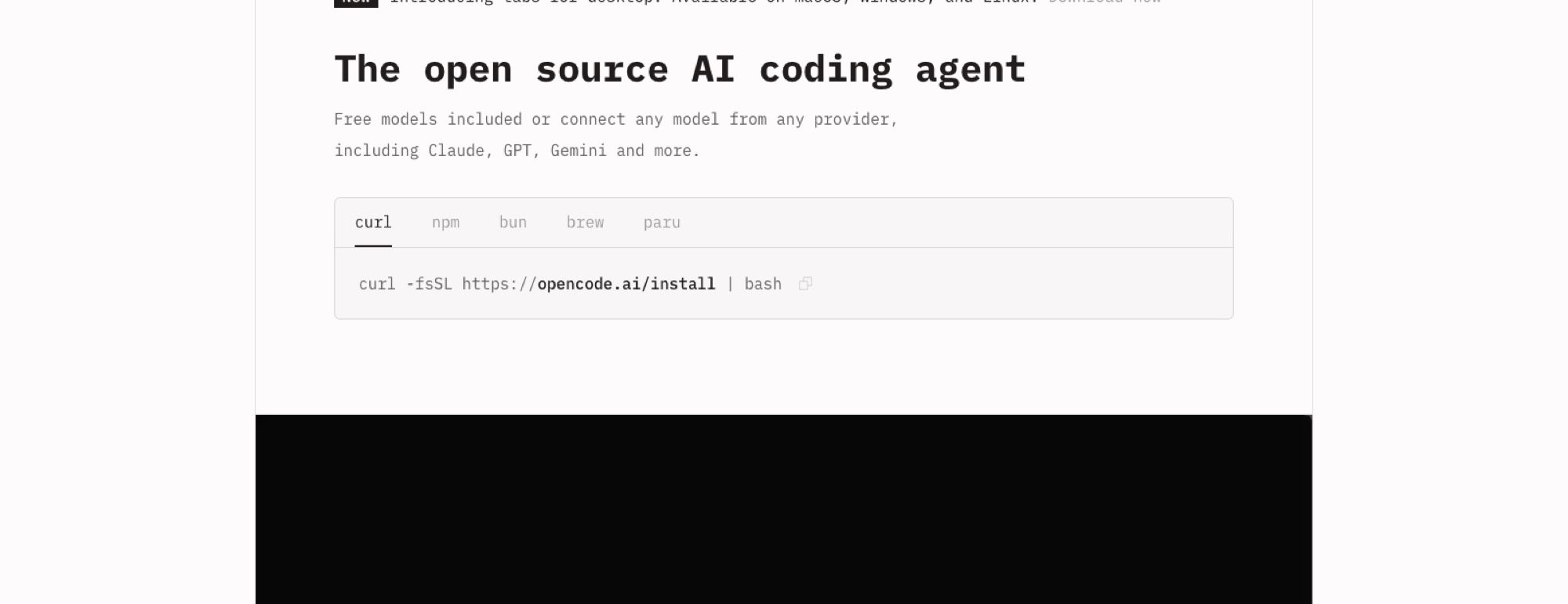
OpenCode ships a TUI, a desktop app still labelled BETA, and IDE extensions. The desktop builds cover macOS on both Apple Silicon and Intel, Windows x64, and Linux as .deb, .rpm or .AppImage. Install paths are unusually generous for a project this young: curl | bash, npm, bun, pnpm, yarn, scoop, choco, pacman, an AUR package, mise, nix, and two separate Homebrew formulas, one of which the README says updates less often than the other.
Claude Code covers the terminal, VS Code, JetBrains, a desktop app, and the browser at claude.ai/code, plus iOS and Android through the Claude app. Anthropic also documents routines that "run in the cloud, so they keep running even when your computer is off."
That last clause is the real dividing line, and it isn't about which agent writes better code. A terminal agent is bound to a terminal session, which is bound to a machine that sleeps, loses Wi-Fi in a coffee shop, and gets closed at 6pm. Anthropic solved it by building cloud execution into the product. OpenCode hasn't, because OpenCode is a local binary by design. MoClaw fills that same gap from the outside: a hosted cloud AI computer that stays up so a long-running job has somewhere to land, sitting alongside whichever agent you already installed rather than replacing it.
What OpenCode charges for, and what it doesn't
The agent is free and MIT-licensed. Two paid things exist next to it, and both are optional.
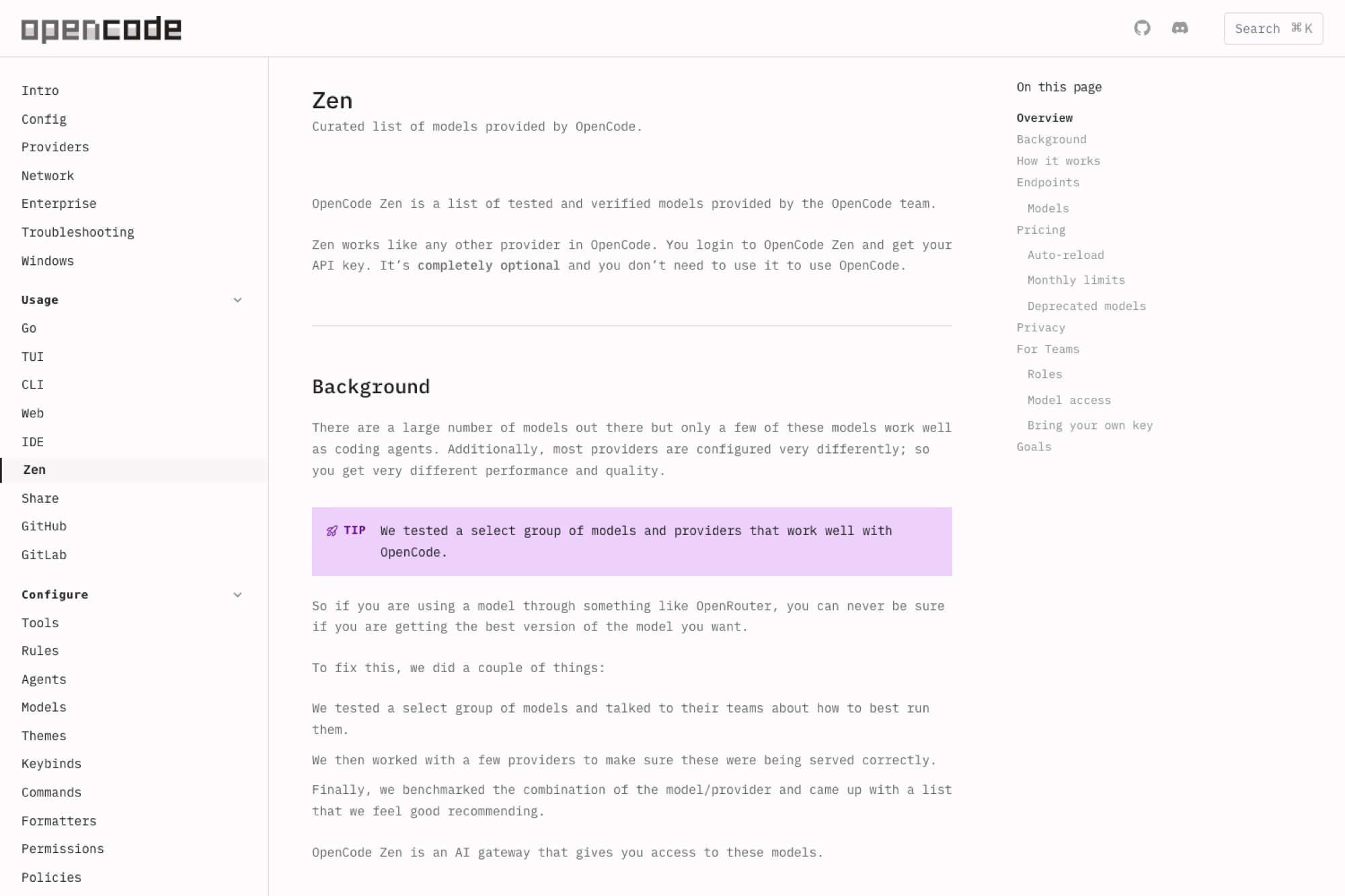
OpenCode Zen is described in the docs as "a list of tested and verified models provided by the OpenCode team." The reasoning is candid: "if you are using a model through something like OpenRouter, you can never be sure if you are getting the best version of the model you want." So they tested combinations of model and provider, talked to the model teams, benchmarked the result, and published a shortlist. The docs are explicit that Zen is "completely optional and you don't need to use it to use OpenCode." OpenCode Go is a separate low-cost subscription covering popular open coding models.
Compare that to how Claude Code is sold, and the shapes are different rather than one being cheaper. Claude Code's pricing is a seat on Anthropic's subscription tiers. OpenCode's is either nothing, or a metered gateway you opted into. If you've ever watched a session limit land in the middle of a refactor, you already know that "how am I billed" affects daily work more than benchmark deltas do. We wrote about the same wall from the other side in our piece on GLM coding plan rate limits.
The second-order effect is where a hosted machine earns its keep. Metered credits punish you for leaving something running; a laptop punishes you for walking away from it. MoClaw is priced per credit against a machine that doesn't need your hardware awake, so an overnight batch costs what the work costs instead of costing you a laptop that can't sleep.
Release speed is a feature and a tax
Five OpenCode releases shipped between 28 August and 4 September 2026: v1.18.25 through v1.18.29. Read the notes and you can see what that velocity buys. v1.18.27 raised default provider header timeouts and streamed-chunk timeouts to five minutes "so slow model startups fail less often." v1.18.26 made Claude 5 sessions tolerate stale thinking blocks instead of failing after a prompt or tool change, and let Bedrock GPT-5.6 models accept a none reasoning effort. v1.18.29 fixed OAuth model filtering so integer GPT versions like gpt-6 are recognised.
Those are all fixes for breakage caused by other people's model releases, which is exactly the maintenance bill a provider-agnostic agent signs up for. Supporting 75+ providers means every upstream change is your bug. The project is clearly paying it: multiple releases credit outside contributors by handle, and there's a note in the README asking anyone who names a project opencode-something to state that they aren't affiliated.
The tax lands on you as upgrade frequency. Anthropic's Homebrew cask, by contrast, "tracks the stable release channel, which is typically about a week behind and skips releases with major regressions." Two different philosophies about who absorbs risk.
Neither of them is the thing that runs while you sleep
Step back from opencode vs claude code for a second and notice what both are: agents that live inside a coding session and edit a repo you have checked out. That's a genuinely useful shape, and it's also a narrow one. Plenty of the work that eats a week isn't a repo edit; it's chasing a vendor's docs, filling a spreadsheet, watching a page for a change, or babysitting something that takes four hours.
For those, the constraint isn't model quality. It's that the machine has to stay awake and reachable from somewhere other than the desk you left. That's the argument for MoClaw as a hosted cloud AI computer you can hand a long task and then close your laptop on, and it's why we treat coding agents and work agents as different categories rather than competitors. We laid out that split in Codex vs MoClaw: coding versus work, and the same reasoning applies here.
The practical version: keep the terminal agent for the repo, and put the four-hour thing somewhere that doesn't share a power button with your keyboard. Picking up a session from a phone matters too, and that's another axis where a hosted machine beats a local one no matter which agent is driving. Our ChatGPT Work vs Codex comparison walks through the same boundary in a different ecosystem.
How to decide in about five minutes
Most opencode vs claude code arguments stall because both sides are answering different questions. Skip that. Ask yourself which of these you'd be annoyed to lose.
Reading the source and patching it yourself, running a local model with no network egress, or pointing the agent at a provider your company already has a contract with: that's OpenCode, and nothing else in this comparison comes close.
Diffs rendered in your IDE, sessions that follow you to a browser or a phone, cloud routines that survive a closed laptop, and an install that changes under you only once a week: that's Claude Code, and the price is Anthropic's models and Anthropic's bill.
If you'd be annoyed to lose both, install both. They don't conflict; one's a Homebrew cask and the other is a curl script, and neither one owns your repo.
FAQ
Is OpenCode free?
Yes. The agent is MIT-licensed and free to install and run, verified from the LICENSE file on 6 September 2026. You still pay whichever model provider you connect it to. OpenCode Zen and OpenCode Go are the team's optional paid services, and the docs state clearly that you don't need Zen to use OpenCode.
What models does OpenCode support?
Per the official docs, OpenCode "uses the AI SDK and Models.dev to support 75+ LLM providers and it supports running local models." That covers OpenAI, Anthropic, Google Vertex AI, Amazon Bedrock, DeepSeek, Groq, Together AI and Cerebras, along with local runtimes like Ollama, LM Studio and llama.cpp. Credentials go in through /connect; model selection happens with /models.
Is OpenCode the same as Claude Code?
No, and they aren't from the same company. Claude Code is Anthropic's product; OpenCode is an independent MIT-licensed project under the anomalyco org, which is where sst/opencode now redirects. They overlap on the terminal agent shape and diverge on licensing, model choice, and how many surfaces they run on.
Which one should I use if I already pay for Claude?
Start with Claude Code, since you're already paying for the models it defaults to. Add OpenCode later if you hit a case it can't cover, like running a model locally or routing through a provider your team already has credits with. The install cost of trying both is a few minutes.
Does either one keep working after I close my laptop?
Claude Code's routines run in the cloud and keep going with your computer off. OpenCode is a local process and stops when the session does. If that gap is your actual problem, a hosted machine such as MoClaw solves it independently of which agent you prefer, because the agent isn't what's going to sleep.
What this comparison is really about
The interesting question was never which agent writes better code, since both drive the same frontier models and the gap moves every month anyway. It's about coupling. OpenCode decouples the agent from the model vendor and pays for it in maintenance; Claude Code couples them tightly and pays for it in lock-in, buying back reach across five surfaces and a cloud that outlives your session.
Neither of those trades is wrong. But if you find yourself reading comparison posts because your real complaint is "the work stops when I stop," you're shopping in the wrong aisle, and no amount of provider flexibility will fix it.
Continue Reading
More Comparison
Lindy vs MoClaw: Teammate or Cloud Computer?

DeepSeek vs ChatGPT: Research, Code, Price

ChatGPT vs Microsoft Copilot: Which Fits You?

Gemini vs ChatGPT for Work: Which Is Better?

Cursor Cloud Agent vs Grok Bot

GPT-5.6 Sol vs Terra vs Luna: Pick One
The MoClaw editorial team writes about workflow automation, AI agents, and the tools we build. Default byline for industry overviews, listicles, and collaborative pieces.
Choosing between tools? Let MoClaw run the work.
Always-on AI assistant on its own cloud computer. No switching required, no setup.
References: https://github.com/anomalyco/opencode · https://opencode.ai/docs/models/ · https://opencode.ai/docs/zen/ · https://github.com/anomalyco/opencode/releases · https://github.com/anomalyco/opencode/blob/dev/LICENSE · https://code.claude.com/docs/en/overview · https://code.claude.com/docs/en/routines