Ornith-1.0 Explained: Self-Scaffolding AI Workflows

Ornith-1.0 explained for AI workflow readers: what self-scaffolding means, how to read its benchmark claims, and which risks to verify before adopting.
Table of Contents
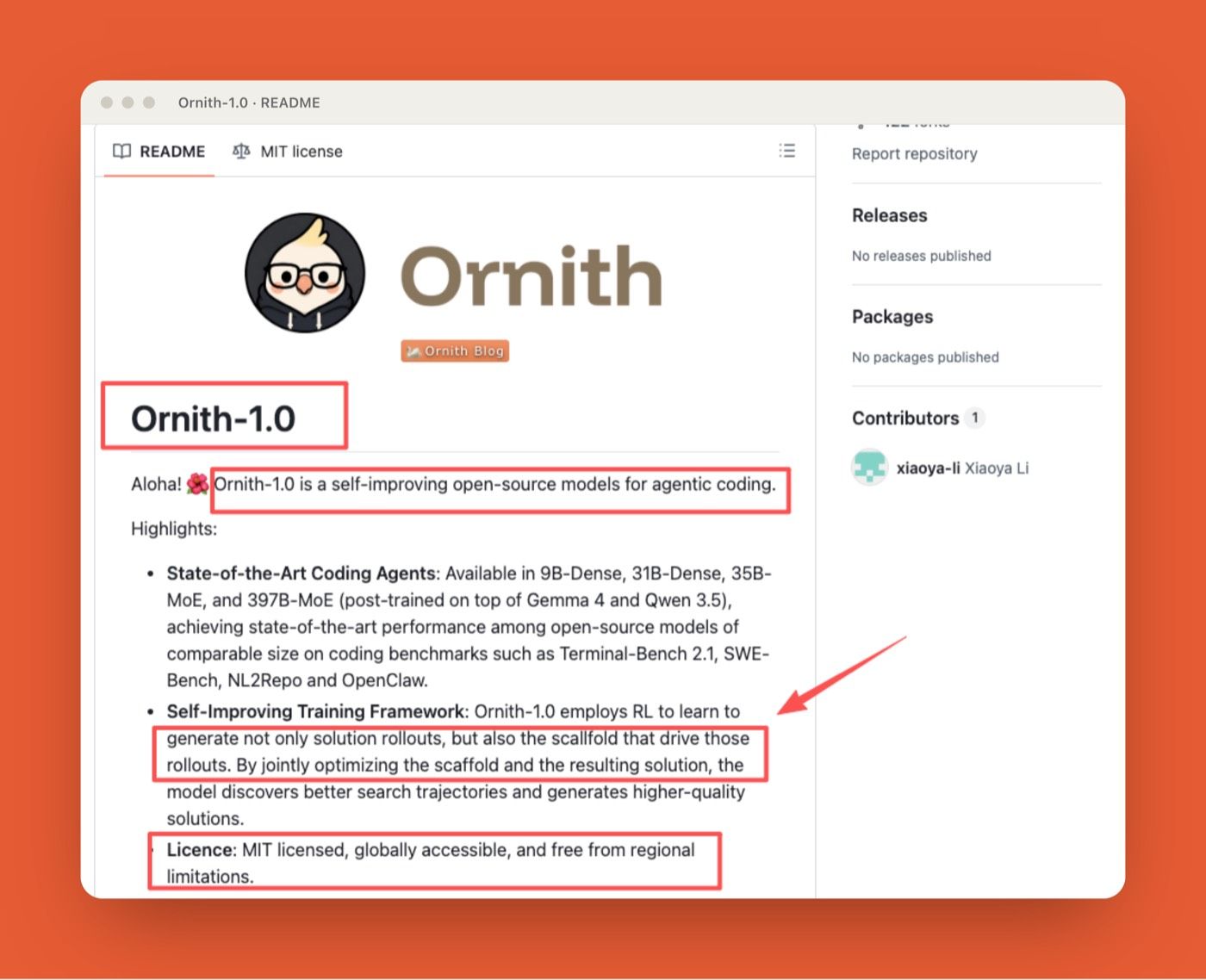
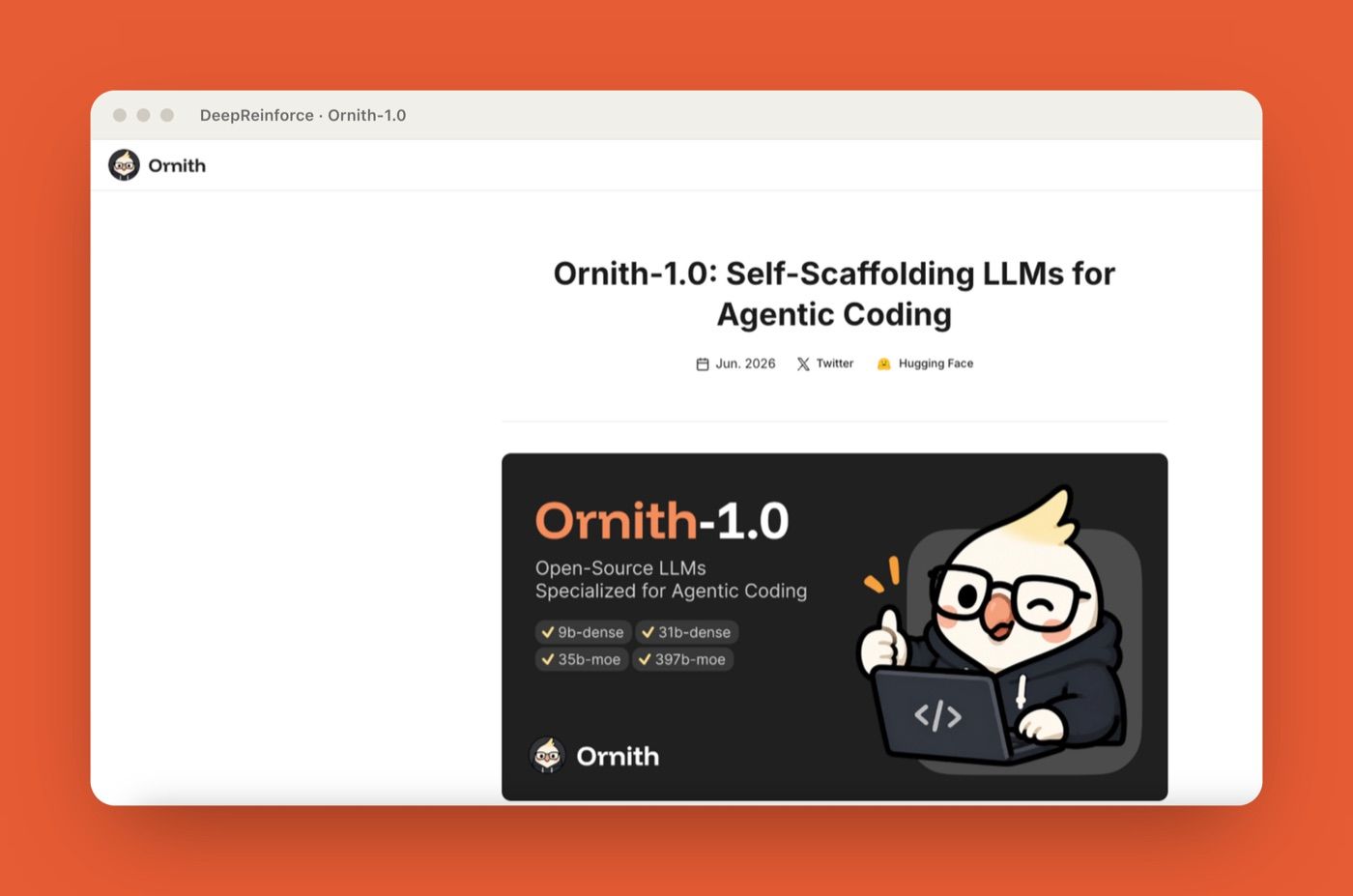
Ornith-1.0 is an open-source model family released by DeepReinforce in June 2026. Its key idea is Self-Scaffolding, which means Ornith-1.0's RL training learns not only solution rollouts but also task-specific scaffolds or harnesses that guide those rollouts. For readers following agentic coding and self-improving systems, it is a new direction worth watching.
Key Takeaways:
- Explain Ornith-1.0 first as a source-defined model release: publisher, model family, task target, license, and benchmark scope.
- Self-scaffolding means improving the work harness around an agent, not removing human review.
- Benchmark claims should stay within comparable open-source model scope unless primary sources support broader claims.
- Agentic coding results should not be assumed to transfer directly to browser research, office work, or managed AI workflows.
I care about scaffolds because I have seen strong models produce weak repeatable work. When I ask one AI session to research a tool, compare sources, draft a recommendation, and flag risks, the answer often looks clean, but the process can drift across runs. In a simple repeat-run exercise, one version may start from the official model card, another may lean on a benchmark repost, and a third may mention the license only after the recommendation is already written. The fix is not a louder prompt. It is a scaffold: source order, verification, review, and handoff stay visible.
What Ornith-1.0 Is
Ornith-1.0 is a DeepReinforce model family for agentic coding, released with public checkpoints and model cards on Hugging Face. The safe explanation starts with source facts: who released it, what model family it belongs to, what the model card says, what license applies, and which benchmark setting supports the claim. That order matters. A new model name can travel faster than documentation. A good article should not infer hardware fit, API access, business use, or OpenClaw association from a headline.
The DeepReinforce model family
DeepReinforce is associated with reinforcement-learning work around coding and technical optimization. The GrandCode paper, authored by the DeepReinforce Team, describes a multi-agent RL system for competitive programming. That gives useful context, but it is not enough by itself to prove every Ornith-1.0 detail. Family membership, release status, benchmark tables, and license claims should come from the DeepReinforce release page or model card, not from name similarity or reposts.
Why it targets agentic coding
Agentic coding is a natural target for self-scaffolding because coding agents need more than next-token completion. They need setup, repository context, tool calls, tests, retries, and verification.
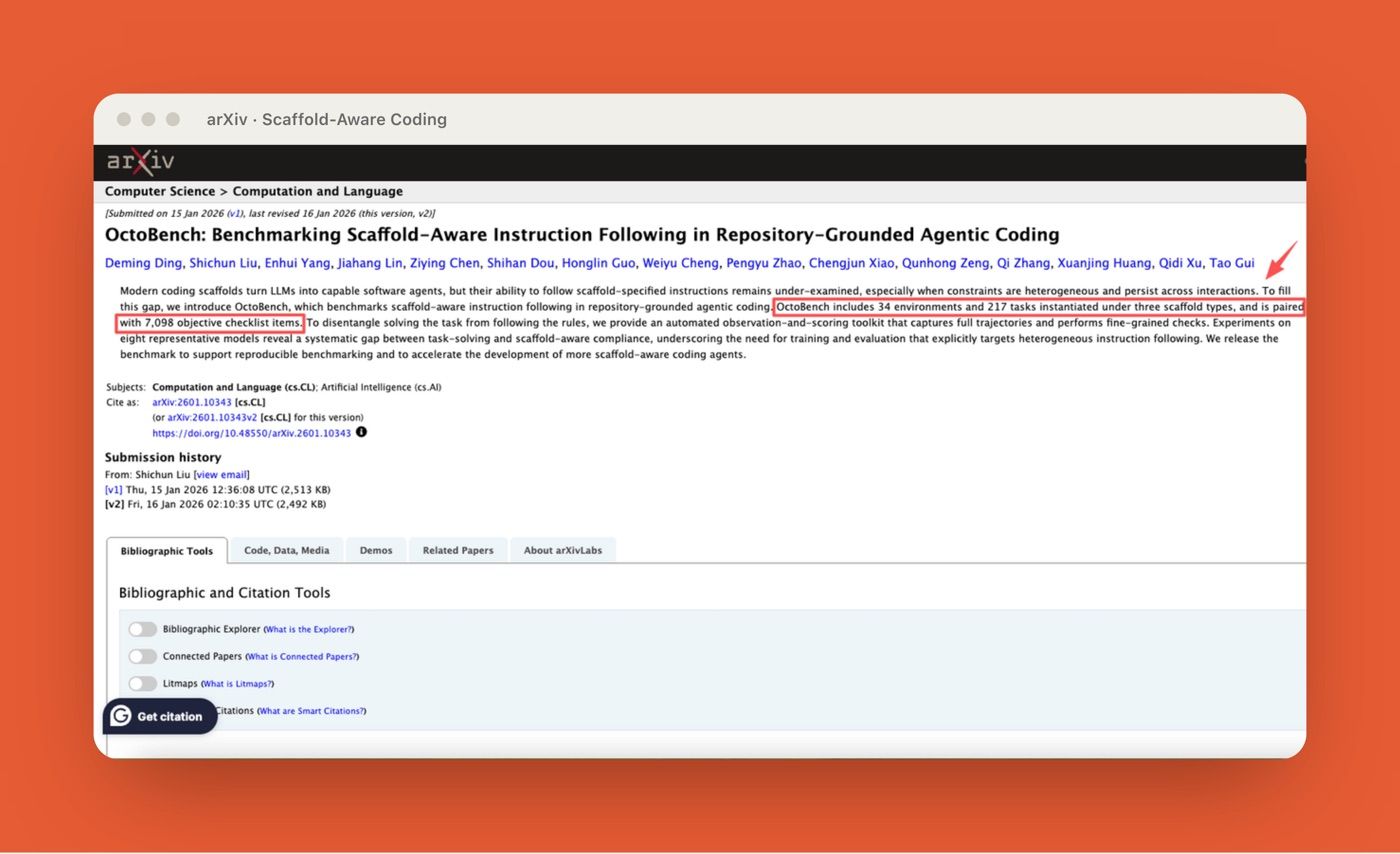
The OctoBench paper is useful here because it separates task-solving from scaffold-aware instruction following in repository-grounded agentic coding. It includes 34 environments, 217 tasks, three scaffold types, and 7,098 objective checklist items, which makes the evaluation frame more concrete than a single pass/fail coding score. That distinction matters for Ornith-1.0 coverage. Passing a coding task is not the same as reliably following the scaffold rules around the task.
What Self-Scaffolding Means
Self-scaffolding means the model or training process improves how work is structured. In workflow language, the scaffold can include the task plan, tool sequence, intermediate checks, retry loop, and final review package.
Learned harnesses vs hand-written scaffolds
A hand-written scaffold is designed by people. It may tell the agent to inspect files, plan the change, run tests, summarize risk, and wait for review. A learned harness is more model-shaped. It may emerge from training signals that reward useful intermediate structure. The tradeoff is visibility. Handwritten scaffolds are easier to inspect. Learned harnesses may be more adaptive, but readers need evidence about what was trained, what was measured, and which failure modes were checked.
Training-time improvement, not runtime autonomy
Self-scaffolding should not be interpreted as full runtime autonomy unless clearly stated in the primary sources. For Ornith-1.0 specifically, Self-Scaffolding refers to a training-time framework for learning task-specific scaffolds. Scaffold-aware evaluation and tool-use patterns are useful context, but they should not be treated as the definition of Ornith's Self-Scaffolding. Regardless of the exact meaning, any claims of enhanced scaffolding still require careful validation: stronger scaffold generation does not eliminate the need for sandboxing, tool restrictions, source verification, and human oversight during deployment.
For more details on how Ornith-1.0 implements this, see the official release post.
Benchmark Claims and Boundaries
Benchmark claims need a boundary. Ornith-1.0 should not be described as absolute SOTA unless a primary source clearly supports that claim and defines the comparison set.
Comparable open-source model scope
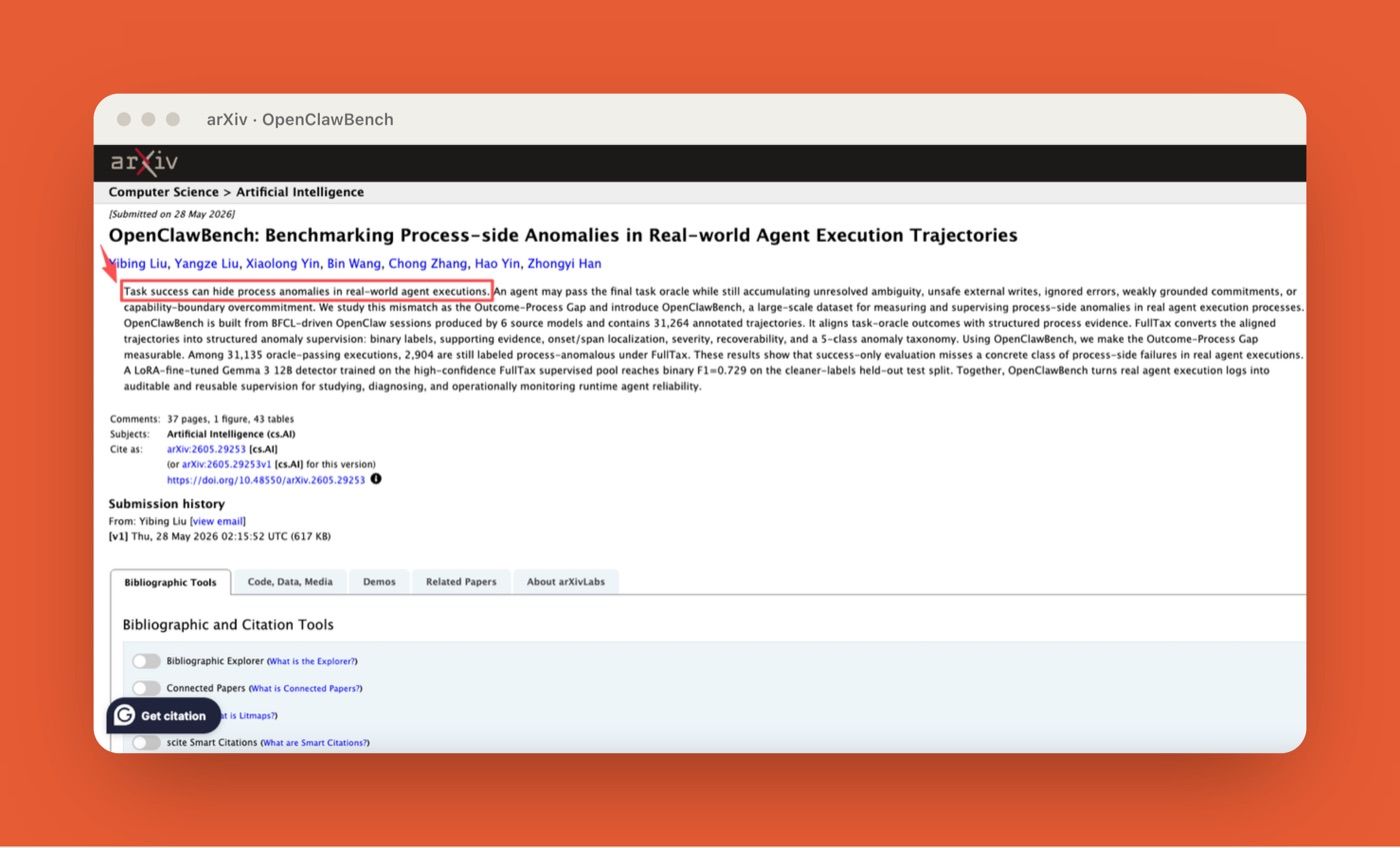
The safer frame is "within comparable open-source model scope." Comparable means similar size, openness, evaluation task, scaffold, and benchmark setting. The OpenClawBench paper adds a useful warning for this section: task success can hide process-side anomalies. A benchmark win can still leave open questions about tool safety, rule-following, recovery, and transfer to other workflows.
Why closed and larger open models still matter
Closed and larger open models still matter because teams choose models for more than one score. Long-context reliability, tool behavior, latency, hosting path, license, ecosystem support, and review burden can matter more than a single coding benchmark. The useful question is not "is Ornith-1.0 the best model?" It is: best under which scaffold, against which peers, for which task, and with which verifier?
Workflow Lessons for Managed Agents
Managed agents can learn from self-scaffolding without becoming coding-agent systems. The lesson is structured.
Repeatable task structure
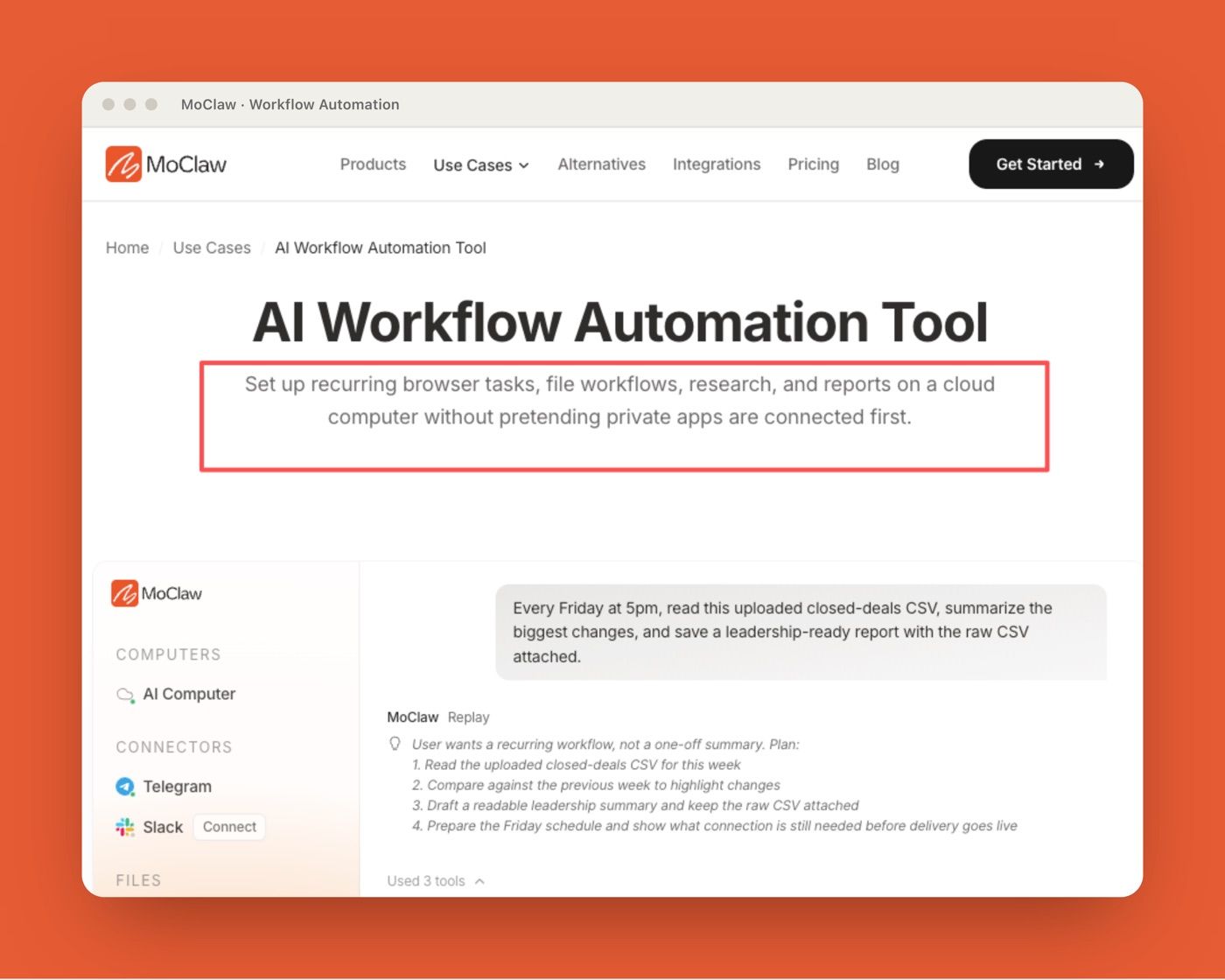
A managed agent needs a repeatable task shape: inputs, source rules, tool path, output format, and review point. MoClaw's AI workflow automation use case shows recurring browser tasks, files, reports, logs, and scheduled delivery running in one cloud workspace.
That is the managed workflow version of a scaffold. The workspace preserves enough state to repeat work without rebuilding the prompt every time.
Review points before real actions
Self-scaffolding does not remove review. It helps place the review earlier. If a workflow sends messages, changes files, edits code, exports data, or updates a system of record, review should happen before the external action.
Here is the drift that made me move review in front of the last step instead of after it. On a repeat run, the workflow lifted a benchmark number from a reposted chart rather than the model card and stated it as settled fact. Nothing looked wrong on the surface, which is the point. A review checkpoint forces model facts, benchmark numbers, and license terms back to a primary source before anything ships.
Risks and Claims to Verify
The main risk is mistaking a good-looking scaffold for a trustworthy result.
Reward hacking and verifier gaming
Reward hacking happens when a system optimizes the score instead of the intended outcome. That risk is directly relevant to self-scaffolding. If the benchmark rewards final task completion, readers should ask whether it also measures process quality, tool safety, scaffold compliance, and rule-following.
Source, license, and benchmark checks
Start with the official DeepReinforce source, not reposted benchmark charts. Confirm which Ornith-1.0 variants are actually published, what checkpoints are available, and whether the license allows your intended use.
Treat benchmark scores as a reason to test, not a final answer. Ornith may look strong on reported results, but the real check is whether it can handle your own repo tasks, follow the scaffold, and produce code that a human can review safely.
FAQ
Can Ornith-1.0 run on consumer hardware?
Do not assume consumer hardware support from the name alone. The official release describes 9B as edge-deployable, but the 35B model card still shows serving recipes that use an 8×80GB GPU node. Check the exact variant, quantization, memory requirement, and runtime setup before giving hardware advice.
What if the model card lists an MIT license?
MIT license generally permits commercial use, modification, redistribution, and private use. However, many AI model releases include additional restrictions through the model card, acceptable use policy, training datasets, or third-party dependencies. Always review the specific model card, linked terms, and any referenced licenses before concluding that commercial use is fully allowed.
Can managed workflows use Ornith through an API?
Managed workflows can use Ornith through an API only if you run it behind a compatible server or use a trusted hosted provider. The model card shows vLLM and SGLang recipes for OpenAI-compatible chat completions, but that is not the same as an official hosted API with pricing, rate limits, and support terms.
What should teams compare before switching models?
Teams should compare benchmark scope, license, hosting path, latency, cost, tool behavior, scaffold compliance, verifier quality, and review burden. A strong agentic coding score may not predict browser research or business workflow reliability.
Ornith-1.0 for Self-Scaffolding Workflow Design
Ornith-1.0 is useful because it puts scaffolds back at the center of the AI workflow conversation. A stronger model matters, but repeatable work also needs task structure, verification, review, and clear benchmark boundaries.
Disclosure: This piece is a source-based explainer, not a hands-on benchmark review. It treats Ornith-1.0 as a fast-moving AI workflow topic. Model details, license terms, access options, hardware fit, and benchmark claims reflect DeepReinforce's published materials and Hugging Face model cards available at publication time. Confirm current specifics against the official release sources before relying on them.
Continue Reading
More Guide
Self-Improving Coding Agents: Non-Builder Guide

Ox Alpha: What We Know So Far

Claude Code Session Manager: Wake for Mac

Grok Speaking Gibberish: What Actually Helps

How to Build Claude Skills for Agent Workflows

Claude Code AGENTS.md: What Actually Loads
The MoClaw editorial team writes about workflow automation, AI agents, and the tools we build. Default byline for industry overviews, listicles, and collaborative pieces.
Ready to put this into practice?
MoClaw runs browser tasks, research, and schedules automatically. Try it free.
References: DeepReinforce: Ornith-1.0 release post · Hugging Face: Ornith-1.0-35B model card · arXiv: GrandCode, multi-agent RL for competitive programming · arXiv: OctoBench, scaffold-aware instruction following in agentic coding · arXiv: OpenClawBench, process-side anomalies in agent trajectories