ChatGPT Codex: From Chat to Tasks

ChatGPT Codex turns a chat request into a scoped cloud task with execution, evidence, review, and handoff. Here is the lifecycle non-coding teams can borrow.
Table of Contents
Codex in ChatGPT / Codex cloud is OpenAI's coding-agent experience for turning a request into a scoped coding task that can run in a cloud environment, return a summary and diff, and leave merge or follow-up decisions to human review.
Key Takeaways:
- ChatGPT Codex turns requests into agent tasks with scope, execution, evidence, and review.
- OpenAI Codex task work is useful to study even for non-coding teams because the lifecycle is transferable.
- Good agent workflow design separates the request, task environment, test evidence, and final approval.
- Human review should happen before integration, merge, publish, or downstream handoff.
Hi guys, Vera here. I started thinking about this pattern after watching a chat thread become too crowded to review. A user asked for a fix, then added context, then pasted logs, then changed scope. The final answer was hard to audit. A task packet would have been cleaner: request, files, run result, evidence, reviewer decision.
What ChatGPT Codex Means in Workflow Terms
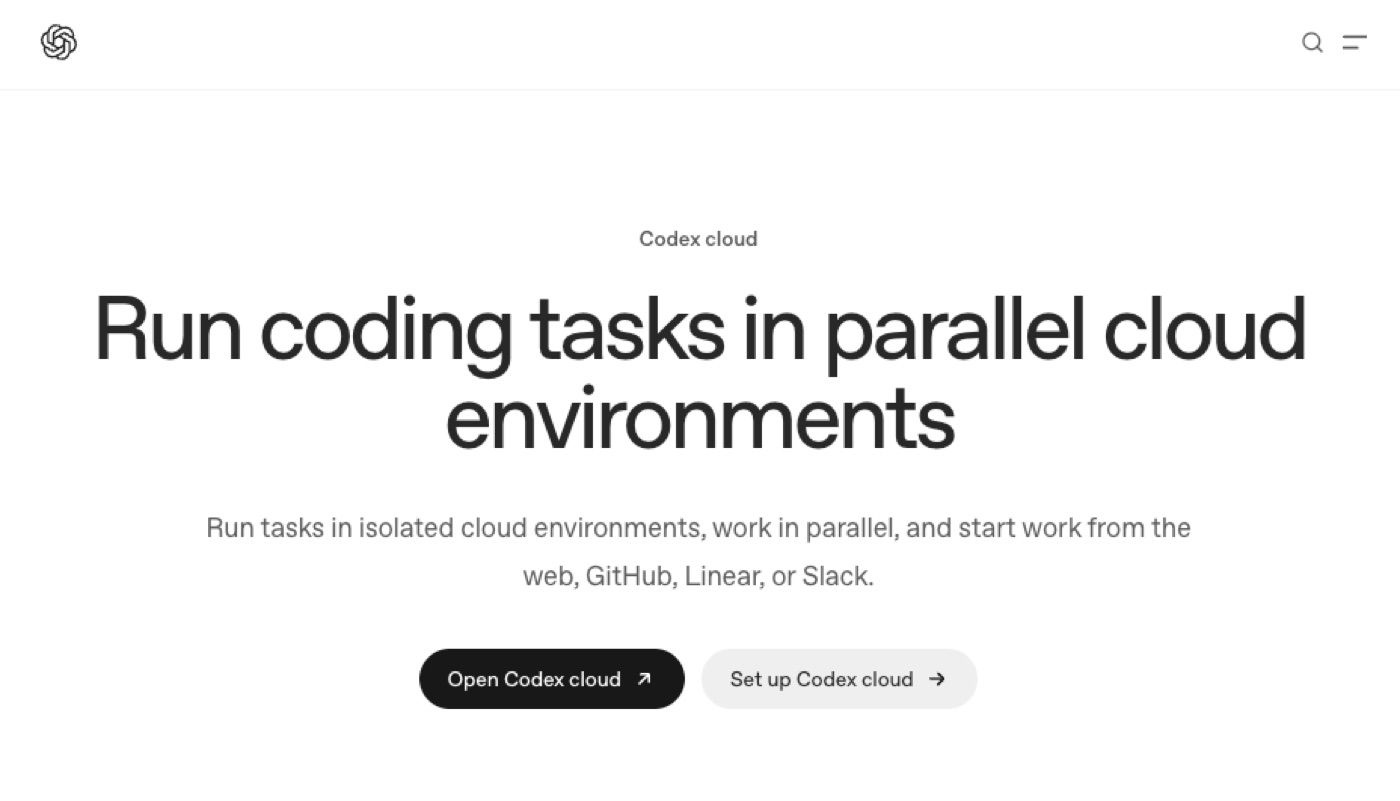
In workflow terms, ChatGPT Codex matters because it separates "asking" from "doing." OpenAI describes Codex cloud as running coding tasks in isolated cloud environments. The user is no longer only asking for advice. The agent can execute a scoped task and return evidence.
Cloud task execution
Cloud task execution means the task can continue in an environment built for work, not only inside the visible chat. That matters for longer jobs: inspecting a project, making changes, running checks, and preparing a result. For an AI work agent, this creates a useful pattern. The request becomes a task. The task produces artifacts. The artifacts need review. The review decides what happens next.
Separate task environments
Separate task environments reduce confusion. A task has its own working surface, instead of mixing every decision into one conversation. That makes logs, changes, and test outputs easier to reason about. The broader lesson is not limited to code. Any agent workflow benefits when work happens in a bounded environment with a clear start, output, and owner.
From Chat Request to Task Execution
A chat request becomes useful when it is scoped tightly enough to run. "Fix this project" is too vague. "Check why this test fails and propose the smallest safe change" is closer to a task.
Scoping the request
Scoping should name the goal, files or sources, blocked actions, expected evidence, and review point. OpenAI's Codex prompting guidance emphasizes clear goals, useful context, and expected output. That is the workflow lesson: a task should know what done looks like before it starts.
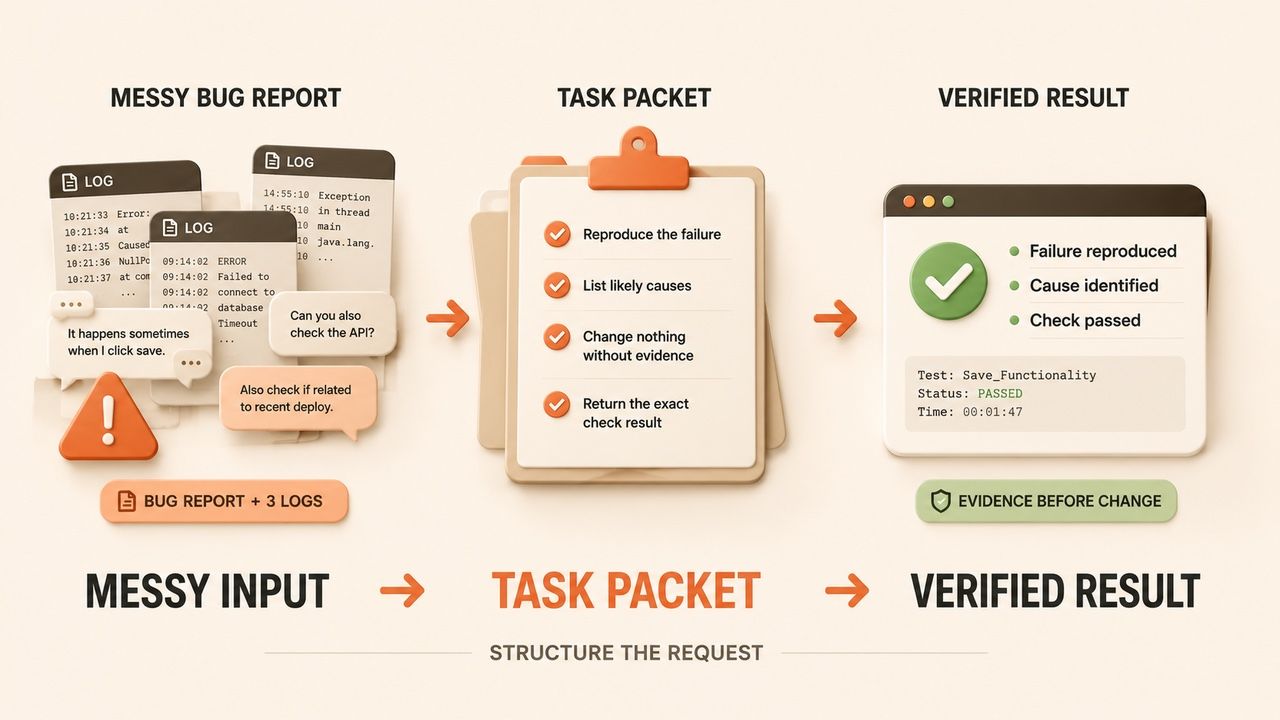
For example, I once handed an AI agent a messy bug report and three logs. The output improved only after I rewrote the request as a task packet: reproduce the failure, list likely causes, change nothing without evidence, and return the exact check result.
Running checks
Running checks is where an agent's work becomes more than a draft. A task should show what it inspected and what passed or failed. For coding tasks, that may mean tests, build output, lint results, or diffs. For non-coding teams studying the pattern, it could mean source checks, spreadsheet validation, screenshot review, or export confirmation.
Returning evidence
Returning evidence is the difference between "trust me" and "review this." The agent should return the files touched, command or check results, unresolved risks, and next decision. This is the part non-coding teams can borrow. A task without evidence is just another polished answer.
Review, Revision, and Handoff
Review is not a delay. It is the step that turns agent output into accountable work.
Logs and test outputs
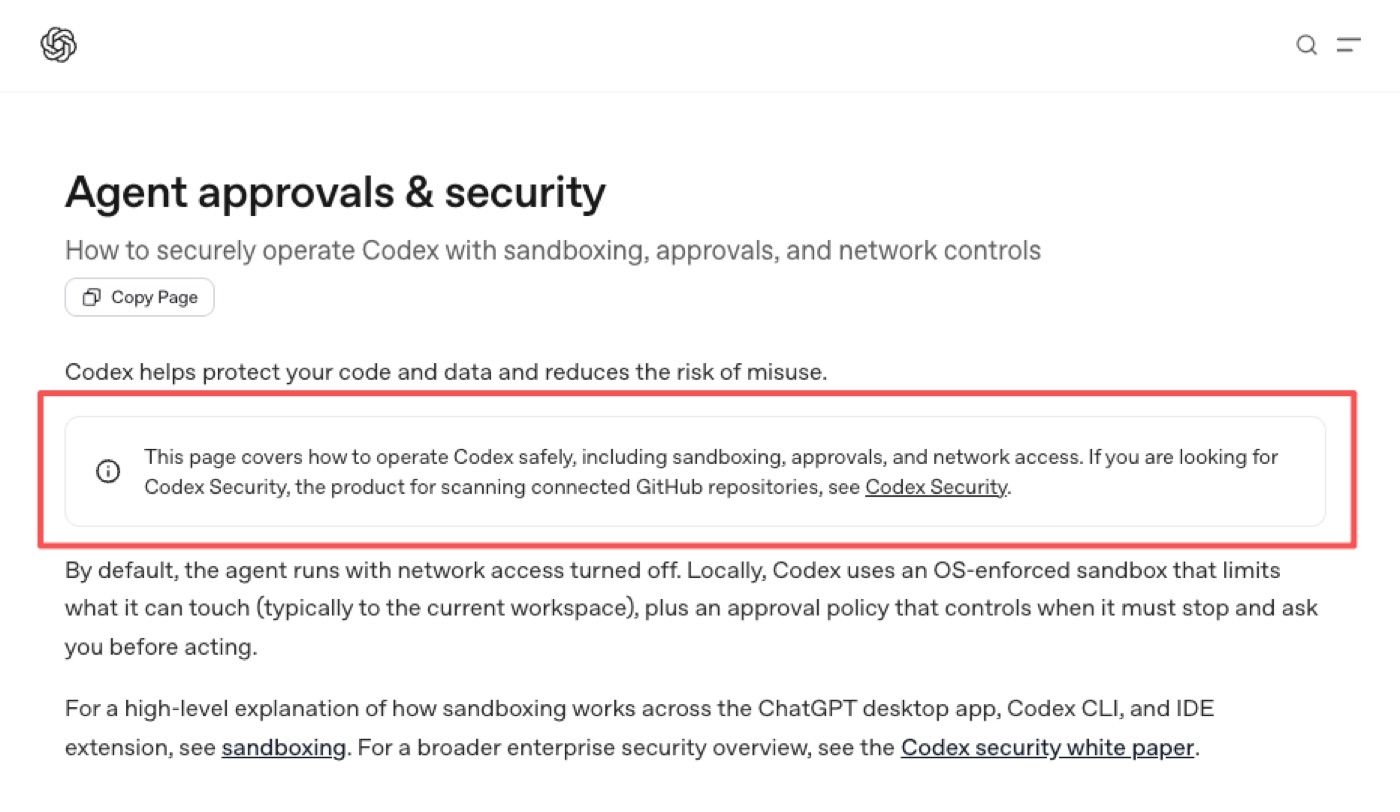
Logs and test outputs should stay attached to the handoff. OpenAI's agent approvals and security page is useful because it treats approval modes, sandboxing, and risky actions as part of agent operation, not as decoration. If a reviewer cannot see what changed, what ran, and what failed, the handoff is weak.
Human review before integration
Human review should happen before integration. That means before merging, publishing, deploying, sending, or transferring to another team. The review question is practical: does the evidence support the change, and does the task still match the request? If not, the right move is revision, not blind acceptance.
What Non-Coding Teams Can Learn From Codex
Non-coding teams should not copy coding mechanics. They should copy the lifecycle: request, task, execution, evidence, review, handoff.
Task packets
A task packet contains the request, context, constraints, expected output, and review rule. MoClaw's Build AI Agent Without The Framework Overhead page frames a related managed-workflow need: teams want repeatable agent work without maintaining local orchestration code and execution state themselves. A good packet reduces back-and-forth. It also makes the task easier to hand to another person or agent.
Evidence before approval
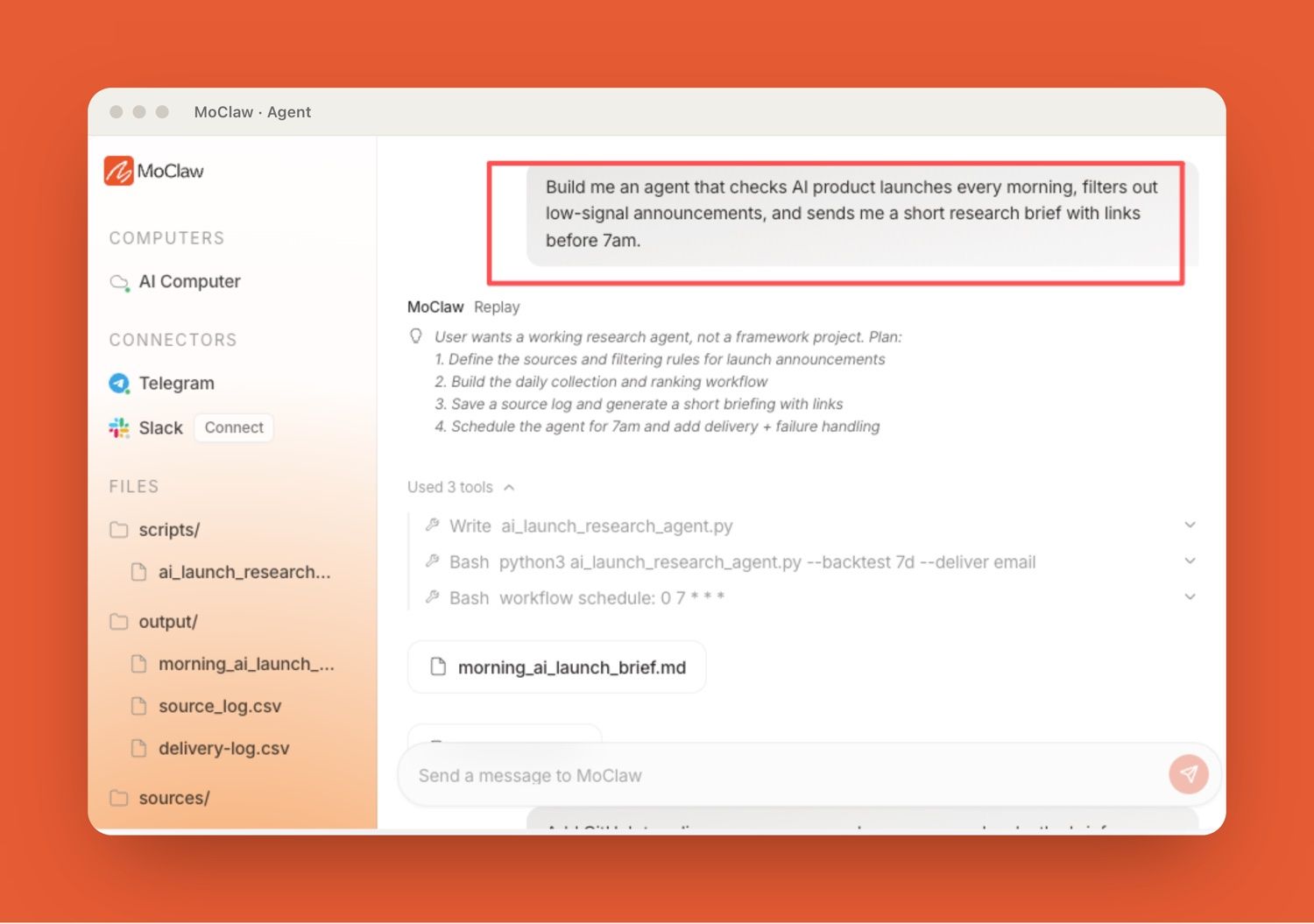
Evidence should come before approval. MoClaw's Automate Tasks With AI shows the same managed-workflow pattern from another angle: recurring work needs tasks, outputs, and reviewable state, not only chat responses.
For operations, research, finance, or content, evidence might be source links, generated files, validation notes, or screenshots. The pattern still holds.
Giving a text-only model eyes
Codex's workflow assumes the model can see what you put in front of it. Run it on a text-only backbone and that assumption breaks quietly: screenshots, mockups, diagrams and error dialogs become dead ends, and the agent will reason confidently about an image it never saw.
Anionex/agent-vision-toolkit, published August 1, 2026 and at 310 stars by August 6 under MIT, closes that gap from outside the model, in two layers that solve genuinely different problems.
The first layer is a set of small command-line tools, each answering one kind of question, plus a skill file that teaches the agent when to reach for which. glance asks a question about an image or transcribes its text. ground returns a bounding box for "where is the Send button" in original pixel coordinates. detect inventories everything in a region as a numbered list with exact visible text and boxes. crop cuts a box out to its own file so several checks can reuse it. trace vectorises an image to SVG locally, never calling a vision API at all, so the geometry comes from actual pixels rather than a model's confident estimate. Splitting them this way means the calling agent, which holds the full context, picks the right question instead of firing one overloaded command and hoping.
The second layer is the interesting one, and it exists because the first has a hole it cannot patch. Tools only cover what the agent decides to look at. An image the user pastes reaches the model before any tool could possibly run, so no amount of skill instruction helps. The fix is a transparent local proxy that turns images into text on the wire before they arrive: for Codex it sits in front of the Responses API, and Claude Code uses the same proxy by pointing ANTHROPIC_BASE_URL at it. Pi, Oh My Pi and OpenCode get one-file native extensions instead. The effect is that pasting a screenshot just works and the built-in image tool stops erroring out, with no tool call and no extra prompting.
Two design choices are worth stealing whether or not you use this. Every image carries a focus hint, so a pasted image inherits its own message's text and a fetched one inherits the agent's stated reason for fetching it; the description then answers this turn's question instead of producing a generic caption. And the vision model is explicitly scoped to looking rather than concluding, transcribing and describing while your coding model draws the inference. Anyone who has watched a vision model return a beautiful paragraph about a UI screenshot that omits the one broken field will understand why both of those matter.
The repo reports its pipeline verified end to end in Codex with DeepSeek V4, and in Claude Code, Pi, Oh My Pi and OpenCode. Read that as the author's own testing, not independent evaluation. There's no benchmark here, and a capability shim doesn't really need one.
Routing work to another model as a Codex subagent
The vision shim solves what the model can see. A different gap sits next to it: what the model costs, and whether every step of a task deserves the same one.
oil-oil/codex-deepseek-subagent, published August 4, 2026 and at 239 stars three days later under MIT, registers deepseek-v4-flash as a native Codex subagent rather than a proxy sitting in front of the API. Once configured, the main agent dispatches to it directly with spawn_agent(agent_type="DeepSeek", fork_turns="none"), and the role lives as a file at $CODEX_HOME/agents/DeepSeek.toml.
The scoping is the part worth copying. The skill handles first-time setup, status checks, repair after you switch parent models, and uninstall. It explicitly does not want to be in the loop for ordinary coding work; once routing is verified, the configuration flow should never run again. Plenty of tools in this category blur that line and end up re-running setup on every invocation.
Two constraints shape whether this fits your workflow. It needs the ChatGPT or Codex desktop application on macOS or Windows, so there is no Linux path and no headless CI story. And DeepSeek here is text-only: images, video and screenshots have to be turned into text by the parent agent first, which is exactly the gap the vision toolkit above fills. The two compose, and the ordering matters.
You also bring your own DeepSeek API key. That makes this a cost-routing decision rather than a free upgrade: cheap steps go to the cheap model, and you own the bill for both.
Extending Codex With Image Generation and Sub-Agents
The subagent pattern above has a natural next step, and codex-bridge is the clearest example of it: a Claude Code plugin that routes work to the Codex CLI so Claude gains two things it doesn't have on its own.
The first is images. Claude Code can't generate them; the Codex CLI can, through gpt-image-2. With the bridge in place Claude writes the prompt, drives image generation through Codex, then looks at the result and regenerates if it missed the brief. Passing an earlier image as a reference keeps palette, stroke weight and margins consistent across a set, which is the difference between a matching icon family and eight unrelated pictures. The project makes the point by generating every image in its own repository this way.
The second is delegation. Four Codex-powered subagents handle review, debugging, bulk implementation and image work, with Claude staying the orchestrator: it scopes the task, Codex does the volume, Claude verifies the output. Intermediate output from the heavy work never enters the Claude context, which is a quieter benefit than it sounds, since context spent reading a subagent's working is context unavailable for the actual problem.
The billing detail is the one people notice. Everything routes through codex login rather than an OpenAI API key, so the work bills against a ChatGPT plan (Plus, Pro or Team) instead of API credits, and against a different budget from your Claude quota. Install is /plugin marketplace add Sateezg/codex-bridge followed by /plugin install codex-bridge@codex-bridge, with a clone-and-run path if you want to try it for one session.
MIT licensed, and it went up on August 9, 2026. The figure first recorded here was around 350 stars the day after launch; checking the GitHub API again on 25 August returns 250, and the repository has not taken a commit since 10 August. The surrounding numbers are what make that worth a second look: 2 forks and zero watchers against those 250 stars, published from an account with one follower. A star count that drops while the code sits untouched isn't something organic interest does, and the fork ratio is far off the live projects cited elsewhere in this article, which land somewhere between one fork per five stars and one per twenty. None of that makes the technique wrong, and the bridge pattern is still worth understanding on its own terms. It does mean you should read this particular repository as a demo its author published and walked away from rather than a maintained dependency: read the code before wiring it into anything you rely on, and check that the Codex CLI login it depends on stays supported.
Reading What Codex Already Wrote Down
Two repositories that showed up this week point at the same overlooked fact: the Codex CLI has been keeping a full record of every task you ran, and almost nobody reads it.
bawadou/ai-data-extractor (214 stars, MIT, first pushed 16 August 2026) pulls your local chat history out of ten coding assistants and normalises it into one JSONL file. Codex CLI stores rollout files at ~/.codex/sessions/**/rollout-*.jsonl and Claude Code writes one JSONL per session under ~/.claude/projects/, but Cursor and Windsurf keep theirs in SQLite, Aider leaves a Markdown transcript per project, and Cline stores raw Anthropic-format message arrays one folder per task. The extractor handles all of them, searching macOS, Linux and Windows conventions without being told which one you're on, and pulls out messages, file paths, diffs, tool calls and results, timestamps, and model names where the underlying store recorded them. The README's stated motivation is worth repeating: back the history up before an app's local database gets cleared, because these stores are not designed as archives.
That matters more than it sounds if your Codex workflow is the one described above. The evidence trail you rely on for review lives in a format nobody promised to keep stable.
icesixgod/codex-trajectory (215 stars, MIT, created 13 August 2026) attacks the other half of the problem: reading a single run rather than exporting all of them. It's a read-only Codex plugin that turns local task logs into an interactive timeline, showing turns, approximate model steps, reasoning summaries, tool timing, subagents, compaction, token usage and failures without modifying the originals. Install is two commands:
codex plugin marketplace add icesixgod/codex-trajectory
codex plugin add codex-trajectory@icesixgod
The design decision worth copying is the default. Safe summary mode returns event names, timing, status and token counts while hiding tool inputs, tool outputs, absolute log paths, Git remotes and base instructions; full detail is opt-in per call or through a confirmation button in the viewer. A tool whose whole job is surfacing what an agent did could easily have leaked the contents of every file it touched into the next conversation, and this one starts closed.
The token panel is the part I'd actually use for a bill you can't explain: it separates input, cache reads, uncached input, output and reasoning output, and shows cache-hit rate per turn. Both projects are days old, so treat them as useful rather than settled.
Limits and Fit
ChatGPT Codex is a strong pattern for scoped execution, but it is not a reason to skip ownership. Someone still owns the request, permissions, review, and follow-up. It fits best when the task can be bounded and evidence can be inspected. It fits less well when requirements are vague, sources are unstable, or the reviewer cannot judge the output. If project permissions change mid-task, the safest workflow is to pause, rescope, and rerun only with approved access.
FAQ
Can Codex tasks continue after context changes?
They can continue only if the task state still matches the updated context. If the user changes requirements, permissions, or success criteria, the safer move is to rescope the task rather than let old instructions drive new work.
Who owns follow-up tasks after handoff?
The reviewer or task owner should own follow-up tasks. Codex can return evidence and proposed next steps, but a human should decide which follow-up becomes a new task, which gets rejected, and which needs more context.
Can task evidence be shared outside the team?
Task evidence can be shared only after checking whether it contains private code, internal logs, credentials, customer data, or sensitive paths. A clean summary may be shareable even when raw logs are not.
What happens if project permissions change?
If permissions change, the task should stop or be reviewed before continuing. The agent should not assume old access is still valid. The handoff should record what changed and whether the task needs a fresh run.
ChatGPT Codex Turns Chat Into Reviewable Tasks
ChatGPT Codex is useful as a workflow model because it shows how a chat request can become a bounded cloud task with evidence, checks, review, and handoff. The lesson is not that every team should work like a coding agent. The lesson is that agent work becomes safer when the task has a packet, an environment, a record, and a human decision before final use. For non-coding teams, that is the durable pattern: do not approve the answer alone. Approve the evidence trail.
Checked boundary: This article explains the ChatGPT Codex task lifecycle for workflow readers. It does not compare Codex against MoClaw, and it does not turn Codex into a general office-agent claim beyond what OpenAI currently describes.
Continue Reading
More Guide
Programmatic Tool Calling for Agents

pxpipe Workflow: Compress Context Safely

Claude Tag Workflows for Shared Slack Context

How to Build Claude Skills for Agent Workflows

Claude Model Upgrades: Protect Recurring AI Workflows

What Is ChatGPT Work? Features, Tasks, and Limits

The MoClaw editorial team writes about workflow automation, AI agents, and the tools we build. Default byline for industry overviews, listicles, and collaborative pieces.
Ready to put this into practice?
MoClaw runs browser tasks, research, and schedules automatically. Try it free.