Meta Skills AI, Explained
Meta skills in AI are agent patterns for creating, routing, and improving other skills, not a product from Meta the company. Here is what the term really means.

Table of Contents
In AI agents, the phrase "meta skills AI" refers to a skill whose job is to act on other skills: creating them, choosing between them, or fixing them. It is not a product from Meta, the company (Facebook, Instagram, WhatsApp). The "meta" here is the ordinary prefix meaning "about itself," the same way a meta-discussion is a discussion about discussions.
Key Takeaways:
- A meta skill is a skill that operates on other skills, not a feature you buy or download.
- The term has nothing to do with Meta the company. Same word, unrelated thing.
- The pattern covers three jobs: creating skills, routing between skills, and improving skills.
- Real named examples exist (Anthropic's skill-creator, OpenSquilla's MetaSkill), but they are instances of the pattern, not the definition of it.
- It only starts to matter once your agent has more skills than you can comfortably manage by hand.
Start with where the confusion comes from. I run a small consulting practice, mostly research and operations work, and the agent I use ships with a stack of built-in skills. For a while my mental model was simple: a skill is a thing the agent does. Read a PDF. Fill a form. Pull a page into a table. One skill, one capability, aimed at one job out in the world.
Disclosure: This piece is produced by MoClaw. I'm Vera, a MoClaw staff writer. Unlike most of what I publish, this isn't a task log with run counts. What I had to sort out here was the term itself. I kept seeing "meta skills" in agent threads, assumed it was a product, and worked out that it mostly isn't one. This is that cleanup.
What Meta Skills AI Means
A meta skill sits one level up. Instead of doing a task, it does something to the skills themselves. If a normal skill writes a report, a meta skill might write the report-writing skill, decide which of four reporting skills to use, or notice the report skill keeps producing the wrong format and adjust it.
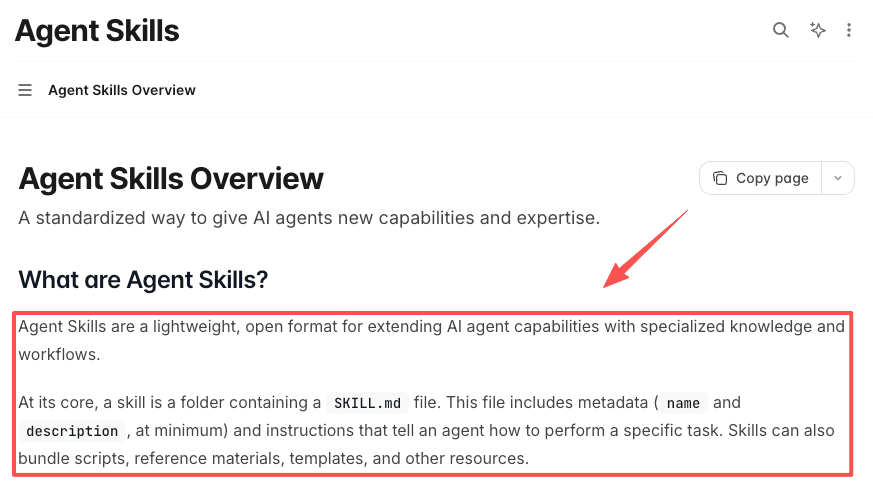
That "one level up" is the whole idea. Under the open Agent Skills format, a skill is just a folder with a SKILL.md file: instructions the agent loads when a task matches. A meta skill is the same kind of folder. The difference is that the task it matches is "deal with skills," not "deal with a spreadsheet."
What this proved: a meta skill is the same kind of folder as any other skill, just pointed at skills instead of spreadsheets. What it left unsolved: the name still collides with a famous company, which the next section clears up.
Why Meta Skills Are Not Meta the Company
This is worth saying plainly, because the name actively misleads. Search the term and part of your brain braces for a Meta announcement out of Menlo Park. There isn't one. The word "meta" is doing its normal English job: the prefix that means self-referential. Metadata is data about data. A meta skill is a skill about skills. No corporate connection.
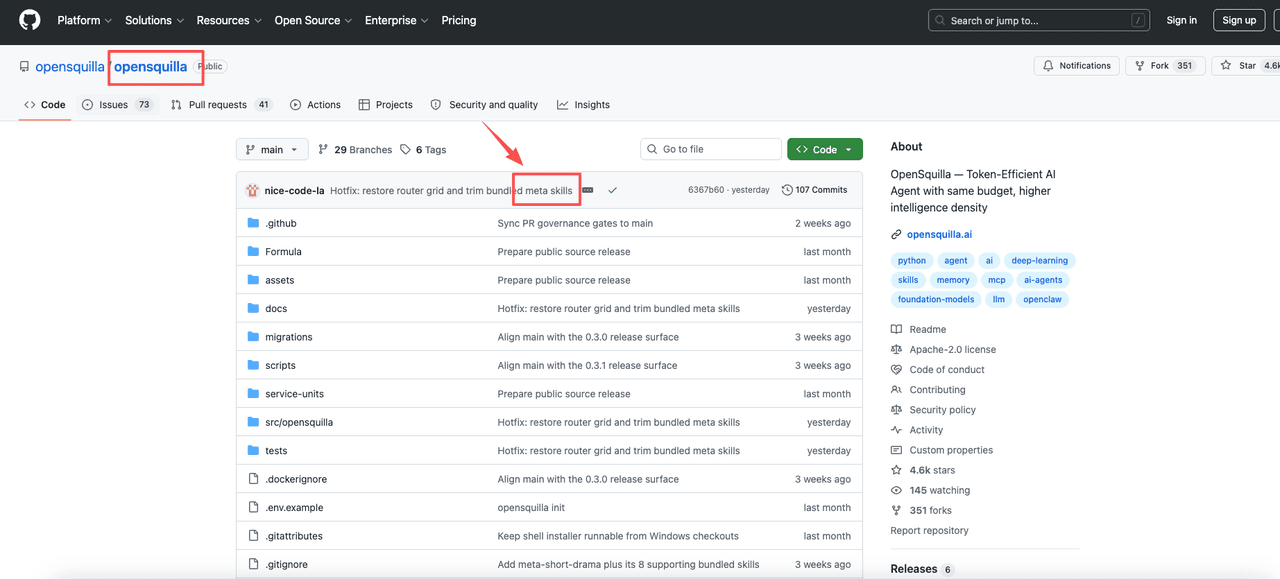
One more layer, because it tripped me up at first. Some tools ship a real feature literally named "MetaSkill." OpenSquilla, an open-source agent runtime, implements its own version of this pattern, where one skill can generate or modify others. The details are in its GitHub repository. That is one product's implementation of the idea, not what "meta skill" means in general, and still unrelated to Meta the company. So you have three things wearing one overloaded word: the general pattern, a vendor feature with that exact name, and a social media company connected to neither. This article is about the first.
What this proved: the "meta" here is the plain self-referential prefix, with one overloaded word covering a pattern, a vendor feature, and an unrelated company. What it left unsolved: what the pattern actually does day to day, which splits into three jobs.
What Meta Skills Do
Used loosely, the term points at one of three jobs. Splitting them apart is what made the topic stop feeling mushy to me.
Create skills
This is the clearest version. A skill creator is a skill that helps produce new skills. You describe a capability you want, and it scaffolds the SKILL.md file: the description, the trigger conditions, the structure. Anthropic's own documentation describes a skill-creator pattern inside its Agent Skills implementation, where a skill can scaffold new SKILL.md files from a plain-language description. If the underlying idea of a skill is still fuzzy, our explainer on what Claude Anthropic Skills are covers the base layer this builds on.
Route skills
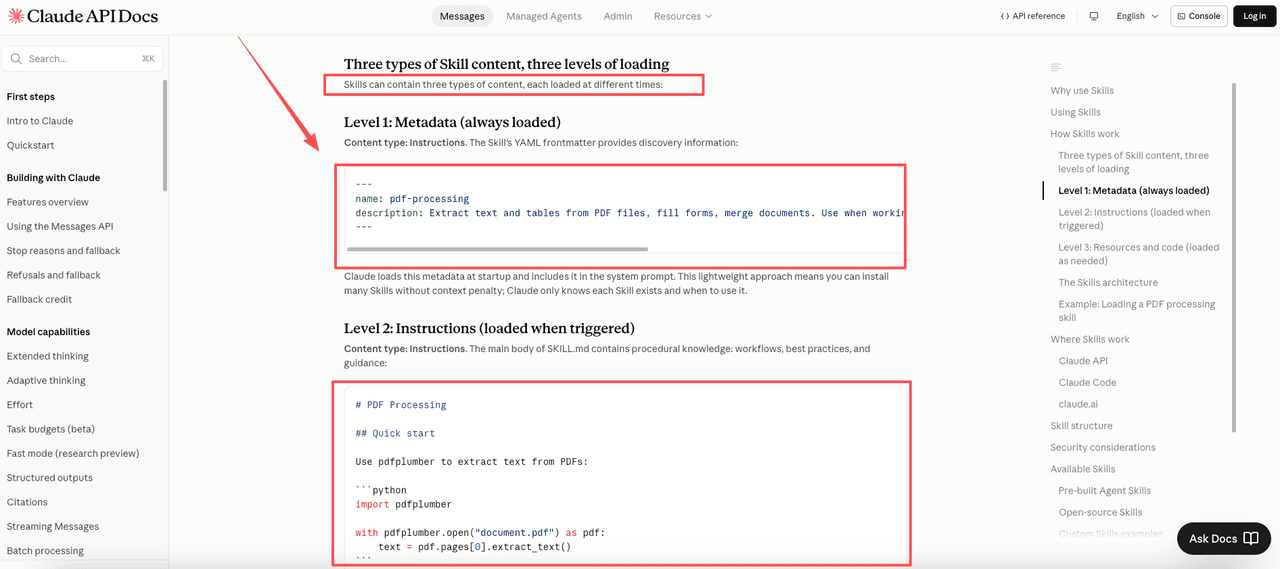
Routing is the quiet one, and probably the most useful day to day. Once an agent holds dozens of skills, the hard part isn't having the right one. It's picking it. A routing meta skill reads the task, decides which skill or combination fits, and arranges the order. With Claude agent skills this runs through progressive disclosure: the agent first sees only each skill's name and description, then loads the full instructions for whichever ones match. That selection logic is the meta layer, deciding what gets pulled into context and what stays out.
Improve skills
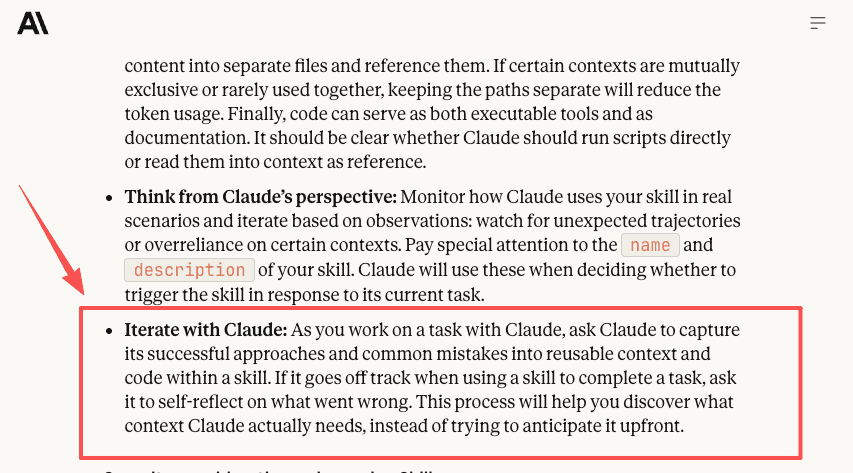
This is the job I'm most cautious about. The idea is a skill that watches how other skills perform and revises them: catching that a skill keeps failing on a format, then patching its instructions. Anthropic's engineering write-up on Agent Skills frames skill-building as iterative, you watch real runs and fix what breaks. A self-improving meta skill tries to automate that loop. Most "improvement" I've actually seen is still a human reading the logs and editing the file. The automated version exists in pieces, not as a solved thing.
What this proved: create, route, and improve are three distinct meta jobs, and only the first is fully solved today. What it left unsolved: how they line up over the life of a skill, which is easier to see as a sequence.
Skill Lifecycle for Agent Workflows
Line those three jobs up and you get a rough skill lifecycle: a skill gets created, it gets selected and run, its output gets reviewed, and sometimes it gets revised or retired. Meta skills are the operations that act at each of those stages instead of inside the task. Create sits at the front, routing in the middle, improvement at the end.
Why this matters for real work, not theory: the value only shows up past a certain scale. With five skills, you route them in your head and edit them by hand, and that beats building a layer to do it for you. The math flips when an agent accumulates enough skills, and enough recurring tasks, that hand-managing the library becomes its own chore. That's roughly the threshold where what an AI agent platform has to handle stops being prompting and starts being tool permissions, output formats, and fallback rules. The agent I use handles the create step through a plain-language conversation rather than a config file, which is where MoClaw's workflow automation fits into this picture for me. I haven't pushed the routing or self-improvement parts hard enough to report on, so I'm leaving those as "exists, not tested by me."
One honest caveat before the questions: a lot of meta-skill talk right now runs ahead of what's actually stable. The create step is real and usable. Routing is real and mostly invisible. The self-improving part is the one I'd treat as a direction, not a finished capability.
What this proved: meta skills act at the edges of a skill's life (create, route, improve, retire), not inside the task itself. What it left unsolved: whether you need any of this yet, which comes down to how many skills you are juggling.
FAQ
Are there real tools that implement meta skills, or is it just a concept?
Both. The concept is general: any skill that operates on other skills qualifies. Named implementations exist too. Anthropic ships a skill-creator inside its Agent Skills format, which scaffolds new SKILL.md files from a plain description. OpenSquilla has its own version of the pattern. And the routing logic built into Claude's progressive disclosure, where the agent selects which skills to load, is a meta operation even if nobody calls it by that name. The concept is older than the tools; the tools are the concept becoming concrete.
What happens to meta skills when the skill library gets very large?
The routing problem gets harder before anything else does. With dozens of skills, the agent has to decide what to load into context on each turn, and a bad routing call means the wrong skill fires or nothing fires at all. Progressive disclosure helps by keeping most skills out of context until they match, but the descriptions have to be precise enough that the right one actually matches. At a certain scale, a routing meta skill, one that reads the task and explicitly decides the order of operations, becomes less overhead than hand-tuning every skill's trigger description. That's roughly when the complexity earns its place.
Is a meta skill the same as a skill creator?
A skill creator is one type of meta skill, not the whole category. Creating skills is a meta operation, but so is routing between existing skills and improving them after the fact. So every skill creator is a meta skill, while plenty of meta skills do jobs that have nothing to do with authoring anything new, like deciding which skill runs next. For the OpenClaw registry itself, our ClawHub installation and review guide explains skills, plugins, installation, and review checks.
When do meta skills actually help?
Meta skills earn their place once an agent holds more skills than you can comfortably track by hand. Below that line, manual routing and editing beat the overhead of setting up a layer to do it for you. The useful question isn't whether the pattern sounds clever. It's whether your skill library has grown past the point where managing it manually costs more than it saves.
Meta Skills AI Is Worth Understanding When Your Skill Library Outgrows Manual Management
The term hides less mystery than its name suggests. Meta skills are a pattern, skills that create, route, or improve other skills, not a Meta product and not a single feature you switch on. If your agent runs a handful of skills, you don't need the concept yet. If it's collecting them faster than you can keep straight, this is the layer that decides whether that library stays useful or quietly turns into clutter. That's the line I'd watch. Where you sit on it is something only your own setup can tell you.
If the managing-by-hand part is what's starting to cost you, that's the gap a managed setup closes. Try MoClaw free and keep the skills you've already written running on a cloud computer that handles the create step in plain language, no config file required.
Continue Reading
More Guide
How to Build Claude Skills for Agent Workflows

Claude Skills for Marketing

HyperFrames Workflow: Video Rules as Skills

Skill Zoo: Reusable Agent Skills for AI Workflows

What Are AI Agent Skills? A Practical Guide

ChatGPT Codex: From Chat to Tasks
Field notes from the MoClaw team. We compare the agent stack we run in production against the alternatives we evaluated and dropped. Production stories with real numbers, not vendor decks.
Ready to put this into practice?
MoClaw runs browser tasks, research, and schedules automatically. Try it free.
References: Agent Skills: open skill format · OpenSquilla: open-source agent runtime · Claude: Agent Skills overview · Anthropic: Equipping agents for the real world with Agent Skills · Anthropic: open-source skills repository