Business Travel App vs AI Travel Agent Workflow

A business travel app owns policy, bookings, and expense records. An AI travel agent workflow owns research, email follow-up, and itinerary updates.
Table of Contents
A business travel app is usually best for fixed booking, policy, records, and expense handoff. An AI travel agent workflow is better for flexible research, email follow-up, itinerary updates, and review preparation before a person approves the trip.
Key Takeaways
- A business travel management app is strongest when the team needs policy rules, booking records, and expense handoff.
- An AI travel agent workflow is stronger when the work is messy: options, emails, itineraries, and review notes.
- Small teams should not treat AI as a payment, reimbursement, or compliance approval system.
- MoClaw fits the flexible cloud execution layer around research, documents, spreadsheets, and review trails.
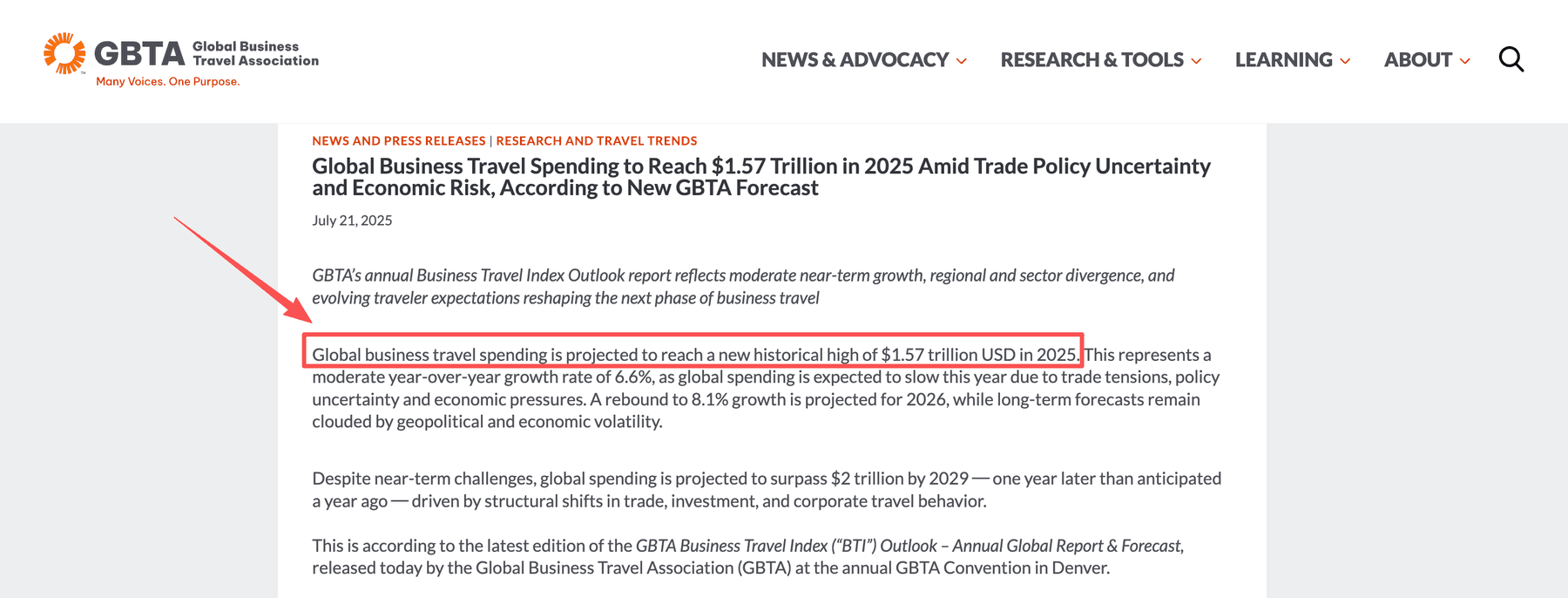
I started taking this distinction seriously after reviewing a small team trip where booking was not the hard part. The booking record itself was clean. The messy part was everything around it: one traveler changed arrival time, a client moved the meeting by two hours, the hotel confirmation did not clearly show late check-in, finance wanted the receipt attached, and the final itinerary needed a handoff note for the person covering support. Global business travel spending is projected to reach US $1.57 trillion in 2025, and the same GBTA report notes that 67% of business travelers use expense systems while 86% rate their trips as worthwhile.
Quick Difference: App vs Agent Workflow
A business travel app gives structure. It fits teams that need an approved place to book, store confirmations, align with policy, and prepare finance records.
An AI travel workflow gives flexibility. It helps when the question is still open: which route fits the schedule, what changed in the inbox, which hotel is close to the venue, and what still needs approval.
For a small consulting team, the app answers, "Where is the booking?" The workflow answers, "What changed, and who reviews it?"
Where a Business Travel App Works Best
A business travel app works best when the team needs consistency more than improvisation. If the same rules apply across employees or clients, a fixed app can reduce errors and give finance a cleaner trail.
Fixed structure can feel heavy for small teams. A three-person consultancy may not need an enterprise process to compare two flights and one hotel. But if travel is frequent, reimbursed, or policy-sensitive, a business travel management app can be the safer foundation.
Policy rules
Policy rules are where a business travel app has a natural advantage. A team can define cabin class, hotel limits, preferred vendors, approval thresholds, refundable fare requirements, and personal add-on rules.
AI can explain a policy or flag a possible exception, but it should not become the policy authority. If a traveler wants a more expensive flight to avoid a risky connection, the workflow can prepare the reason. A manager or finance owner should approve it.
Booking records
Booking records belong in a stable system. The team needs traveler names, dates, confirmation numbers, ticket status, hotel details, cancellation windows, and supplier contacts. These records should survive employee turnover.
Airfare also comes with details that affect later decisions. Travelers should understand fare restrictions, baggage fees, ticket changes, and third-party booking limits. For U.S. air travel, advertised fares must include mandatory taxes and fees, and ticket prices can change quickly when a team waits between research and approval.
Expense handoff
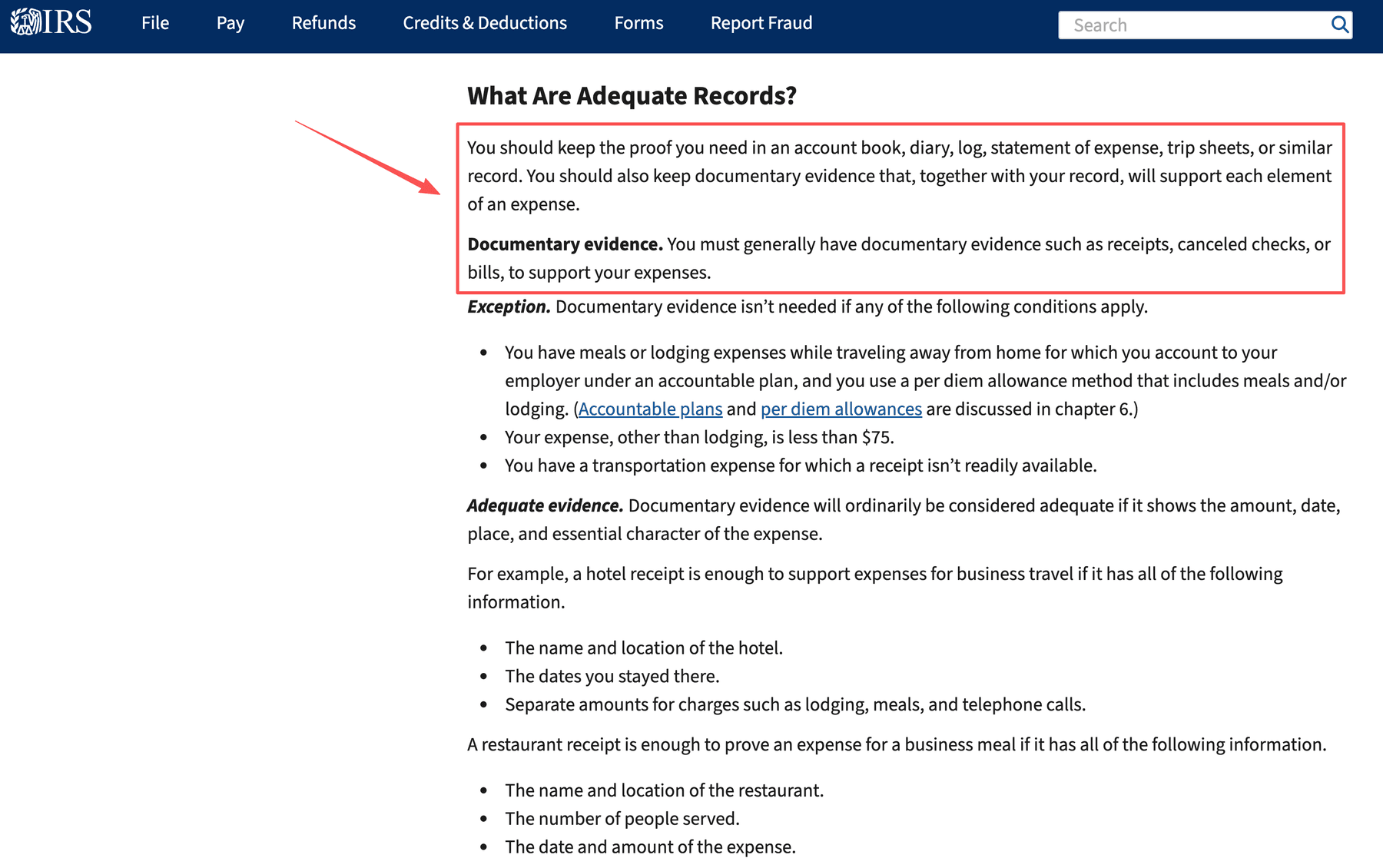
Expense handoff is another app-first area. Reimbursement needs amounts, dates, business purpose, receipts, and approval evidence. A business travel app or expense platform can preserve the official record better than a free-form AI chat.
For U.S. tax recordkeeping, business travel expenses need adequate records, and written records are more reliable than oral evidence alone. The final expense record should be structured, exportable, and business-owned.
Where an AI Travel Workflow Helps
An AI travel workflow helps when the trip is not ready to become a record yet. It can read messy inputs, compare options, draft updates, and prepare a decision packet. This is where travel workflow automation has value for small teams that do not want to rebuild the same brief every time.
The safest pattern is simple: let AI prepare, then let the responsible person approve. That keeps the workflow useful without giving it authority over payment, reimbursement, policy, or compliance.
Research and options
Research is where an AI travel agent can save time. It can compare airports, arrival windows, meeting locations, hotel proximity, ground transfers, and traveler preferences. It can also explain why the cheapest option may not be the best operational choice.
For example, I once used a workflow to compare three route options for a short client trip. The cheapest flight looked better at first because it saved about $120, but it landed after 10 p.m. at a further airport. Once I added the taxi time, hotel arrival risk, and the fact that the traveler had a 9 a.m. client meeting, the cheaper option stopped looking like the best option.
That was the useful part of the workflow. It did not just rank flights by fare. It showed why one option was cheaper, why another was safer, and which trade-off needed a manager's approval.
Email follow-up
Business travel often lives in email. A client changes a meeting time, a hotel sends a confirmation, or finance asks for a receipt. An AI workflow can draft replies, summarize threads, and identify missing details.
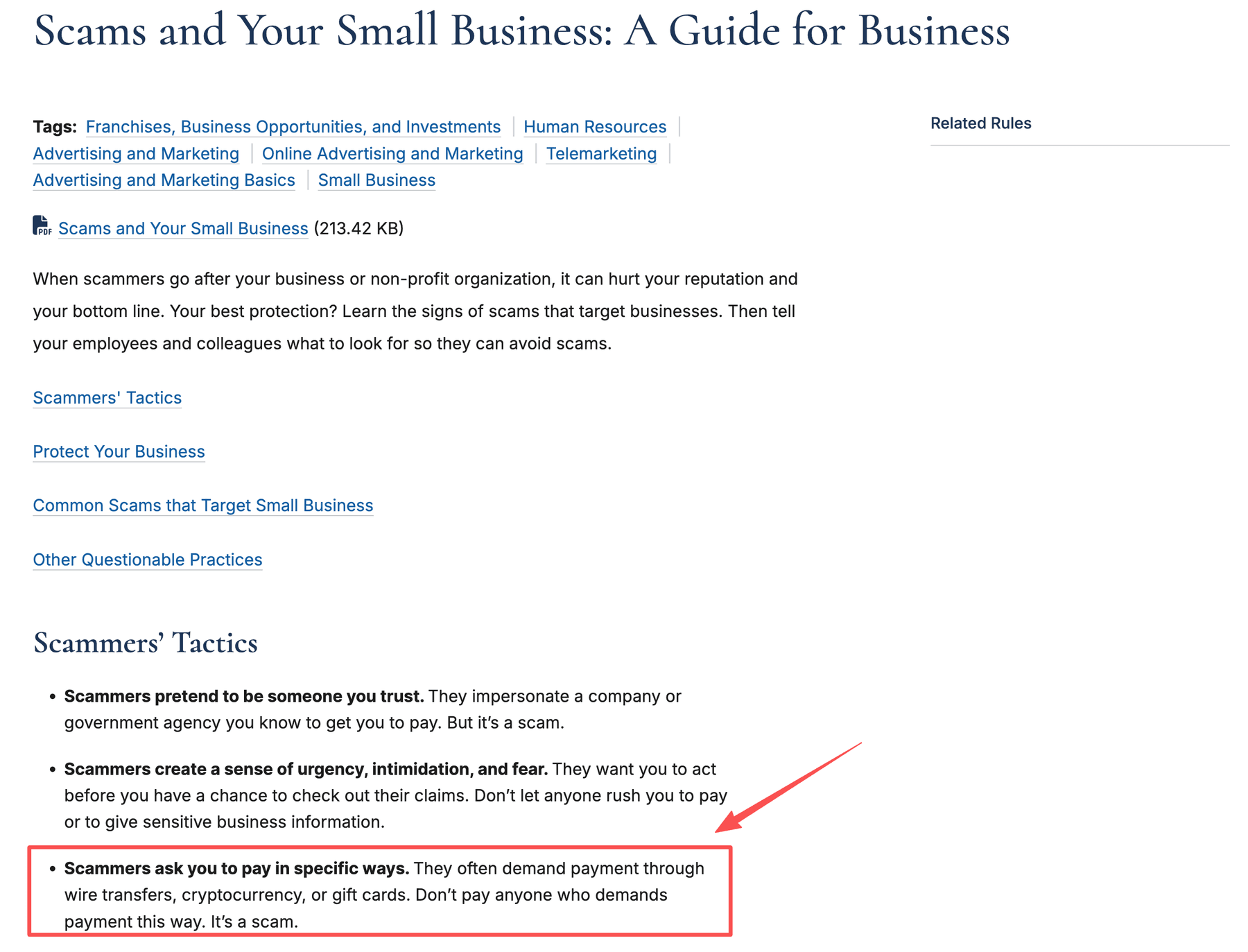
This does not mean it should send sensitive or binding messages on its own. If the email affects payment, cancellation, passenger details, or supplier commitments, a human should review it. Business scams often rely on urgency and fake payment pressure, especially when a vendor request involves wire transfers, cryptocurrency, or gift cards.
Itinerary updates
Itinerary updates are a good fit for AI because they are repetitive but detail-heavy. A workflow can update a shared itinerary, revise a spreadsheet, note changed arrival times, and prepare a traveler-facing summary.
The key is to separate formatting from verification. AI can make the itinerary readable. The owner still checks flight status, hotel rules, name spelling, visa needs, and refund windows on current supplier pages. Those windows are not always a matter of airline goodwill either: U.S. rules entitle a passenger to a refund when the airline cancels or significantly changes a flight and the traveler declines the alternative.
Decision Matrix for Small Teams
The choice is not "app or AI" in the abstract. The better question is which layer should own each job in the corporate travel workflow.
| Travel task | Better fit | Why it matters |
|---|---|---|
| Enforcing standard travel policy | Business travel app | Rules need consistency and manager approval paths. |
| Holding final booking records | Business travel app | Confirmations and supplier details need a durable system of record. |
| Preparing expense evidence | Business travel app | Finance needs receipts, amounts, dates, and business purpose. |
| Comparing early trip options | AI travel workflow | Requirements are still fluid and need explanation. |
| Drafting traveler or client emails | AI travel workflow | The work is repetitive, but final send should be reviewed. |
| Updating shared itineraries | AI travel workflow | AI can reformat and summarize changes quickly. |
| Approving payment or cancellation | Human owner | The business needs accountability before money or rights change. |
For a two-person consultancy, AI may handle planning while official records live in email, calendar, and accounting tools. For a 30-person team, the business travel app may be the core system, with AI handling research around it. The right design depends on risk, volume, and later accountability.
How MoClaw Fits This Workflow
MoClaw fits as a flexible cloud execution workflow around business travel work. It can prepare research, generate itinerary files, update spreadsheets, draft review notes, and preserve handoff context. It should not be positioned as a booking platform, payment processor, reimbursement system, HR policy engine, or compliance approval tool.
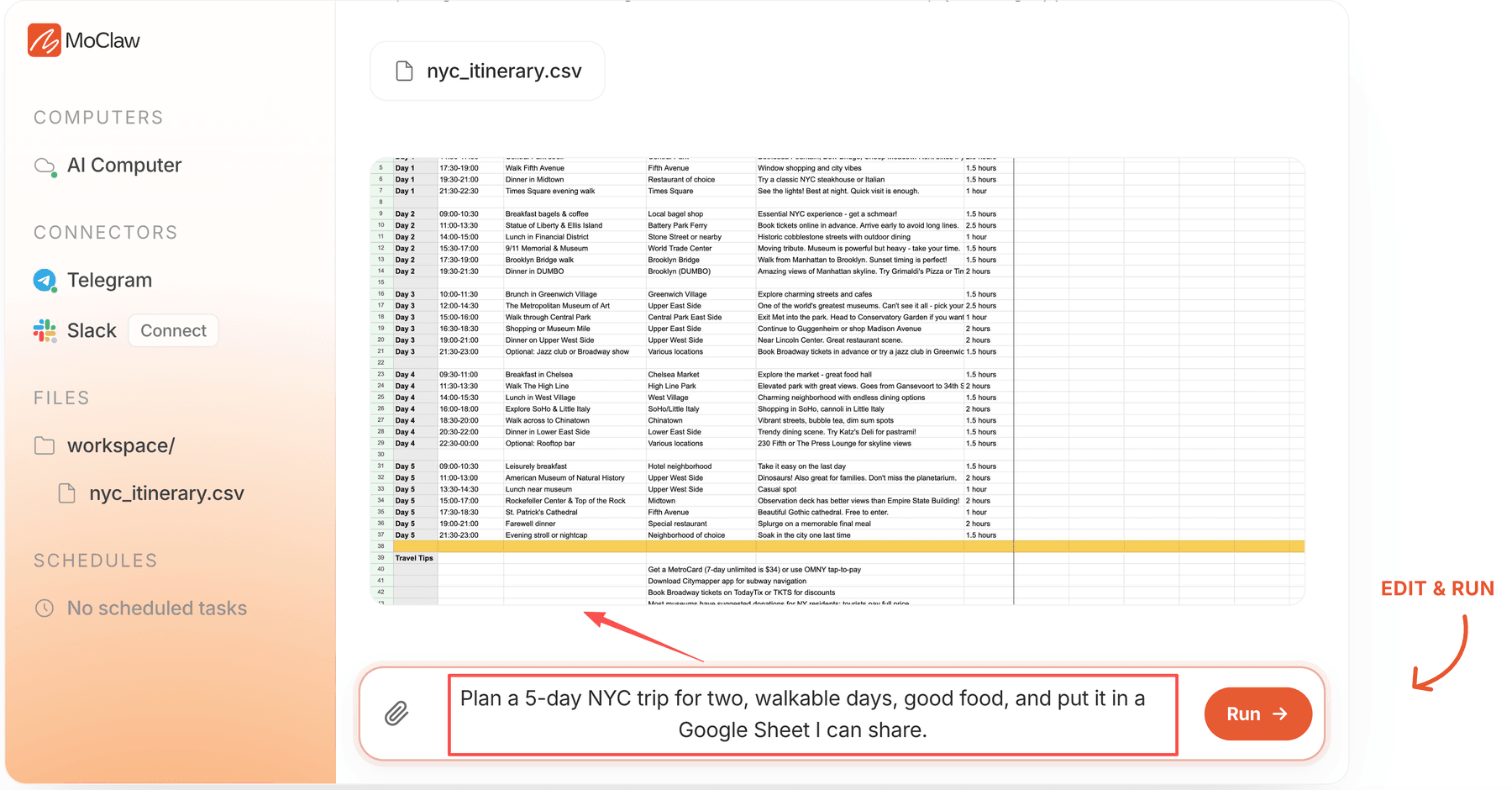
For travel-specific planning, MoClaw's AI travel itinerary generator with Google Sheets shows how a trip can become a structured spreadsheet instead of a loose chat answer. A related AI travel planning workflow for busy teams shows the boundary: the workflow can create files, while current prices, routes, and rules still need verification.
If a team works through email, sheets, and documents, MoClaw's Google Workspace integration is relevant for Gmail, Calendar, Docs, Sheets, Drive, and Tasks once permissions are approved. That makes MoClaw a working lawyer, not the legal record owner.
FAQ
Can an AI workflow work alongside a travel app?
Yes. The app can hold bookings, policy rules, and expense records while the AI workflow prepares research, email drafts, itinerary changes, and exception notes. The handoff should define which system is authoritative for bookings.
Who owns travel records after an employee leaves?
The company should own business travel records, not the departing employee's private inbox or personal AI account. Before access changes, export confirmations, receipts, approval notes, client commitments, and active itinerary changes into the approved record system.
What should be exported before switching tools?
Export traveler profiles where permitted, booking history, unused credits, open reimbursements, policy settings, approval records, vendor contacts, and recurring trip templates. Export rejected option notes if they explain an approved exception.
Can team travel rules be reused across workflows?
Yes, but the rules should be written as clear operating instructions, not only stored inside one app. Keep approval thresholds, preferred vendors, fare limits, record requirements, and exception rules in a versioned source humans and workflows can reference.
Business Travel App Decisions Need Flexible AI Workflows
A business travel app is the stronger home for policy, bookings, and expense records. An AI travel agent workflow is the better layer for research, email follow-up, itinerary changes, and review preparation. Small teams get the best result when fixed systems hold the official record and flexible workflows make the surrounding work easier to inspect.
Fact-check note: this comparison was written for MoClaw after reviewing business travel, airline ticketing, expense recordkeeping, and small-business fraud sources on August 11, 2026. This is workflow guidance, not procurement, tax, legal, booking, reimbursement, or compliance advice. MoClaw is described as a flexible cloud execution workflow, not as a replacement for formal travel, payment, expense, or approval systems.
Continue Reading
More Comparison
Travel Agency App vs AI Workflow for Clients

Free AI Agent: Where Each Free Tier Stops

AI Copilot vs AI Agent for Recurring Work

Grok 4.5 vs GPT-5.5 for Agent Tasks

Opus 5 vs Fable 5: Two Different Rankings

Opus 5 vs Kimi K3: A Tie, Then a Choice
The MoClaw editorial team writes about workflow automation, AI agents, and the tools we build. Default byline for industry overviews, listicles, and collaborative pieces.
Choosing between tools? Let MoClaw run the work.
Always-on AI assistant on its own cloud computer. No switching required, no setup.
References: GBTA: Global Business Travel Spending to Reach $1.57 Trillion in 2025 · U.S. DOT: Buying a Ticket · U.S. DOT: Refunds · IRS Publication 463: Travel, Gift, and Car Expenses · FTC: Scams and Your Small Business