Grok 4.5 for Research, Writing, and Data Analysis
Grok 4.5 for research, writing, and data analysis: staged source trails, a four-pass editing workflow, data cards, long-context limits, and review gates.

Table of Contents
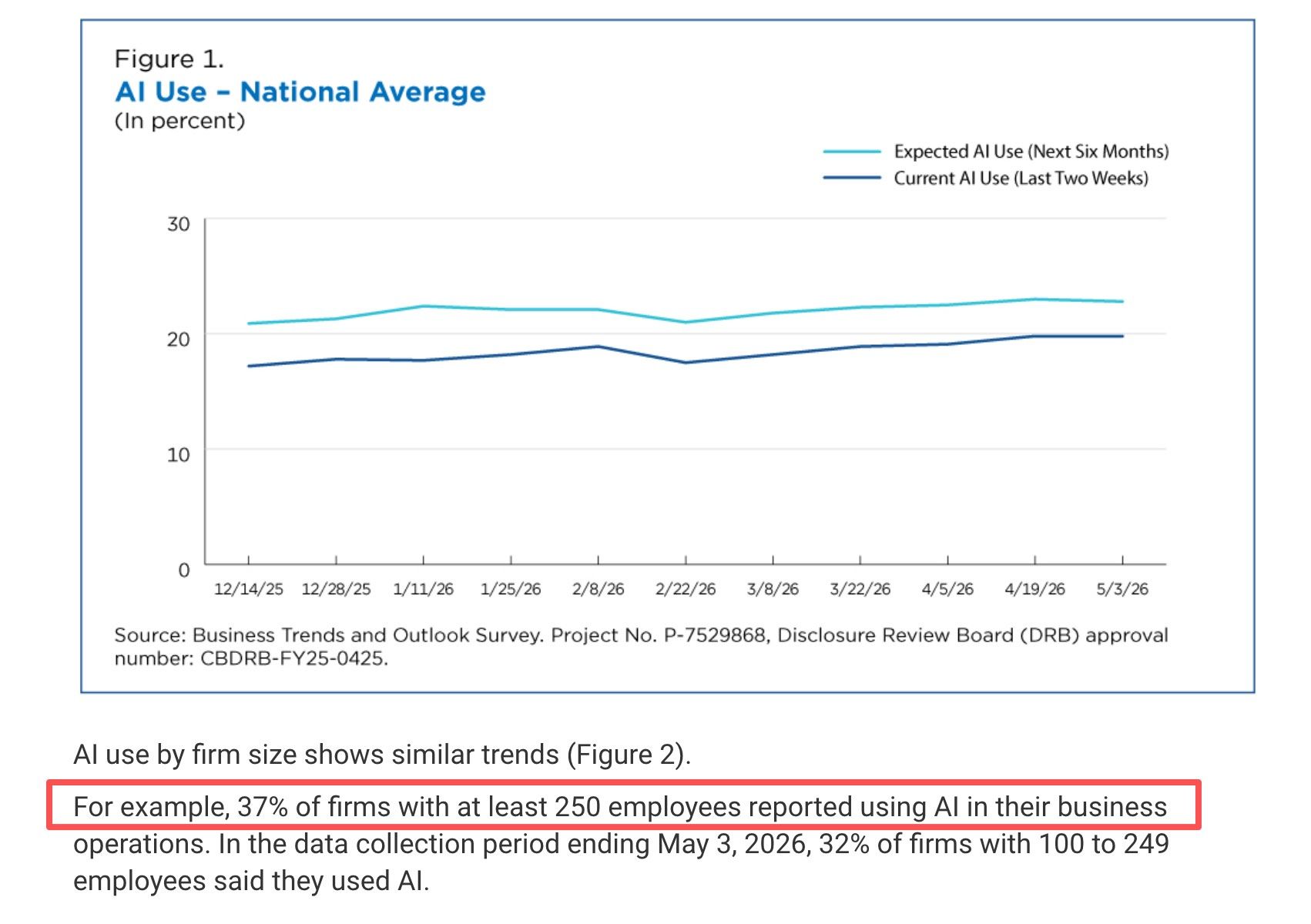
Grok 4.5 for research is best understood as a knowledge-work model for source synthesis, drafting, structured outputs, and data-assisted analysis, with human review still required before high-stakes decisions. The ceiling is lower than the launch coverage suggests: U.S. Census Bureau data put business AI use at 17% to 20% between December 2025 and May 2026, so the constraint for most teams is not model access but whether the workflow around the model can run the same way twice.
Key takeaways:
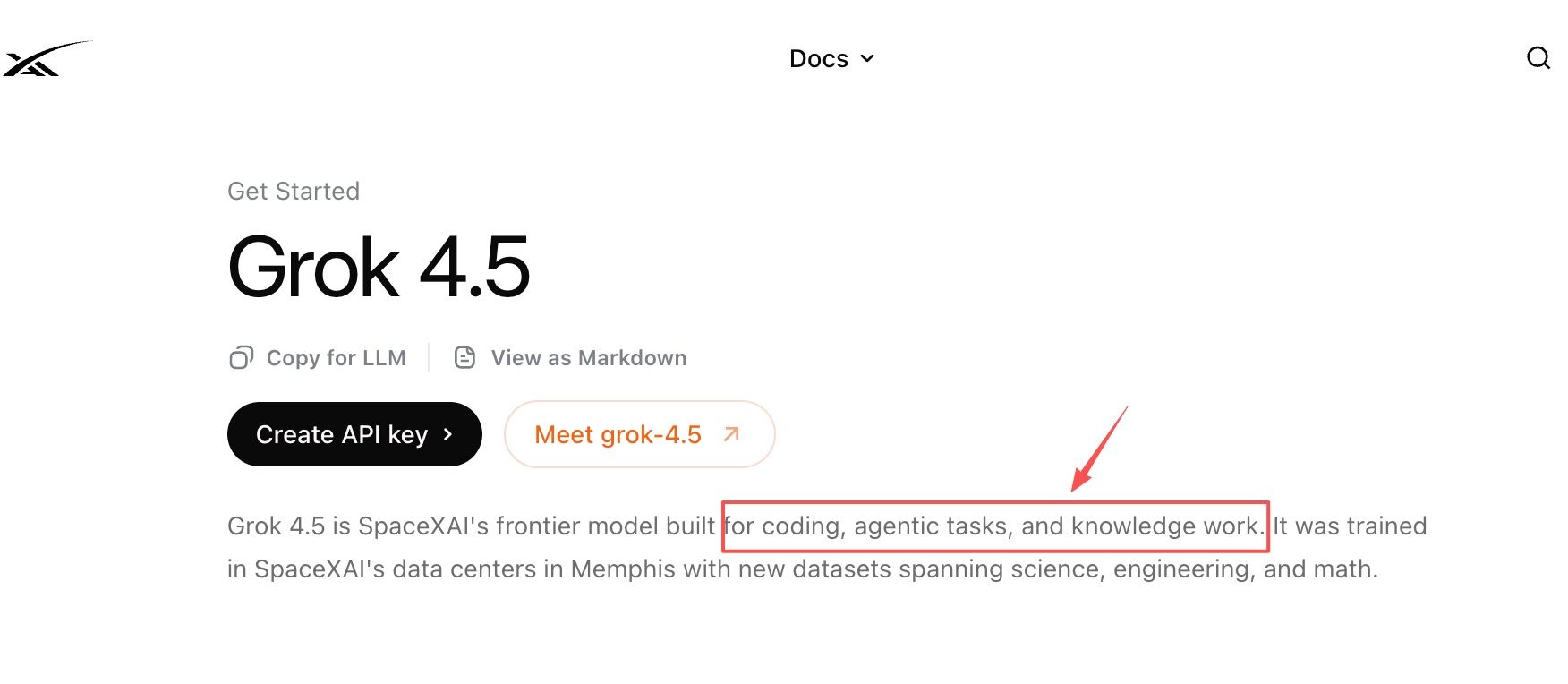
- Grok 4.5 is positioned for coding, agentic tasks, and knowledge work, with text and image input, 500K context, structured outputs, reasoning, and tool use.
- Research workflows should preserve source trails, conflicts, dates checked, and unsupported claims.
- Grok 4.5 writing workflows are strongest when they separate structure, style, factual claims, and reviewer notes.
- Grok 4.5 data analysis should be treated as assisted exploration unless numbers, formulas, and assumptions are checked.
- Legal, financial, medical, compliance, and contractual outputs should remain reviewed by qualified people.
I used to build competitor briefs by pasting tabs into chat, fighting stale numbers, changing formats, and producing outputs that looked confident but did not preserve enough evidence. A good Grok workflow should not just produce a nicer paragraph. It should leave a trail: which sources were checked, what changed, which claims are supported, and what still needs a human decision.
Knowledge Work Capabilities to Verify
Grok 4.5 is not only a chat model. SpaceXAI (formerly xAI) positions Grok 4.5 for coding, agentic tasks, and knowledge work, with grok-4.5 as the API model name, reasoning effort controls, function calling, web search, X search, and code execution. The model detail page adds the numbers that matter for source-heavy work: a 500K token context window and image input alongside text. If you have not settled on which door you use to reach it, the access paths are mapped in our guide to how to use Grok.
That official feature set matters because knowledge work often fails in the middle layer. A model may be good at reading, writing, and summarizing, but the workflow breaks when it loses source attribution, mixes old and new evidence, or treats analysis as a final recommendation.
The hidden mechanism is context authority. Grok 4.5's large context window allows larger source inputs, but more context does not automatically mean better evidence. This is a measured failure mode, not a hunch: a widely cited study found language models use long contexts unevenly, with accuracy dropping when the relevant passage sits in the middle rather than near the start or end. That paper tested earlier models and every generation since has pushed the ceiling higher, so treat it as a reason to check placement, not as a fixed limit on Grok 4.5. Long context can also bury the current instruction, mix stale material with fresh sources, and make review harder if the output does not show where each claim came from.
Use a small test before production:
| Test packet | What to measure |
|---|---|
| 5 source URLs | citation retention and source freshness |
| 1 prior report | whether stale assumptions are marked |
| 1 spreadsheet | formula and column interpretation |
| 1 draft memo | style consistency and factual changes |
| 2 reviewer passes | whether notes stay separate from final prose |
Resolved: Grok 4.5 has the technical surface for research, writing, and data analysis workflows. Unresolved: your team's source quality, review process, account tools, and data policies decide whether the output is safe to use.
Research Workflow Patterns
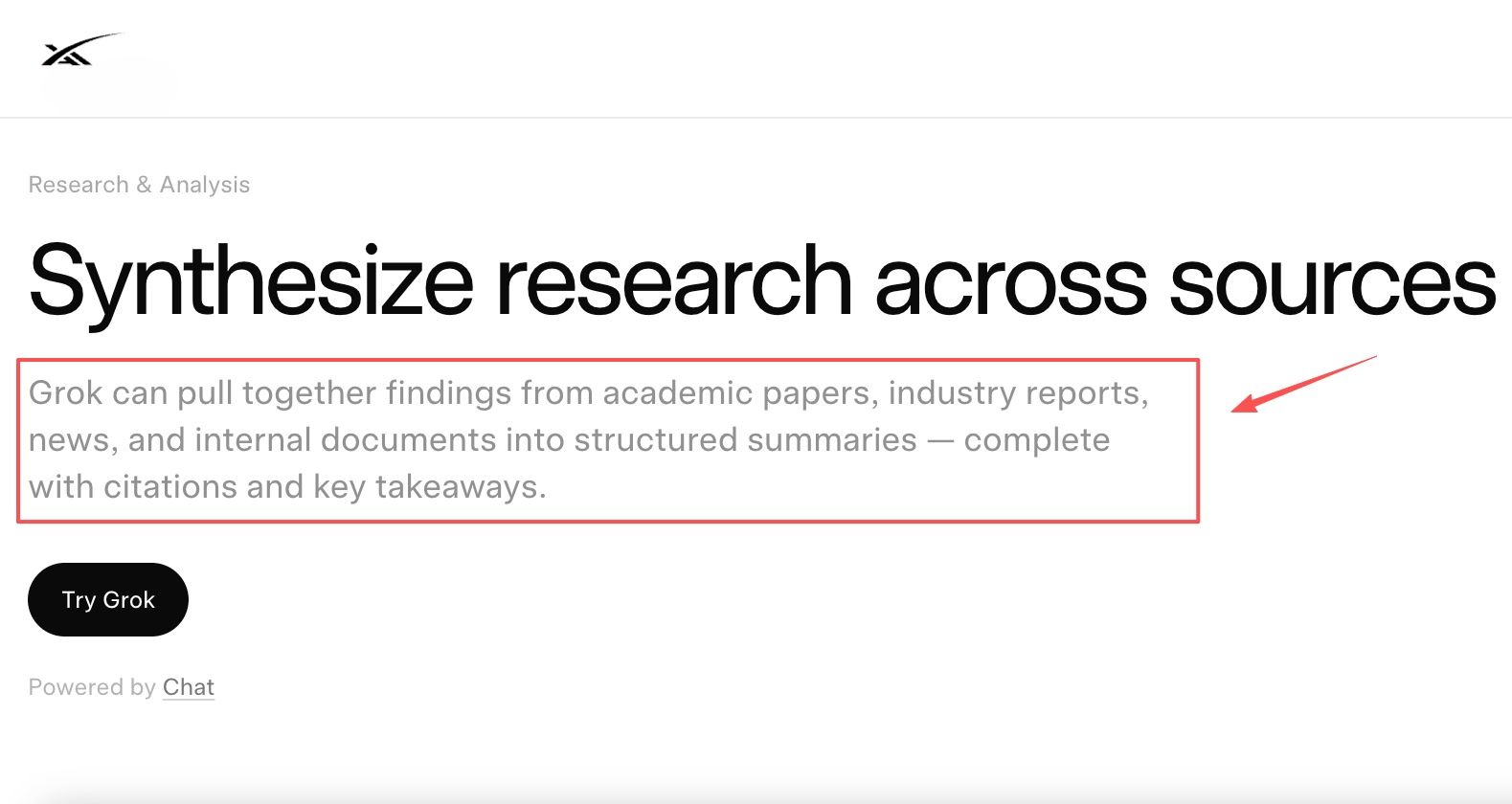
A strong AI research workflow starts with a research question, approved source list, source age rule, output format, and unknown section. Grok can help synthesize across sources, and SpaceXAI frames research synthesis around structured summaries with citations, key claims, supporting evidence, and source attribution.
The workflow should not be "ask Grok for the answer." It should be staged:
| Stage | Output |
|---|---|
| Source inventory | URLs, files, dates checked, access issues |
| Claim extraction | claim, source, confidence, conflict |
| Synthesis | themes, differences, unknowns |
| Review draft | final brief plus reviewer notes |
A realistic example: for a weekly competitor brief, I would give Grok five pricing pages, last week's summary, and a spreadsheet of prior packaging notes. The task is not to "summarize competitors." The task is to identify confirmed changes, preserve URLs, compare against last week, and flag anything that changed without enough evidence.
The public adoption data explains why this workflow layer matters, and it splits sharply by company size. In the same Census release, 37% of firms with at least 250 employees reported using AI, against 32% of firms with 100 to 249 employees in the collection period ending May 3, 2026. Bigger teams are further in, which is exactly where an unrepeatable research process starts to cost real money. The bottleneck shifts from access to repeatability: can the research process run the same way next week, by a different person?
Resolved: Grok 4.5 can support source-heavy research drafts. Unresolved: source permissions, freshness, and citation review still need human ownership.
Writing and Editing Patterns
Grok 4.5 writing works best when the team separates four jobs: structure, style, facts, and approval. Mixing those jobs into one prompt makes drafts look finished before they are safe.
For grok 4.5 writing, use a four-pass workflow:
| Pass | Ask Grok to do | Human check |
|---|---|---|
| Structure | organize rough notes | missing sections |
| Style | tighten voice and flow | tone and audience |
| Fact review | list claims needing proof | source support |
| Final draft | prepare publishable version | owner approval |
This is where many teams lose quality. A model can improve flow while changing the meaning of a commitment. It can make a product note sound clearer while making a promise the team did not approve. For client-facing writing, the reviewer should check names, dates, prices, legal implications, claims, and tone.
For example, if I give Grok a 2,000-word launch memo, I do not ask for a final rewrite first. I ask it to create a section map, then tighten language, then list claims that require evidence. Only after that do I ask for a clean draft. That extra pass often catches the difference between "we plan to support this" and "we support this."
Resolved: Grok 4.5 can reduce drafting and editing friction. Unresolved: final meaning, approved commitments, regulated claims, and brand voice still belong to a person.
Data Analysis Patterns
Grok 4.5 data analysis should be framed as assisted exploration, not automatic truth. The model can help explain columns, write transformations, generate structured summaries, reason over files, and use code execution where available. But the workflow must preserve assumptions, source rows, formulas, and reviewer notes.
A safe analysis workflow starts with a data card:
| Field | Example |
|---|---|
| Dataset owner | RevOps |
| Date range | Q2 2026 |
| Row count | 12,400 |
| Known gaps | missing region on 4% of rows |
| Approved use | internal trend review |
| Not approved | financial guidance or legal advice |
That data card matters more than the prompt. Without it, the model may explain patterns that come from missing fields, duplicates, or a changed export format.
A practical analysis task might be: "Review this campaign export, identify three traffic changes, show source columns, flag missing data, and draft a summary for the marketing lead." That is useful. It is not the same as asking Grok to decide budget allocation, tax treatment, medical risk, or legal compliance.
Resolved: Grok 4.5 can help turn messy datasets into explainable drafts, tables, and next-step questions. Unresolved: statistical validity, domain interpretation, sensitive data handling, and final decisions require specialist review when stakes are high.
High-Stakes Work Requires Review
High-stakes work is where the model should slow down. If Grok is used for legal, financial, medical, insurance, hiring, security, compliance, or contractual workflows, treat any output as a claim to verify, not advice to follow.
NIST's AI Risk Management Framework emphasizes govern, map, measure, and manage as a lifecycle approach to AI risk. For Grok 4.5 knowledge work, that translates into simple operating rules: define what the model can read, what it can draft, what it cannot decide, who reviews the output, and what record is archived.
A high-stakes review gate should trigger when the workflow includes personal data, confidential datasets, payment decisions, legal wording, medical interpretation, financial forecasts, security findings, or external publication. In those cases, ask Grok to prepare evidence and options, then route the final decision to the accountable human.
The review gate is also where model choice stops being cosmetic. If your source packets routinely run past a couple of hundred thousand tokens, the cost and context behaviour of the model you picked starts to dominate the workflow, which is the comparison we ran in Grok 4.5 vs Claude.
Resolved: review gates can make Grok workflows safer and more useful. Unresolved: the correct reviewer depends on the domain, data class, and business impact.
Chaining Workflows in MoClaw
MoClaw fits as an adjacent execution layer when Grok 4.5 knowledge work becomes recurring. It is not xAI, not Grok, and not a replacement model. The fit is workflow continuity: research sources, browser tasks, files, logs, schedules, handoff, and review.
For recurring research, MoClaw's AI research assistant is relevant because ongoing briefs need source lists, repeatable checks, and reviewable outputs. For broader chained work, MoClaw's AI workflow automation frames browser work, files, reports, logs, and scheduled delivery as one workflow rather than separate prompts.
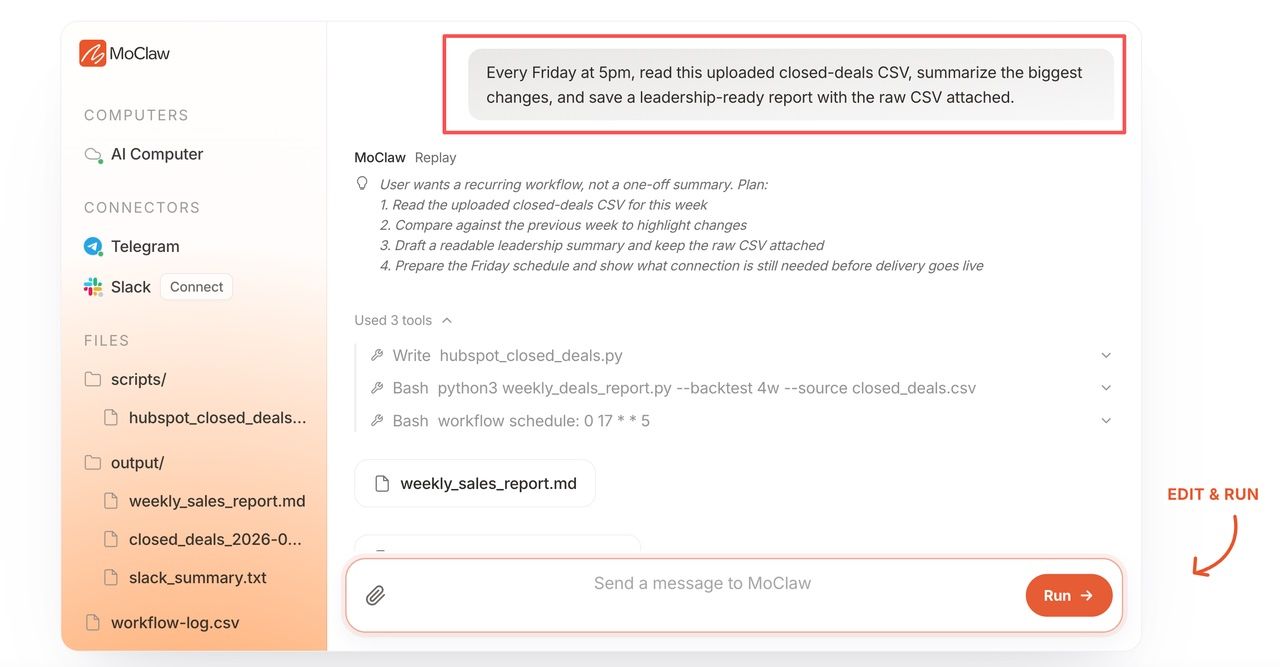
A chained workflow might look like this: monitor five sources, collect changes, ask Grok 4.5 to synthesize the research, draft a memo, create a data table, and send the package for human review. The model helps with reasoning and drafting. The workflow layer preserves the task record.
Resolved: MoClaw is useful when knowledge work repeats and needs execution records. Unresolved: model selection, source permissions, and final approval still need team policy.
FAQ
What source trail should a research workflow preserve?
Preserve source URL or file name, date checked, author or publisher if available, claim supported, conflicting source, and reviewer note. Keep the source trail separate from the prose so a future model or reviewer can re-check claims without rebuilding the task.
Can drafts keep separate reviewer notes?
Yes. Keep reviewer notes outside the final prose, either in comments, a separate review table, or a task record. Notes should identify factual concerns, tone concerns, missing evidence, and final approval status. Do not let the model silently merge reviewer notes into publishable copy.
How should teams handle confidential datasets?
Use the minimum dataset needed, mask personal or sensitive fields, record the approved purpose, and restrict exports. If the dataset includes customer records, employee data, financial details, health information, or contractual material, require a domain owner before model use.
When should analysis move to a specialist tool?
Move to a specialist tool when the task needs statistical testing, governed BI dashboards, database lineage, reproducible code, regulated calculations, or domain-specific validation. Grok can help explore and summarize, but specialist tools should own audited analysis.
Grok 4.5 for Research Works Best With Evidence, Not Just Output
Grok 4.5 for research, writing, and data analysis is strongest when teams design the workflow around evidence. Use Grok 4.5 long context to hold useful materials, not to hide review complexity. Ask for source trails, supported claims, unknowns, data assumptions, and reviewer notes. The model can move knowledge work faster, but the durable workflow is still source, draft, analyze, review, and archive.
Editor's note: Model capabilities, context window, tool availability, and knowledge-work positioning claims were checked against SpaceXAI documentation and public listings on August 3, 2026. API access, pricing tiers, Office add-in availability, and regional behavior move quickly, so re-check the linked sources before a production rollout.
Continue Reading
More Guide
What Is Agent-Reach? Free Eyes for AI Agents

Grok 4.5 PowerPoint Plugin, Explained

Grok Office Add-ins for Excel & Word
Agent Harness: What the Term Actually Means

AI ROI Measurement Framework for AI Agents

Why Claude Switched Models to Opus 4.8
The MoClaw editorial team writes about workflow automation, AI agents, and the tools we build. Default byline for industry overviews, listicles, and collaborative pieces.
Ready to put this into practice?
MoClaw runs browser tasks, research, and schedules automatically. Try it free.
References: SpaceXAI Docs: Grok 4.5 · SpaceXAI Docs: Models, context window and pricing · SpaceXAI: Synthesize research across sources · U.S. Census Bureau: AI Use at U.S. Businesses · NIST AI Risk Management Framework: Core · Liu et al.: Lost in the Middle, How Language Models Use Long Contexts