Agent Harness: What the Term Actually Means

An agent harness is the runtime that turns a model into an agent. What the term means, how it differs from a framework, and which 2026 projects use it.
Table of Contents
An agent harness is the software wrapped around a language model that turns its output into action: the loop that runs tools, the code that manages the context window, the memory that survives a restart, and the permission layer that decides what the model is allowed to touch. The model reasons. The harness does everything else.
That definition is roughly what Databricks, LangChain and Salesforce all published within a few months of each other in 2026, which tells you something about how fast the word travelled. A year ago nobody outside a handful of eval teams used it. Now it's in repo descriptions.
Key Takeaways:
- A harness is the runtime around a model: tool execution, context management, memory, permissions, and the stopping condition.
- The word is not standardized. Three popular 2026 projects use it to mean three different layers of the stack.
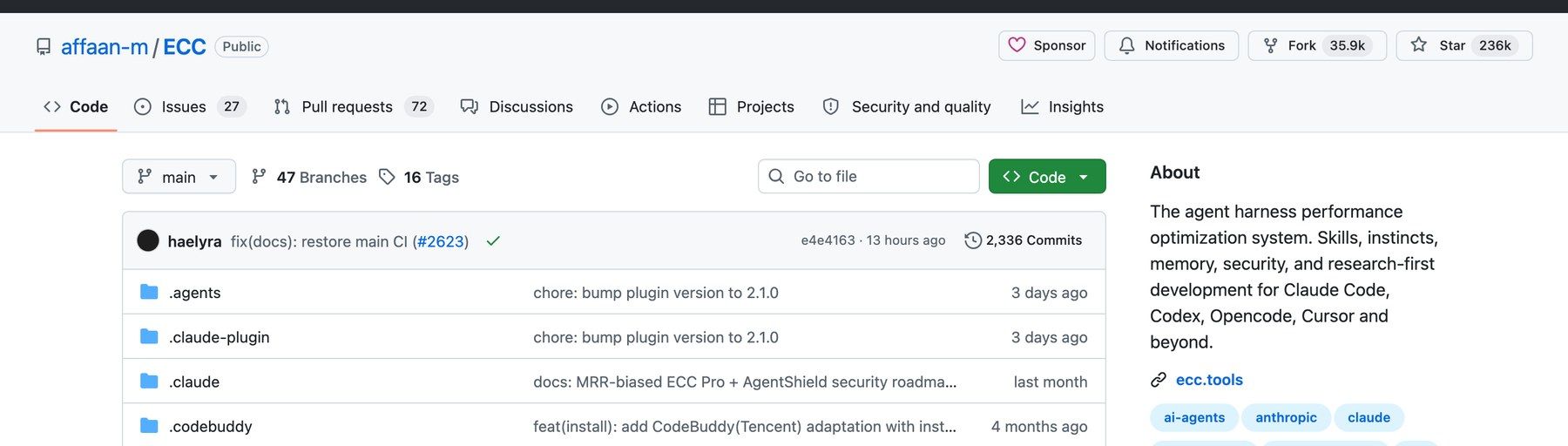
- ECC (235,813 stars as of July 30, 2026) uses "harness" to mean Claude Code or Codex itself, and positions itself as a layer that tunes them.
- PenguinHarness uses it the other way round: the harness is the thing you install and run.
- If you're picking between building one and renting one, the deciding factor is usually who operates the memory and the sandbox, not what the loop looks like.
What an agent harness actually is
Here's the definition worth quoting: an agent harness is the execution layer between a language model and the outside world. It runs the model's tool calls, decides what stays in the context window, persists state across sessions, and enforces what the model may and may not do.
Strip the harness away and a model is a text function. It has no memory of the last five steps, no way to run the code it just wrote, and no mechanism for checking whether any of it worked. Every practical agent product you've used is a model plus a harness, and most of the difference in quality between two products running the same model comes from the harness half.
The reason the word caught on is that the industry needed a name for the part that isn't the model. "Agent framework" was already taken by the library layer. "Agent" refers to the whole thing. Harness filled the gap in the middle.
Why "harness" took over developer vocabulary in 2026
Track the term through actual repositories and you can watch it converge. All figures below are from the GitHub API on July 30, 2026.
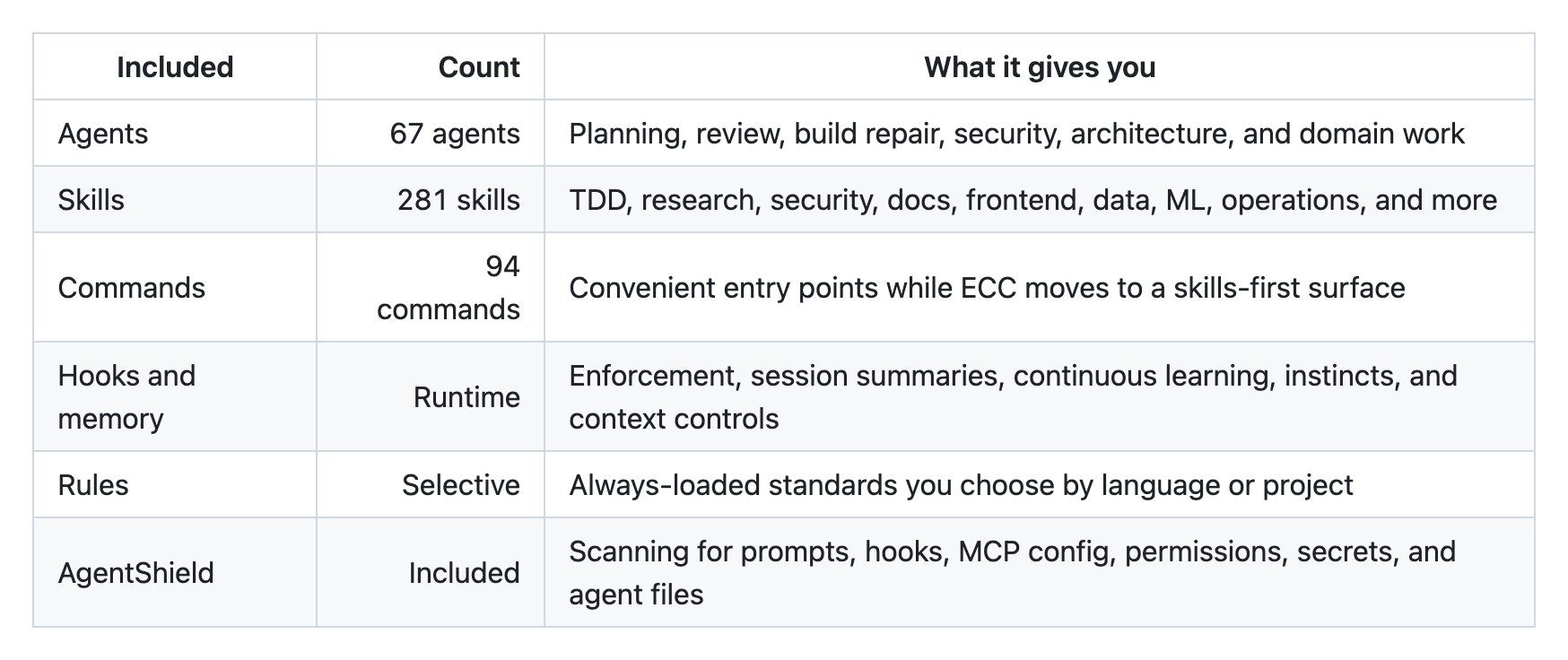
ECC (affaan-m/ECC) is the biggest single carrier. Its one-line description reads "The agent harness performance optimization system." The repo's own changelog dates the shift: the v1.8.0 release in March 2026 is titled "Harness Performance System" and is the point where the project stopped calling itself a config pack. By the June 2026 v2.0.0 release the framing had hardened into "The Agent Harness Operating System." It sits at 235,813 stars and 35,894 forks, MIT licensed, and ships 67 agents, 281 skills and 94 command shims.
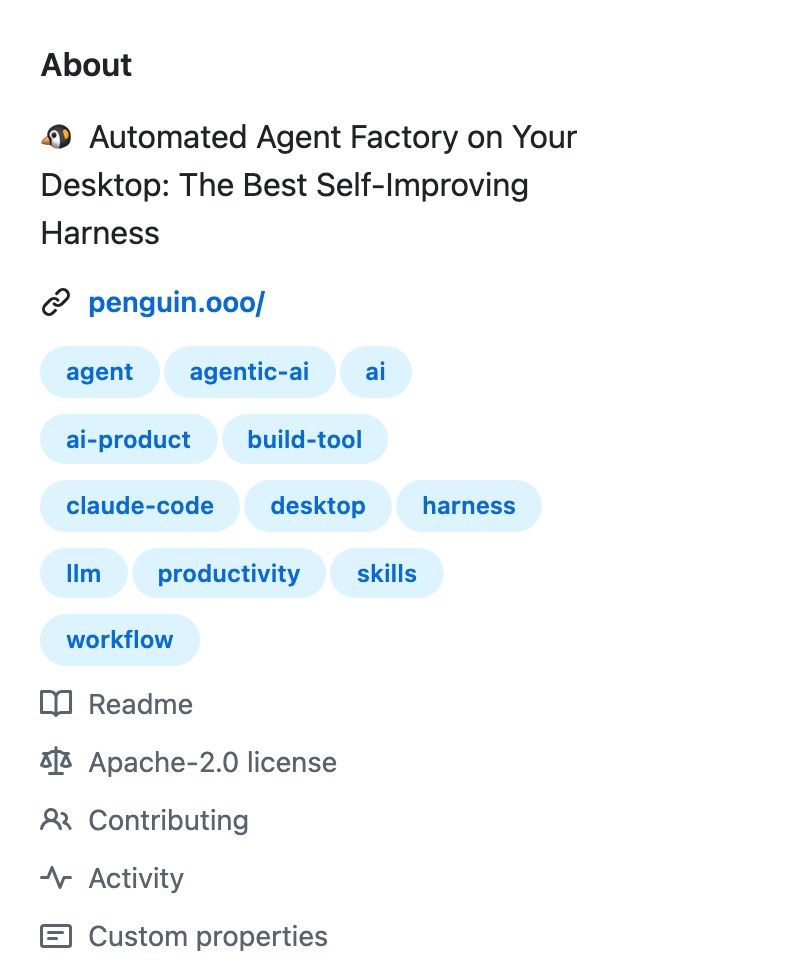
PenguinHarness (Prism-Shadow/penguin-harness) put the word in its name. Created July 19, 2026, Apache-2.0, 218 stars, and written by Yaowei Zheng, who also wrote LlamaFactory. It carries harness as a literal GitHub topic. Its pitch is that agents build agents: the README claims a full retrieval app generated for $0.02 of DeepSeek V4 Pro tokens, and best-in-class data-analysis accuracy at 1/70 of Claude Code's cost. Those are the project's own benchmark numbers, published without an independent replication, and the roadmap still lists "public release of the benchmark suite" as unchecked.
impeccable (pbakaus/impeccable) is the one that shows the term has escaped the agent-tooling niche entirely. It's a design language, 52,740 stars, and its description is "The design language that makes your AI harness better at design." Not a harness. It assumes you have one.
Even Alibaba's open-code-review tags itself with harness. When a Go CLI for reading git diffs reaches for the word, the word has arrived.
The vendor entry changes the stakes. Microsoft shipped an Agent Harness at BUILD on June 3, 2026, defining it in the Agent Framework announcement as "the layer where model reasoning meets real execution: shell and filesystem access, human-in-the-loop approval flows, and context management across long-running sessions." Read as prose that matches the community usage almost exactly. Read as software it does not, because the thing being named is a pair of methods: .AsHarnessAgent() in .NET and create_harness_agent() in Python, which convert a chat client into one. So in the community the word points at a category, and in Microsoft's SDK it points at a constructor. That gap is the single best illustration of why the term still slips.
Harness vs. framework vs. agent: what sits where
Most explainers go circular at exactly this point, so here's the split that holds up.
| Layer | What it is | You interact with it by | Examples |
|---|---|---|---|
| Model | Weights that turn tokens into tokens | Sending a request | Claude Opus 5, Kimi K3, DeepSeek V4 |
| Harness | The runtime that executes what the model decides | Running it, or using a product built on one | Claude Code, Codex, Cursor, PenguinHarness |
| Framework | A library for assembling your own harness | Importing it and writing code | LangGraph, CrewAI |
| Agent | A harness plus a model plus a task | Giving it a job | Whatever you deployed last week |
The framework and the harness are the pair people mix up, and the difference is direction. A framework hands you parts and expects you to assemble the loop; a harness is the assembled loop, already running. CrewAI is something you build with. Claude Code is something you use. Both sit at the same altitude in the stack, which is why the vocabulary keeps colliding.
There's a second collision, and it's the reason "harness" reads as ambiguous even to people who understand the concept. ECC and PenguinHarness use the word in opposite directions. ECC's docs say "install ECC once per harness" and list Claude Code, Codex, Cursor, OpenCode, Gemini, Zed and Copilot as the harnesses. So for ECC, a harness is a coding agent you already have, and ECC is the layer on top. PenguinHarness reverses it: the harness is the product, and the models plug into it. Neither is wrong. But if you're reading two repos in one afternoon, that's why the word feels slippery.
The parts of a harness, borrowed from ECC's own breakdown
ECC publishes a table separating the concepts it manages, and it's the most useful decomposition I've found in a README. It is ECC's taxonomy, not an industry standard, and nobody has ratified it:
| Part | What it does | Context behavior |
|---|---|---|
| Skills | Reusable workflows: TDD, security review, deep research | Loaded only when the task calls for one |
| Agents | Scoped workers with their own context and tool permissions | Isolate planning from implementation from review |
| Rules | Durable project or language standards | Always loaded, so install them selectively |
| Hooks | Scripts fired on harness events | Run outside the model's context entirely |
| Instincts | Patterns learned from real sessions, with confidence scores | Recalled when relevant |
Instincts are the interesting row, because that's the part that has no equivalent in a framework. ECC caps how many learned instincts get injected at session start (the default is six) and has commands to import, export, prune and cluster them into skills. You can argue about whether confidence-scored heuristics are memory or configuration. What's hard to argue is that a library you pip install doesn't do this, and a harness has to.
Note what's missing from every version of this list: the sandbox. Permission scoping and file-system isolation are usually the harness's least glamorous and most load-bearing job, and they're the part hardest to bolt on afterwards.
People have also started reviewing the harness itself, not just the diffs it produces. Better Harness from the Qoder team is a slash-command plugin (MIT, roughly 1,280 stars as of July 31, 2026) that grades your AI coding workflow against a five-dimension Agent Work Loop: Task Understanding, Controlled Execution, Change Validation, Reliable Delivery, and Learning Capture. Install varies by host (/plugin marketplace add QoderAI/better-harness on Claude Code; Codex, Cursor, and Qoder each have their own path), then /better-harness builds an evidence-backed HTML report. The framing mirrors Martin Fowler's feedforward and feedback split: AGENTS.md, specs, and skills up front; tests, hooks, and review after. Missing evidence stays explicit instead of becoming a fake score. The same hook subsystem that Better Harness treats as a feedback sensor is also where security tools like Numbat attach for pre-action detection.
Above the harness: what multi-agent orchestration adds
Once the harness layer settled, a second layer started appearing on top of it, and the 2026 crop takes four routes that don't solve the same problem.
Voting and synthesis. agents-council (173 stars, MIT, created July 20, 2026) is a skill that shells out to the AI CLIs you already have installed. Members run in parallel, then a Chairman synthesizes. Its selling point is billing: because it drives claude, codex and gemini as subprocesses rather than calling their APIs, the cost lands on subscriptions you already pay for. The catch is in its own README, which notes response time equals the slowest member.
Scale. Ailin's Collective Intelligence engine (160 stars, AGPL-3.0) indexes 76,636 models across roughly 90 provider integrations and coordinates them through 32 registered strategies. It reports 97% accuracy against 68 to 82% for frontier flagships. Treat that as vendor-reported; the project's own documentation carries per-layer status badges distinguishing what ships today from what's on the roadmap, which is more honest than most and also a signal to check which layer any given number came from.
Runtime and traces. AxisAgentic (523 stars, Apache-2.0, Python 3.12+) isn't competing with either. It's a long-horizon runtime that writes an append-only trace of every run, so the same record supports replay, evaluation, and export of training trajectories. Their benchmark figure comes with an unusually candid warning that baseline values were collected under different harnesses, tools and judges, so it should be read as a comparison rather than a ranking.
When does any of this beat one well-configured agent? Narrowly. Multi-agent helps when the failure mode is a blind spot rather than a capability gap, which is why review and verification are its best-fitting jobs. It also multiplies spend: asking three CLIs one question costs three full context reads, and the synthesis pass adds a fourth. Nobody advertises that arithmetic, and for most single-threaded coding work, a better prompt and a tighter tool set beat a council.
Multiplayer agent harnesses: qm
qm from yc-software adds an axis the projects above do not have. Created July 29, 2026, it describes itself as "a multiplayer agent harness for work," running in Slack and on the web. Its growth is the steepest in this article: it sat at 200 stars on the evening of July 31, added roughly 2,700 over the next twelve hours, and reached 7,976 by August 3, 2026. The design assumption is a company rather than a developer. Every person and every room gets its own scoped memory, files, keychain view, permissions, crons, and durable sandbox, so colleagues each customize the same deployment without stepping on each other and still work with it together in a shared channel. It is MIT licensed, TypeScript on Node, and keeps sessions and memory in Postgres. Its security model is one org-wide posture that narrower scopes may only tighten, with a predeclared policy for destructive commands that holds even in the most permissive setting.
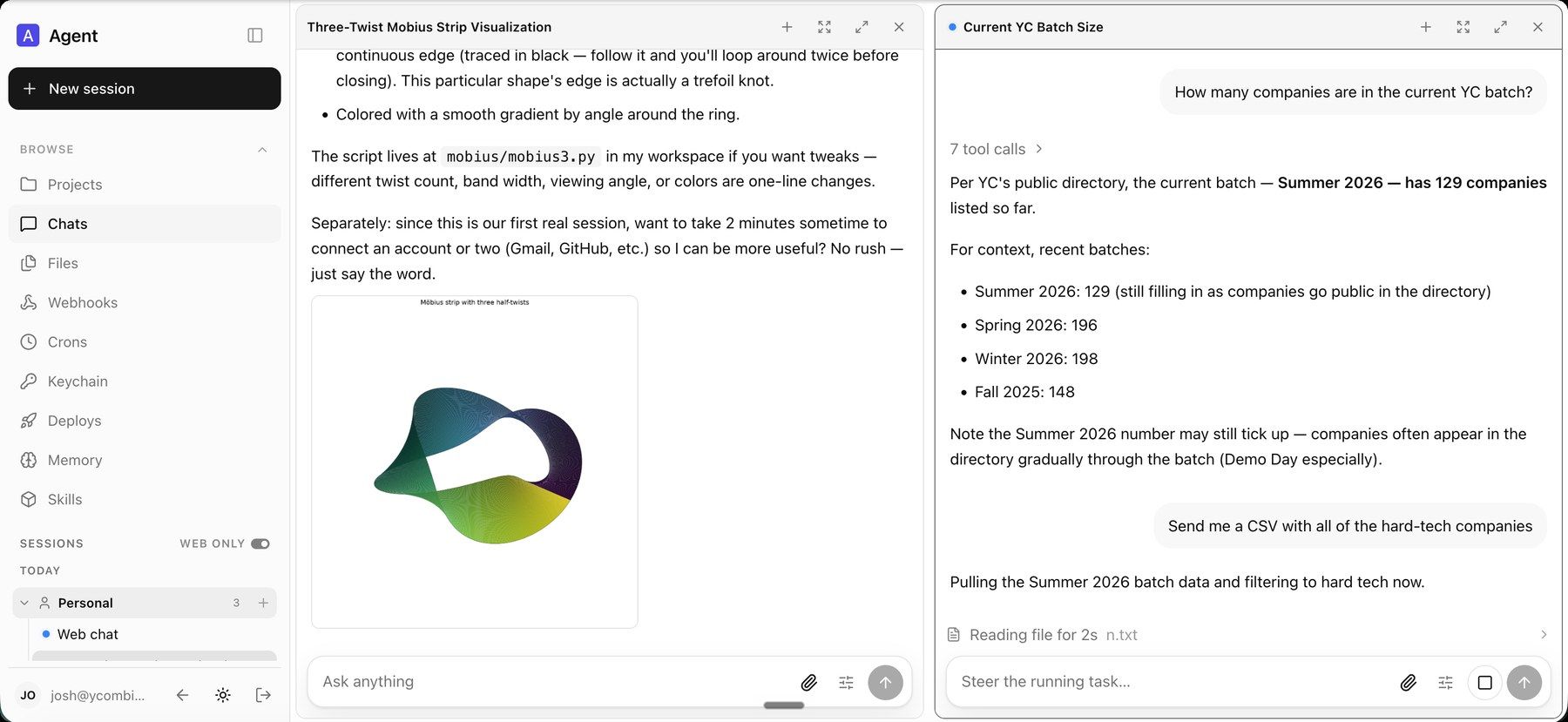
That is a different dimension from the orchestration projects above, and the two are easy to conflate. agents-council and Collective Intelligence scale the number of agents working on one person's question. qm scales the number of people sharing one agent deployment. You can want either without wanting the other, and multi-agent orchestration only answers the first.
qm also pulls the vocabulary in a third direction, which is worth recording because this article has now watched it happen twice already. Its README tells you to "pick your own harness and model," naming Pi, OpenCode, Codex and Claude Code as the harnesses that drive its core, while its own one-line description calls qm itself a harness. So qm is a harness that hosts harnesses. ECC treats the harness as the thing underneath it, PenguinHarness treats the harness as the product, and qm manages both readings in the same README.
Running the whole office locally. munder-difflin (2,118 stars, MIT, created 31 May 2026, at v0.4.4 and self-labelled a working prototype) is the desktop-app answer. It wraps the coding CLIs you already have installed, ten of them including Claude Code, Codex, Antigravity, Grok, Kimi Code, Qwen, OpenCode, Crush, pi.dev and GitHub Copilot CLI, then coordinates them as agents that message, route and remember, drawn as avatars moving around a shared office floor in Electron and Pixi.js. Like agents-council it runs on the subscriptions you already pay for and their hourly limits rather than API credits, which is the recurring economic argument in this whole layer. Its cost is the opposite of a library's: an Electron app with node-pty and a live floor plan is a lot of surface for something whose own README calls it a prototype, and a 247-fork, single-maintainer project is a bet on one person's attention. Worth noting that the GitHub API reports its licence as NOASSERTION; the LICENSE file in the repository is plain MIT.
The layer that calls itself a meta-harness: Ruflo
The vocabulary took another turn in August 2026 when ruvnet/claude-flow renamed itself Ruflo and began describing itself as "the original agent meta-harness." At roughly 69,000 stars it is the largest project in this article by an order of magnitude, and the claim is a positioning one: it does not want to be a harness, it wants to be the thing that coordinates several of them. Claude Code and Codex are named as native targets rather than competitors.
What that means in practice is a router, a swarm coordinator, memory that survives sessions, a hooks system that intercepts your normal Claude Code activity, and a daemon holding it together. The CLI install path advertises 98 agents and an MCP server; the README elsewhere reassures newcomers they "don't need to learn 314 MCP tools or 26 CLI commands," which is a fair summary of the surface area involved.
Two things are worth knowing before the name confuses you. The rename is not finished below the surface: the npm scope is still @claude-flow/*, the directory it writes into your project is still .claude-flow/, and several commands in the current README still say npx claude-flow@latest. And it ships fast enough that two versions, 3.38.17 and 3.38.18, were deprecated within a day after a publish race corrupted the dependency graph. We took the whole naming map apart in what changed when Claude Flow became Ruflo.
So the tier list now reads: model, harness, and something above the harness that claims the coordination job. Whether "meta-harness" survives as a word is a different question from whether the layer exists. The layer clearly does.
What a harness is worth, measured
Most of the harness argument is made by assertion. A paper published August 4, 2026 tries to put a number on it instead: LongHorizon-Harness from Alibaba's AMAP group, released the same day as AMAP-ML/LongHorizon-Harness on GitHub under MIT, at 287 stars two days later.
The setup is the useful part. Same model, same execution backend, only the harness changes. Everything the model contributes is held constant, so whatever moves is attributable to the layer this article is about.
It splits the work across three roles rather than letting one growing context own everything. A manager holds the original goal, verified progress and the next step. An executor starts each round with a fresh context and one clearly defined task. An auditor independently inspects files, interfaces, logs and tests in the real environment. Only results that survive that independent check enter persistent state, so a failed action or a refreshed context costs you the current round rather than the run.
Against Claude Code as the baseline, the reported gains:
| Benchmark | Metric | Claude Code | LongHorizon-Harness |
|---|---|---|---|
| WeaveBench (114 tasks) | Pass rate | 51.8 | 80.7 |
| OSWorld 2.0 (108 tasks) | Binary success | 2.8 | 8.3 |
| Terminal-Bench 2.1 | Success rate | 69.7 | 77.2 |
The Terminal-Bench improvement came with 24% fewer tokens, which is the counterintuitive result worth sitting with. Three roles and an audit pass sound like they should cost more context, not less; they cost less because a fresh executor context doesn't carry the accumulated debris of everything that already went wrong.
Read the numbers as harness numbers, not model numbers. That's the whole design of the comparison, and it's also the limit of what it proves: it says a better harness beats a worse harness on the same model, not that any particular harness will hold up on your work.
Do you need to build one?
Build a harness if the loop itself is your product, or if the models you run need to reach systems that can't leave your network. That's a real category and it's small.
For everyone else, the honest test is operational rather than architectural. The tool loop is a weekend. What isn't a weekend: session state that survives a process restart, credentials that don't leak into a log, a sandbox with an actual boundary, and someone who fixes it at 3am when a provider changes their streaming format. Teams that skip past this usually discover it during the second incident, not the first.
Renting the harness means those problems belong to someone else. Zentor runs a hosted agent with persistent memory, its own execution sandbox, and messaging channels already wired up, so the part you configure is the task rather than the runtime. It won't teach you what a harness is. It will save you from operating one.
What's still unsettled about the term
Three things, and they'll probably stay open through 2027.
The scope boundary is unresolved. Whether a harness includes the multi-agent orchestrator sitting on top of it, or stops at the single-agent loop, currently depends on who's writing. ECC's "operating system" framing pulls the orchestrator inside. AxisAgentic's runtime framing keeps them separate.
There's no benchmark for harness quality. Every number quoted above comes from the project publishing it, measured on its own suite. PenguinHarness has an unreleased benchmark; Alibaba's code-review tool ran the most rigorous evaluation of the group and it only covers code review. Comparing two harnesses on the same model is still guesswork.
Two forces are pulling the word in opposite directions at once, which is the part nobody has written up. Community usage keeps widening it toward generality. When a design language and a git-diff CLI both tag themselves harness, the term is on its way to meaning "AI tooling," which is what happened to "agent" in 2024. If that finishes, expect the precise meaning to migrate to a newer word. Microsoft is pulling the other way, narrowing it onto a specific constructor in a specific SDK. Vendor naming usually wins that kind of contest, so the likeliest 2027 outcome is a word that means one concrete thing inside the Microsoft stack and something looser everywhere else.
FAQ
Is an agent harness the same as an agent framework?
No. A framework is a library you import to build your own loop, like LangGraph or CrewAI. A harness is a loop that's already built and running, like Claude Code or Codex. You write code with a framework; you run a harness. The confusion is fair, because both live at the same layer of the stack, and a framework's job is to help you produce a harness.
Do I need a harness to run a single agent?
Yes, even for one agent. Anything that executes tool calls, keeps conversation state, and decides when to stop is a harness, whether or not you call it one. A 100-line Python while-loop around an API call qualifies. The question is never whether you have a harness; it's whether you wrote it or installed it.
Is "harness" an official term?
No standards body defines it. It came out of evaluation work, where a "harness" was the scaffolding that let you run a model against a benchmark, and it spread into agent tooling from there. Databricks, LangChain and Salesforce all published definitions in 2026 that broadly agree on the runtime meaning, but the boundaries differ between them.
What's the difference between a harness and an agent?
The agent is the harness plus a model plus a job. Swap Claude for Kimi K3 inside the same harness and you have a different agent with identical plumbing. That substitutability is exactly why the industry needed a separate word for the plumbing.
Does the model or the harness matter more for agent quality?
Both, at different points. On easy tasks a strong model covers for a weak harness. On long tasks the harness dominates, because context management, recovery from a failed tool call, and memory across sessions decide whether the run finishes at all. AxisAgentic's whole design premise is that long-horizon reliability lives in the runtime, not the weights.
Last updated: August 3, 2026. The qm figures were verified against the GitHub API and an archived snapshot of its repository page on that date; all earlier star counts, licenses and creation dates were verified July 30, 2026. This page gets a new entry under "Why 'harness' took over" whenever another notable project adopts the term, rather than a new article.
If you're mapping the rest of this vocabulary, what the Fable method is covers the prompting-side term that moved on a similar curve, and the best Claude skills covers the skills layer that most harnesses now expose.
Continue Reading
More Guide
OpenAI Models in Cursor: What Happens Nov 12

Manus AI Pricing: What 4,000 Credits Buys

8 Ways to Cut Your AI Agent Bill
Content Creation Workflow: Brief to Publish
Rune IDE: Keyboard-Driven and Agent-Optional

Browser Use Life Recorder: A Local Audio Diary
The Zentor editorial team writes about workflow automation, AI agents, and the tools we build. Default byline for industry overviews, listicles, and collaborative pieces.
Ready to put this into practice?
MoClaw runs browser tasks, research, and schedules automatically. Try it free.