Best Claude Skills to Install in 2026

The best Claude skills to install right now, ranked by momentum and kept current: video-shotcraft, text-to-cad, i-have-adhd, design-judge-skills, and more.
Table of Contents
The best Claude skills worth installing right now lean hard in one direction: agents that make video. This list ranks them by momentum, meaning how fast each skill is actually gaining adoption, and it is dated and re-checked as the ecosystem moves, because a best-of list that quietly went stale is worse than no list at all.
Here is a number that shows how far the ecosystem has moved. The agency-agents roster has drawn more than 146,000 GitHub stars, and as of early July it installs its agents into Claude Code, Codex, and Cursor from a signed desktop app. A year ago a "skill" was a text file you copied into a folder. Now it has its own installer.
Key Takeaways:
- Video is the standout category: three separate skills for cinematic product clips, footage governance, and hand-drawn shorts landed in the same window.
- The two largest by raw stars are i-have-adhd (a ten-rule output-control skill) at 21,686 and diagram-design (28 editorial diagram types) at 21,146. diagram-design is the momentum story: it added more than 10,000 stars in the five days to August 18.
- Skills now install across agents. Most of these skills run in both Claude Code and Codex, and some in Cursor.
- Every entry flags what the skill is bad at, not just what it is good at, and every number is a dated snapshot that drifts, so verify before you rely on it.
How We Rank the Best Claude Skills
All star counts, fork counts, licences and last-push dates on this page were pulled from the GitHub API on August 18, 2026. Where a number moved since our previous check, we say by how much, because on a list ranked by momentum the direction matters more than the total.
Star counts were re-checked against the GitHub API on August 18, 2026 for every repository linked below. Figures for skills without a public repository link are carried from the July 24 edition and may lag.
Most "best Claude skills" lists rank by total stars and never get updated, so the same mature repos win forever and the list slowly rots. We rank by momentum, meaning how fast a skill is gaining attention relative to how long it has existed, and we re-check the list as things change. A two-week-old skill adding two hundred stars tells you more about where builders are heading than a settled repo coasting on a large old total.
That choice has one honest cost. Momentum data is noisy, and star counts are a snapshot taken on August 18, 2026. Treat every number here as approximate, and reconfirm on the day you install anything. One more caveat before the list: installing a skill runs someone else's code, so it is worth reviewing what a third-party skill can touch before you add one you do not know. With that said, here is what moved.
What this section settles: you are reading a current, curated list of the best Claude skills ranked by real momentum, not a stale star-count.
Where to Find Claude Skills on GitHub
Search claude skills github and you land on repositories, not on a ranked list, which is a different job from the one this page does. Four places are worth knowing, in descending order of authority.
The official repository. Anthropic publishes anthropics/skills, created on 2025-09-22 and carrying 168,438 stars as of August 12, 2026 despite shipping no application code. Inside are 17 worked examples in skills/, the Agent Skills specification in spec/, and a single SKILL.md scaffold in template/. Licensing is the part worth reading carefully: there is no LICENSE file at the repository root, so GitHub's API reports no licence at all, while the README places many of the skills under Apache 2.0 and describes the four document skills — docx, pdf, pptx, xlsx — as source-available rather than open source. The answer to "what licence is this" is per-folder, not repo-wide. We break the repository down in Claude Anthropic Skills, Explained. It also registers as a Claude Code plugin marketplace with /plugin marketplace add anthropics/skills.
Curated indexes. awesome-claude-skills sits at 72,335 stars, and alirezarezvani/claude-skills at 24,328 stars under MIT, describing itself as 345 skills alongside 30-plus agents and 70-plus custom commands. Both are useful for breadth. Neither vets what it lists — an index tells you a skill exists, not whether it works or what it does to your machine.
Vendor repositories. nvidia/skills is the pattern here: 2,867 stars, Apache 2.0, skills scoped to one company's product line rather than to general use. Expect more of these.
Topic pages. github.com/topics/claude-skills sorts by recency rather than popularity, which surfaces what shipped this week instead of what won last quarter.
The gap between those four and this page is vetting. A star count records how many people bookmarked a repository, not how many ran it twice, and installing a skill means handing an agent a file of instructions it will follow — which is why we cover what to read before you install in our third-party skill permissions review.
Ecosystem News: The Skills Layer Grew Its Own Tooling
Four things happened around the skills themselves, not just inside them.
First, agency-agents shipped a native desktop app, built on Tauri 2, that browses the agent roster and installs into Claude Code, Codex, Cursor, Gemini CLI, and roughly a dozen other agents with one click. It reached v0.3.0 in early July, with signed macOS builds and Linux and Windows packages. Installing a skill used to mean reading a README and copying files into the right directory. Now there is a checkbox.
Second, ComposioHQ's awesome-claude-skills index, a directory of more than a thousand skills, surfaced on GitHub's daily trending and now sits above 72,000 stars. A curated list drawing that much attention is its own signal: enough skills now exist that people need a map.
Third, a joke got 100,000 people's attention and is worth one line. /bro is a single-file skill whose entire instruction is to restate the agent's last message in plain language with no jargon. The version that spread is the seven-line SKILL.md in Dillon Mulroy's dotfiles, which reached Hacker News on August 4 2026; a separate standalone repo, luchasarie/bro-skill, has 134 stars but a single commit and has not been touched since July 25. It is not on the list below because a one-line prompt is not a skill in the sense the rest of this page uses. It is on this page because it is the clearest evidence yet that the format's floor is very low, which is both its strength and the reason directories now need curation.
Fourth, the tooling grew a gate. xyiqq/skilldoctor, public on 2026-08-13, lints a SKILL.md against the spec and audits its body for instructions that have no business being there: prompt injection, reads of SSH keys or .env files, wildcard Bash(*) grants, curl piped into a shell. It reached v0.2.4 inside three days, ships a GitHub Action, and emits SARIF so findings land in the security tab next to everything else. Where the desktop app turned installing a skill into a checkbox, this one aims at the decision immediately before that. We walked the full rule catalog in what skilldoctor actually checks.
Here is what builders actually shipped and said on X across the month:
-
 savip@savipww
so a guy named Vincent turned Claude Code into the whole studio and gave it away. it's called video-shotcraft. you describe a shot, it builds it in React and renders it on your machine with Remotion. 106 shot recipe cards, 162 motion styles…
-
 Polymarket@Polymarket
NEW: Anthropic launches a feature that lets users teach Claude skills by recording their screen.
-
 Sakata@0x_sakata
you can edit videos with Claude Code 100% free and open source 😳 no presets. no menus. just tell your agent what you want. cuts filler words, auto color grades, burns subtitles… the real cheat code is how it reads video, the LLM never watches it, it reads it.
-
 VORTEX: AI Bros & AI Arena, Peak AI Buzz@VORTEX_Promos
Based on yesterday's video by @mreflow I decided to test Claude remotion skill… It took only 2 hours and 25 clicks "I allow" and after $200 in tokens I got this. Maybe not epic yet but this is a good start.
-
 Raph Guilhem@raph_guilhem
I just built a Claude skill that makes animated ads in any style (Stop Motion, Vox, Origami…). Paste a reference, it breaks the look into an editable spec, generates on-brand stills, then animates them into stop-motion. The frame opens empty. The cut-out pieces slide in and snap into place.
-
 How To Prompt@HowToPrompt__
You can now turn any book into a Claude skill. it's called book-to-skill. you point it at a book and it generates a full skill… then you type /your-book-slug and your agent reads the exact chapter to answer your coding question with zero hallucinations.
-
 monokern@monokern
THIS CLAUDE SKILL CLONES COMPLEX 3D WEBSITES FROM A SINGLE ACTIVE LINK. drop any live link into the terminal, Claude extracts the UI sections, animations and 3D elements, and adapts the entire structure to your brand in one session. No writing Three.js by hand.
-
 Hamel Husain@HamelHusain
If you think your writing Claude skill makes your fully autonomous slop cannon good, I bet you are wrong.
What this section settles: the skills wave stopped being a pile of loose files and grew installers, indexes, and a public argument about quality.
The Best Video and Creative Skills Right Now
video-shotcraft
What it does. Turns Claude Code or Codex into a motion-design studio for product video. You describe a shot; the agent writes React and renders it locally through Remotion. It ships roughly 106 shot recipe cards and about 161 motion previews you can point at, plus a runnable template that outputs a 36-second, 1080p, 30fps, ten-shot cut.
Stars and velocity. 5,377 stars and 466 forks, Apache-2.0, created July 19 2026, last push August 14 2026. Up about 14% since our August 12 check.
Install. npx skills add Vincentwei1021/video-shotcraft, in Claude Code or Codex.
Who it's for. Founders and marketers who want a demo video without opening a timeline. One caveat worth knowing before you commit: Remotion is free for individuals and small teams, but companies need a paid Remotion license.
Verdict. The most complete of the video skills this month, and the reason video leads this list. We put it through a full real-world run, written up in the tutorial linked further down.
qiaomu-cut-skill
What it does. A video-director skill built around footage governance. Its asset layer pulls from stock sources and local files, tracks provenance and license for each clip, then renders through ffmpeg and adds three-layer bilingual subtitles in ASS format.
Stars and velocity. 324 stars, MIT, but note the last push was July 19 2026. The idea is good; the repo has now been quiet for a month.
Install. Via npx skills, using the generic agent-skills layout rather than a Claude-Code-only path.
Who it's for. Editors who care where each clip came from. The docs are Chinese-primary, and the workflow assumes that context, so budget for the language gate if your team reads English only.
Verdict. Narrow but opinionated. The provenance tracking is the part worth stealing, because most skills ignore licensing entirely.
story-to-handdrawn-video
What it does. Turns a written story or script into a silent, 3:4 short in a hand-drawn diary-comic style. You hand it text; it runs the image generation and the render, and wraps the whole pipeline as a skill.
Stars and velocity. 1,424 stars, MIT, last push August 8 2026. It has roughly tripled since our July check, one of the steeper curves on this list.
Install. Packaged as a Codex and Agent Skill, so it runs on Codex, Claude Code, Kimi Code, and other runtimes that read the skill format.
Who it's for. Creators making story or explainer shorts in a sketch aesthetic. The input and docs assume Chinese, so budget for that if your team writes in English.
Verdict. A one-trick skill, and the trick is genuinely charming. The cost of entry is the Chinese-first workflow.
h3lite
What it does. Drives local MiniMax H3 video generation from Codex or WorkBuddy, with ComfyUI doing the actual rendering. You describe the shot; the skill picks a route based on what your graphics card can hold, assembles the components, generates video with native audio, then checks its own output. Four routes cover the usual asks: text straight to video, a locked first frame, locked first and last frames, and multi-reference jobs mixing images, video and audio. Character or multi-shot work starts with an anchor card that pins wardrobe, props, scene and lighting, saved to anchors.json, and a QA pass samples the first, middle and last frames for continuity afterwards.
Stars and velocity. 305 stars and 33 forks, MIT, created 13 August 2026 and pushed as recently as 23 August. Small next to everything above it, but it's the only skill on this list built around running a current video model on hardware you already own.
Install. Not a one-line npx skills add. You choose a ComfyUI install target first, then one of two component sets: Set A pairs a W4A8 diffusion model with a 4B INT4 text encoder for low-VRAM machines, while Set B uses a 4B FP8 encoder. Budget an evening for the first run, most of it downloading.
Who it's for. Windows and NVIDIA owners, and for now nobody else. That's the repo's own support table talking, not our guess: Windows plus NVIDIA is the single verified route, Apple silicon is a community path through a separate MLX build, Intel Macs sit at unverified, and Linux is marked experimental. Documentation leads in Chinese with an English README alongside it, though since what comes out the far end is video, the language gate stops at the docs.
Verdict. The hardware routing is the reason to look. Most local-video instructions assume you have the VRAM and let you discover otherwise forty minutes into a download; this one asks what you're running and picks components to fit. Whether that trade is worth an evening comes down to one question, and it isn't about the software: is there an NVIDIA card in the machine under your desk?
design-judge-skills
What it does. An evidence-driven toolbox for design awards. It runs case-study research, critiques a design, matches your work to the right award, helps prepare the submission, and runs a pre-submission check before you send it.
Stars and velocity. 1,020 stars, Apache-2.0, last push August 17 2026. The star count reads slightly below our August 12 figure; we have no explanation for that and are reporting both.
Install. Its badges list Claude Code, Codex, OpenClaw, OpenCode, and Hermes; the docs also cover Cursor, Cline, and Gemini CLI.
Who it's for. Designers actually entering awards, or teams who want award-grade critique framed as evidence rather than taste.
Verdict. The broadest scope of the design skills here. It treats "is this any good" as a research question, which is either exactly what you want or more process than you need.
gathered-scenes-zine-skill
What it does. Turns ordinary photos into a designed zine page. A small-press layout treatment rather than a filter, with the typography and composition decisions already made.
Stars and velocity. 3,957 stars and 428 forks, created August 1 2026, pushed August 16. Up about 44% since our August 12 check. One caveat: GitHub cannot classify its licence, so do not assume MIT before you ship anything with it.
Install. git clone the repo, then copy the skill folder into ~/.codex/skills. There is an English README alongside the Chinese one.
Who it's for. People with a full camera roll and no layout software.
Verdict. Narrow, and unapologetic about it. The kind of skill that exists because someone made a set of design decisions once and encoded them, which is the format at its best.
travel-memory-sticker-card
What it does. Turns travel photos into collectible memory sticker cards. You hand it a photo; it produces a framed 3:2 card in a consistent illustrated style, with a references/style-guide.md in the repository doing the work of keeping a set visually coherent rather than leaving each render to chance.
Stars and velocity. 308 stars and 26 forks, created 12 August 2026 and still untouched since that first day, twelve days on. Stars keep arriving; commits don't.
Install. Packaged as a Codex skill with a root SKILL.md and an agents/openai.yaml, so it drops into an agent skills directory the usual way.
Who it's for. Anyone who takes more photos than they ever do anything with. It's the smallest genuinely non-developer skill on this list, which is most of why it's here.
Verdict. Charming and thin, in that order. One caveat that matters more than the star count: the repository ships no LICENSE file, so what you may legally do with the skill itself is undefined. Fine for personal use, not something to build into a product.
ip-as-logo
What it does. Generates simplified mascot logos, treating the output as a logo first and a character second. What separates it from a prompt is how much it refuses: one dominant silhouette built from roughly four to seven large shapes, exactly three semantic colours by default (two for the character, one for the background), thick rounded forms with every tip and point blunted, and a character filling 85–95% of the square as it emerges from an assigned lower corner. It proposes three directions, waits for approval, generates six candidates, then hands back every one of them without filtering, ranking or silently retrying the ones it likes less.
The spec has moved since this list first covered it, so if you read the earlier version of this entry, three details have changed underneath you. The shape budget tightened from six-to-ten down to four-to-seven; the fixed 75–85% corner crop was replaced by a rule that explicitly declines to prescribe any crop; and the numeric ceiling on gradient strength, a 0.08 OKLCH lightness span, is gone in favour of refusing to hand the image model a shading formula at all.
Stars and velocity. 3,938 stars and 191 forks, MIT, created 18 August 2026 and pushed on 22 August. It sat at roughly 795 stars when we first wrote this entry on 19 August, so it has gone up about fivefold in six days, and the forks have climbed with it. That ratio is the reassuring part: bought stars don't fork a repository.
Install. npx skills@latest add s1dashu/ip-as-logo-skill, with --global for a personal install across projects. It follows the open Agent Skills format rather than binding to one agent product.
Who it's for. Founders naming a side project, and anyone who has watched an image model return eight unrelated pictures when asked for a consistent set.
Verdict. The explicit rejection rules are the interesting part: it names what it won't produce, including illustration-level complexity, pure flatness and excessive 3D volume. That's how you get a repeatable house style out of a generative model, and it's a template more skills should copy. The one-day star number we flagged last time has now had a week to prove itself, and it held.
lanshu-create-ai-presenter-video
What it does. Takes a topic or a finished script plus one photo of a person you have permission to use, and produces a presenter-led video end to end: it organises the script, generates the voiceover, generates the presenter, calibrates lip sync, adds subtitles and keyword motion graphics, cuts, renders, and then runs its own QA pass. The design decision worth copying is that the finished narration is treated as the master clock, so presenter motion, captions, graphics and cuts all line up against the audio rather than against each other.
Stars and velocity. 695 stars and 115 forks in its first four days, MIT, created 20 August 2026. No releases yet; the repo is a Python 3.9+ skill with a validation workflow and needs FFmpeg on your machine.
Install. git clone https://github.com/cclank/lanshu-create-ai-presenter-video.git ~/.codex/skills/lanshu-create-ai-presenter-video. Written as a Codex skill and deliberately provider-neutral: it picks tools by capability from whatever is available in your environment, and the source hard-codes no vendor, model name or private endpoint.
Who it's for. Anyone producing talking-head explainers who has a presenter image they are actually allowed to use. That condition is not decoration, it is the first line of the requirements, and this skill is not a face-swap tool. Optional inputs cover voice samples, screen recordings, B-roll, brand assets, target platform, duration, orientation and end cards. Unlike the two Chinese-first entries above, the SKILL.md the agent reads is in English; only the human-facing README is Chinese.
Verdict. The most complete pipeline in this section that ends in a person on screen rather than motion graphics, and the QA-and-recovery references are more thought-through than the star count suggests. Four days old, so treat the output quality as unproven.
gpt-image-skill
What it does. Generates and edits images from Codex, Claude Code or Google Antigravity through your existing ChatGPT subscription rather than the Images API. Direct prompts pass through unchanged; when you hand it several concepts at once, it writes a distinct image-ready prompt per concept and runs the batch with bounded parallelism. Local reference files go into the generation, bridge-produced transparent PNGs get checked for real alpha, and outputs land in <project>/generated-images/ inside whatever project you were already in.
Stars and velocity. 126 stars and 14 forks, created 26 August 2026 and pushed 28 August. Young enough that the numbers here will be wrong by the time you read them.
Install. This one is unusual and you should read it before you run it. The documented method is pasting a long authorization prompt into your agent, which grants it read-only environment checks, a persistent clone, user-level installation of Git, Node.js 22+ and the Codex CLI, creation of skill links for three hosts, and a device-authorization sign-in. That is a lot of blanket permission in one paste. The repo does bound it — no administrator elevation, no discarding local changes, no replacing existing Codex auth, and it explicitly forbids itself from using OPENAI_API_KEY or the Images API — but the boundary lives in AGENT_INSTALL.md, and reading that file first is the sane order of operations.
Who it's for. Anyone already paying for ChatGPT who wants image generation inside the coding agent instead of a second tab. The repo is straight about the economics: built-in generation still consumes your included plan usage, image turns burn that allowance three to five times faster than comparable non-image turns, and Codex image generation is not on the Free plan at all. It isn't free generation, it's generation you've already paid for.
Verdict. The subscription-not-API framing is the whole pitch and it's a real one. Two things to weigh against it: there is no LICENSE file in the repository as of 28 August 2026, so despite being public it grants you nothing in writing, and the install flow asks for more trust up front than a git clone would.
The Best Engineering and Workflow Skills
archify
What it does. Turns a codebase or a plain system description into an interactive architecture map without leaving the chat. The agent emits a typed JSON intermediate representation and Archify compiles it deterministically into HTML and SVG, which is the part that separates it from asking a model to draw a diagram: the same input produces the same output. It also does Before / Delta / After snapshots, so you can review an architecture change as a diff before a merge rather than reading the PR and imagining it.
Stars and velocity. 27,753 stars as of 29 August 2026, created 15 April 2026, MIT licensed, last pushed 28 August 2026.
Install. Works with Cursor, Claude Code, Codex CLI and OpenCode. Note the name collision if you go searching: an unrelated Australian architecture-materials platform also trades as Archify, so include the maintainer handle when you look it up.
scientific-agent-skills
What it does. The largest skill bundle in this list by an order of magnitude, aimed at turning a general agent into a research assistant: literature work, experiment design, and data analysis, with the README advertising 163 skills and connections to over 100 scientific databases. If you work anywhere near a lab or a systematic review, this is the one entry here that could replace a workflow rather than speed one up.
Stars and velocity. 36,715 stars as of 29 August 2026, created 19 October 2025, MIT licensed, at v2.64.0 with a push on 28 August 2026. The version number tells you more than the star count: this has been shipping steadily for ten months.
Install. Follows the Agent Skills standard, so it drops into Claude Code alongside everything else here. Install selectively; 163 skills loaded at once is not a setup, it is a mess.
caveman
What it does. Tells the agent to answer like a caveman: no articles, no pleasantries,
no connective filler, same technical content in a fraction of the words. The README's own
example turns a 69-token explanation into a 19-token one. The repository also ships a
separate Go runtime, caveman wrap, which proxies provider traffic and compresses what the
agent reads before each call with byte-exact recovery. Those are two different products with
two different benchmarks, and conflating them is the most common mistake written about this
project.
Stars and velocity. 99,743 stars and 5,800 forks as of 21 August 2026, created 4 April 2026, with v2.2.0 tagged the day before. Twenty-four releases in four and a half months.
Install. As a Claude Code skill or plugin; the CLI adds slash commands including
/caveman-stats and /caveman-learn. caveman learn scans your existing session history and
ranks where the tokens actually went before you change anything, which is the right order.
Who it's for. Anyone whose sessions run long and chatty. Anyone already writing terse imperative prompts should read the honest-numbers note first.
Verdict. The measurement discipline is better than the marketing. The landing page says "cut 65% of your AI costs"; the small print says 65% fewer output tokens across ten prompts, and the README's own "Honest number warning" adds that input and reasoning tokens are untouched, the skill costs roughly 1,000 to 1,500 input tokens per turn, and on already-terse workloads the whole thing can go net-negative. The separate 33.2% figure belongs to the wrap benchmark, 54 runs passing all 18 exact-answer checks, not to the skill. One thing to check before you commit: the licence is split, MIT for the skill and BSL-1.1 for the engine, proxy, browse and MCP pieces, so self-hosting your own traffic is free while offering it to third parties as a service is not.
benjamin-plus
What it does. Changes how the agent looks things up and waits, never what it builds. Five habits: gather facts in one combined pass instead of five pokes at the repo, read 50 lines when it only needs to see something, probe every dependency in one command, treat the task's own verification command as the definition of done, and poll a running build every 30 seconds instead of every second. JetBrains reports that last one alone accounted for nearly half of all steps on some agent platforms.
Stars and velocity. 203 stars, MIT, created 17 August 2026 by JetBrains and pushed the next day. Four days old at the time of writing.
Install. Inject it, don't install it. Clone to ~/.benjamin-plus and add a SessionStart
hook in ~/.claude/settings.json that cats injected-instruction.md, or append the same file
to CLAUDE.md, or to ~/.codex/AGENTS.md for Codex. About 3 KB, roughly 745 tokens of ruleset.
Who it's for. Anyone who wants a cost reduction with an actual confidence interval attached rather than a screenshot.
Verdict. This is the best-evidenced entry on this page, and the delivery finding matters
more than the headline. JetBrains tested the same text two ways: injected into the system prompt
it cut median cost 17.9%, and shipped as a discoverable skill folder it cut 0.5%, statistically
nothing, because agents burned the savings hunting for SKILL.md. If you maintain a skills
directory, that result should change how you ship. The cost number itself comes from
a paired A/B
over 80 SkillsBench tasks on Claude Code 2.1.201 in Docker with Sonnet 5, Wilcoxon on the paired
deltas, with quality landing at 7 better, 5 worse, 68 ties. On a harder Java SWE-bench setup with
Codex and 675 paired replicas the effect shrank to 4.4%, and JetBrains says plainly to expect
somewhere between 10% and 18% depending on how bloated your sessions already are.
autoprompt
What it does. Wraps your coding agent in a planning, build, review, test and sign-off loop instead of letting it act on the first plausible reading of a request. It ships as a skill plus a CLI installer, and the same install covers six agents: Claude Code 2.1.219 or newer, Codex on a subagent-capable build, OpenCode 1.18.7+, Kilo Code 7.4.22+, VS Code 1.133+ with Copilot, and Prime Agent.
Stars and velocity. 323 stars and 25 forks, MIT, created 17 August 2026 and pushed two days later. Three days old at the time of writing.
Install. npm install -g autoprompt-skill, then run autoprompt and pick your agent from the list. autoprompt doctor --strict checks every detected installation afterwards. Needs Node 20+, Python 3.11+ with PyYAML, and Bash 4.3+ on macOS or Linux.
Who it's for. Anyone whose agent keeps confidently finishing the wrong task, where a bad first interpretation costs a rebuild rather than a retry.
Verdict. The headline is "45% fewer failures on agentic coding tasks," and the repository is unusually straight about where that number comes from, which is why it's here rather than filed under marketing. It's one measured run of OpenCode 1.18.7 on Terminal-Bench 2.1: 60 of 89 tasks solved without the skill, 73 of 89 with it, so 29 failures became 16. That is the 45%. It's the author's own run rather than an independent evaluation, on one agent build, and the vendor's own framing is that the DeepSeek reference score beside it used a different setup and isn't a comparable third run. The trade-off disclosure is the part more projects should copy: roughly 3x the time and 2x the tokens, with the README stating plainly that timing and token logs weren't retained and those figures are planning estimates from user reports rather than measurements. Read the claim as worth testing on your own tasks, not as a settled result.
claudish-to-english
What it does. Rewrites each assistant message into plain English on screen, using a local model through ollama by default, or the Anthropic API, or any OpenAI-compatible endpoint. It's display-only: Claude's own reasoning and the saved transcript keep the original wording, and only what you read changes. An opt-in second hook does the same to Markdown files as they're written, off by default. If your session runs in another language, the rewrite follows that language.
Stars and velocity. 2,157 stars and 103 forks, MIT, created 10 August 2026 and still being pushed on 20 August. Up about 58% in the five days since our last check, which is a lot of people quietly conceding they find the default output hard to read.
Install. As a Claude Code plugin. The default provider needs ollama running locally with a model pulled; gemma4:26b-mlx is the default at roughly 17 GB, and it's an Apple-silicon MLX build, so Windows users have to switch to a regular tag through CLAUDISH_MODEL. Switching to the Anthropic or OpenAI-compatible provider drops the requirements to jq, curl and an API key.
Who it's for. Anyone handing an agent's output to someone who doesn't write the code, and anyone who has read a paragraph of dense agent prose three times without extracting a decision from it.
Verdict. The engineering choice that earns it a place is that every hook fails open. Provider down, request timed out, key missing, model never pulled: you see Claude's original text, and the first time it happens in a session the plugin tells you why in one line. A display layer that could silently swallow an answer would be worse than no display layer, and this one can't. The author calls it a working prototype, and the local-model path is a real setup cost, so start on the API provider if you only want to find out whether the rewrite earns its keep.
diagram-design
What it does. Twenty-eight diagram types as one agent skill: architecture, flowchart, sequence, state machine, ER, timeline, swimlane, quadrant, org chart, Venn, layer stack, pyramid, and more. Output is a self-contained HTML file with inline SVG in three variants (minimal light, minimal dark, full editorial), with no build step, no JavaScript, and no external image dependency. It reads your website to pick up brand colours, and it will redraw an existing draw.io or Mermaid source at a format, size and detail level you choose.
Stars and velocity. 21,146 stars and 1,304 forks, MIT, commits landing today. Our August 13 snapshot had it at 10,682, so it has added more than 10,000 stars in five days. That is the largest absolute jump this list has recorded.
Install. /plugin marketplace add cathrynlavery/diagram-design, then /plugin install diagram-design@diagram-design. There is a Codex path too. Claude Code disables auto-update for third-party marketplaces by default, so turn it on once under /plugin if you want the updates.
Who it's for. Anyone who writes documentation and keeps skipping the diagram, because Figma costs half an hour and the agent's default is a grey rounded box.
Verdict. The clearest case here of a skill that encodes taste rather than capability. Its rules are unusually specific: one accent colour reserved for the one or two things the reader should see first, a target density of 4 out of 10, and every node has to earn its place. Version 2.3 added semantic patterns, which describe behaviour separately from layout so a queue or a trust boundary can reuse an existing type instead of spawning a new one. Static output stays the default; motion is opt-in.
book-to-skill
What it does. Compiles a technical book into a single agent skill your coding agent can consult while it works, instead of you pasting chapters into context. It reads PDF, EPUB, DOCX, Markdown, HTML, RTF and MOBI, and it takes a folder of mixed sources as happily as one file. The repo claims 24x to 51x fewer tokens than dumping the same book into context to answer one question.
Stars and velocity. 1,185 stars and 142 forks, MIT, created August 13 2026 and pushed the next day. Five days old at the time of writing, which makes the star curve the steepest per-day figure in this update.
Install. pip install -e . then book-to-skill install, which copies the skill into ~/.claude/skills/, ~/.agents/skills/ and ~/.copilot/skills/.
Who it's for. People working through a dense reference, a database internals book or a protocol spec, who want the agent to cite it rather than approximate it.
Verdict. The token claim is the interesting part and also the part to check yourself, because "measured on real books" is carrying weight without a published method. The shape is right though: a book is exactly the sort of source that is too large for context and too structured for naive chunking.
neuroarxiv
What it does. Makes the agent check arXiv for prior art before it designs anything new. It fetches real papers over HTTP, reads each in isolation so no source anchors another, then converges on one cited recommendation with a first step and the ways this has already gone wrong for somebody else. The author is explicit that it is not a search wrapper: search hands you sources, this forces a decision grounded in them.
Stars and velocity. 366 stars and 40 forks, MIT, created August 5 2026, last push August 10. The smallest entry here by some distance.
Install. npx github:UditAkhourii/neuroarxiv install drops it into ~/.claude/skills/neuroarxiv. Restart Claude Code and /neuroarxiv "<problem>" is live. Needs Node 18 or newer.
Who it's for. Anyone about to hand-roll an algorithm or a systems technique where guessing wrong costs a rebuild rather than a typo.
Verdict. The narrowest reflex on this list and the one most likely to save a week. Whether it beats a careful literature search done by hand is unproven. Whether it beats not doing one, which is the realistic alternative, is not really in question.
legal-skills
What it does. Three agent skills for United States utility-patent work: a 316-item pre-filing audit, a simulated USPTO prosecution loop that plays examiner against your own application, and an adversarial design-around attack on your claims. Deterministic Python handles the counting and the date arithmetic, because that is precisely where models fail quietly; the README notes that a model will report "all numerals consistent" after checking 19 of 20.
Stars and velocity. 368 stars and 42 forks, GPL-3.0, created and last pushed August 12 2026. The newest repo on this list.
Install. No CLI. Copy the three skill folders into your agent's skills directory: ~/.claude/skills/ or a project .claude/skills/ for Claude Code, the equivalent path for Codex, Cursor or Grok.
Who it's for. Founders and in-house engineers who want to walk into a patent conversation already knowing which parts of their application are weak.
Verdict. Listed for the shape of the thing more than the domain: it is the clearest example so far of a skill encoding a professional process rather than a task. Read its disclaimer first, and take it seriously. The skills do not file, do not sign declarations, do not contact the USPTO, and refuse the acts that require a registered practitioner. The repo says all of that at length before it says anything else, which is more restraint than this category usually shows.
text-to-cad
What it does. A bundle of skills that turns a coding agent into a CAD and robotics engineer. Describe a part and it exports STEP, STL, 3MF, GLB, and DXF; it also generates URDF robot descriptions, slices meshes to validated G-code, and can send jobs to a Bambu Lab printer. It runs locally with browser previews.
Stars and velocity. 13,577 stars and 1,437 forks, MIT, commits landing today. Created April 2026, and now third-largest by stars after two repos that grew faster.
Install. npx skills install earthtojake/text-to-cad, in Claude Code or Codex.
Who it's for. Hardware and robotics people who were stitching six tools together, from CAD software to slicers to URDF exporters.
Verdict. The most ambitious skill on the list by a wide margin. If it holds up outside the demo videos, it collapses a real toolchain into a prompt.
icm-architect
What it does. Turns a process description into a working folder structure an agent can operate from. ICM stands for Interpretable Context Methodology: the idea that folder layout and markdown files can carry an agent's state instead of orchestration code. Build mode scaffolds a fresh workspace; Restructure mode audits an existing folder and proposes a migration.
Stars and velocity. 1,059 stars and 150 forks, MIT, last push August 14 2026. It passed a thousand stars since our August 12 check, and the commits have restarted; when we first listed it the repo had been quiet since July.
Install. Drop it into ~/.claude/skills/, or upload it in Claude's settings.
Who it's for. People wiring up multi-step agent workspaces who are tired of gluing steps together in code.
Verdict. The most abstract entry here, and the one most likely to either click immediately or bounce off, depending on how you already think about context. It validates its own output with a "walk test": a memoryless agent has to orient itself from the files alone.
i-have-adhd
What it does. An output-control skill that lives in a single SKILL.md. Roughly ten rules: lead with the answer, number multi-step work, restate progress like "step 3 of 5", cap lists at five items, give concrete time estimates, and cut the closers. "Hope this helps" is banned outright.
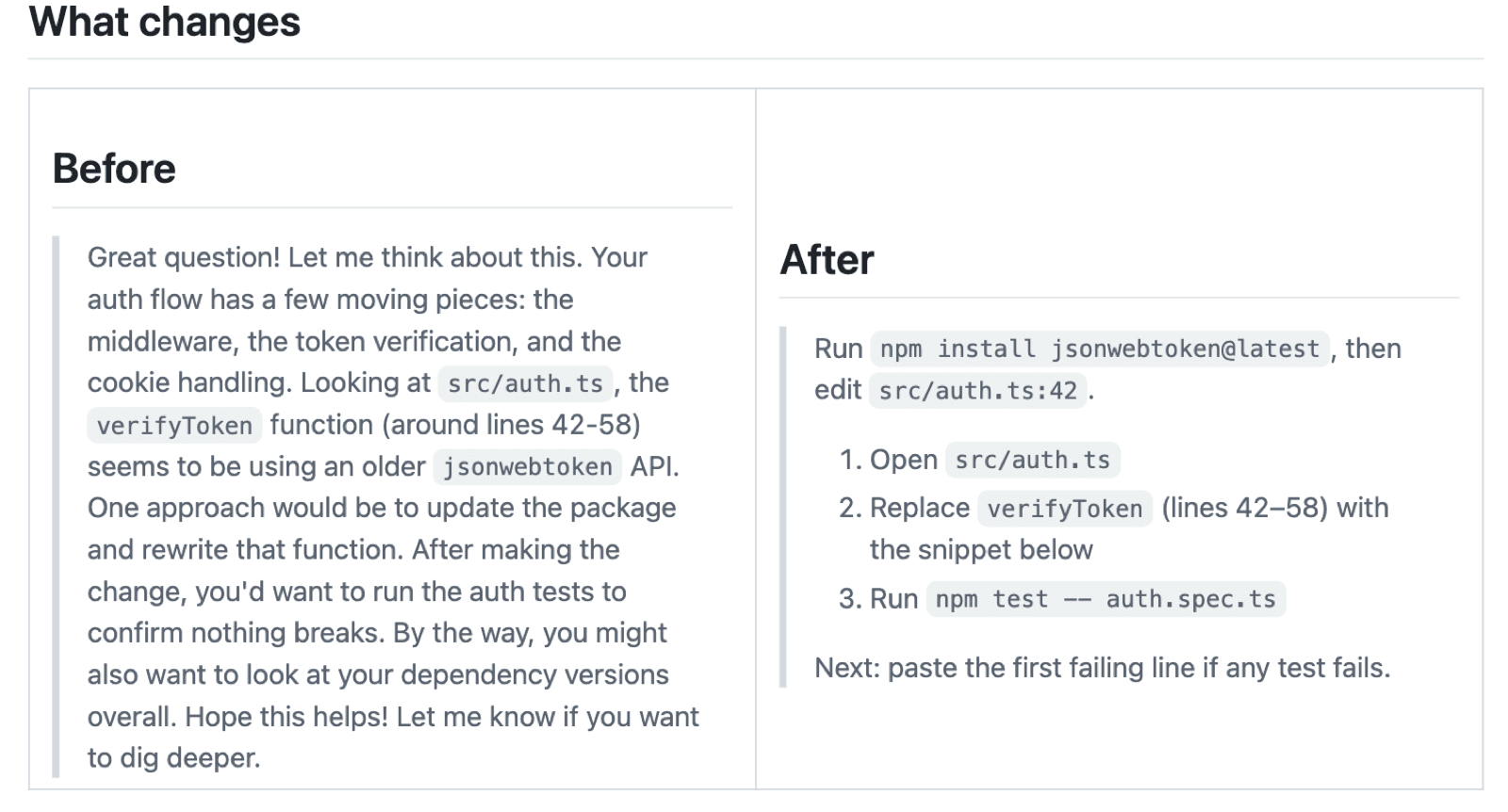
Stars and velocity. 21,686 stars and 1,376 forks, MIT, commits landing today. Still the largest here by raw stars, though diagram-design has closed most of the gap in a week.
Install. One command through the plugin marketplace. It works with Claude Code, Codex, Cursor, and the generic agentskills layout.
Who it's for. Anyone whose agent buries the one line they needed under three paragraphs of warmup.
Verdict. The best install-to-value ratio in the roundup. Ten rules, and your agent stops padding. If you want the same idea with a different rule set, attention-span (763 stars, AGPL-3.0) covers the same ground; pick one, because running both means two files arguing about your output format.
One skill that did not make the cut, in the interest of not misleading you: whathappened, an X-sentiment briefing workflow, currently runs only on Grok's X-native build. It installs through npx skills but will not function in Claude Code or Codex today, because it depends on native X API tools those agents do not expose.
What these sections settle: the range this month runs from robot arms to design juries to a ten-line file that just makes your agent shut up and answer.
open-kimi-ppt-skill
What it does. An unofficial skill that reverse-engineers Kimi Slides so a coding agent can create, edit, replicate and read presentations. It emits an editable PPTD file plus a real PPTX export, and ships a local browser editor for the touch-ups you would otherwise do by hand.
Stars and velocity. 1,602 stars against 1,229 forks, an unusually high fork-to-star ratio that suggests people are copying it rather than watching it. Created August 5 2026, last push August 7. No licence is declared on the repo, which matters if you plan to reuse the prompt.
Install. npx open-kimi-ppt-skill@latest. Needs Node 18 or newer.
Who it's for. Anyone whose work ends in a deck, who would rather hand the agent an outline than fight a template.
Verdict. The deliverable most knowledge work actually ends in, and it produces that deliverable as an editable file rather than a screenshot. Being unofficial is the risk: Kimi Slides compatibility is something the upstream product can break without warning.
ppt-master
What it does. Generates PowerPoint through PowerPoint's own object model rather than around it: native shapes and connectors with working adjustment handles, data-backed charts and tables, the full text, picture, fill and effect model, and via the template route a deck carrying real slide masters and layouts. Generating from source documents is the main path, but it will also distill a reusable template out of reference decks, fill an existing .pptx with new content while preserving its design, and add native transitions, animations and narration to a finished file. SmartArt is documented as a deliberate omission rather than a gap.
Stars and velocity. About 47,884 stars against a first commit on 2025-12-10, MIT confirmed in the LICENSE file, v4.8.0 shipped 2026-08-16. Roughly 3,867 forks and 98 watchers. One caveat the numbers make plain: this is essentially a single-author project, with 1,660 commits from the maintainer against twelve from the next contributor.
Install. npx skills add hugohe3/ppt-master, or add it as a Claude Code plugin marketplace with /plugin marketplace add hugohe3/ppt-master then /plugin install ppt-master@ppt-master. Both paths fetch only the skill files, so you still run pip install -r requirements.txt from the install location, and you need Python 3.10 or newer. A skill-only zip of about 56 MB is on the Releases page if the full repository download is too heavy.
Who it's for. Anyone whose deck has to survive being reopened and edited in PowerPoint afterwards, and anyone working from documents that already exist rather than from an outline typed into a chat box.
Verdict. The most complete answer on this list to the deliverable problem, and the interesting contrast with open-kimi-ppt-skill above: that one reverse-engineers a live product and can break when the product moves, while this one targets the file format, which does not move. Two things to know before you commit. The README is candid that the model sets the ceiling and that a one-shot perfect deck is not the promise, which is the right expectation to carry in. And the model recommendations in that README are commercially entangled, with the suggested provider named as the project sponsor and several affiliate registration links alongside it. The skill is free and the code is MIT; treat the shopping advice as advertising.
refactoring-ui-skill
What it does. Teaches Claude the mechanical rules from Adam Wathan and Steve Schoger's Refactoring UI and then applies them: pick spacing, type sizes, weights, colors, shadows and radii from fixed scales rather than ad hoc values; build hierarchy through weight and color instead of piling on font-size; simulate depth with light. Its most useful trick is the diagnosis table, which turns "looks off" or "feels cheap" into a specific mechanical fix. The repo says every rule and CSS value was cross-checked page by page against the book, and it ships a contrast-verified starter token set in assets/tokens.css.
Stars and velocity. 352 stars and 31 forks, created 26 August 2026. GitHub's API reports the license as NOASSERTION, but the LICENSE file in the repository is the plain MIT text — worth checking yourself rather than trusting the badge either way.
Install. A git clone into ~/.claude/skills/refactoring-ui for every project, or .claude/skills/refactoring-ui for one. The folder name matters: it has to match the skill's declared name.
Who it's for. Engineers who can build the component but can't say why it looks wrong. Designers already fluent in these rules will find it a rules file they could have written; that's rather the point of packaging it.
Verdict. The most quietly useful skill in this batch, because it targets the gap where most agent-built interfaces fail. It does not include the book, and the repo is clear about that, so buy the book if you want the reasoning behind the numbers.
cyclomatic-complexity-skill
What it does. Measures cyclomatic complexity per function using whichever tool fits the language — radon, eslint, gocyclo, lizard, or a manual count when none is available — then refactors the worst hotspots first with guard clauses, extracted functions, lookup tables and named predicates. It respects your project's own linter thresholds when they're configured, and closes every refactor with a before-and-after complexity table.
Stars and velocity. 155 stars and 7 forks, Apache-2.0, created 26 August 2026.
Install. /plugin marketplace add saurabhkumar8112/cyclomatic-complexity-skill then /plugin install. It also ships as a .skill file on Releases for Claude.ai, and can go up through the Skills API. Triggers on its own during refactoring and code-review requests, or you name it directly.
Who it's for. Anyone maintaining a codebase where a lot of the code was written by an agent. The README's framing is blunt about why that's the target: AI-generated code works, and it branches like a jungle.
Verdict. One line elevates this above the dozens of "refactor my code" prompts floating around: it refuses to game the metric. Complexity moves into well-named functions, not into clever one-liners that score better and read worse. That constraint is the difference between a real refactor and a number going down.
open-pstack
What it does. Brings Lauren Tan's pstack, built from the skills she uses shipping code at Cursor, to Claude Code and Codex. The entry point is poteto-mode: you describe a task in plain language and it picks a workflow, learns how the current system works before changing anything, compares designs when the choice actually matters, prefers small changes over extra machinery, asks several models to challenge the important decisions, and runs the code to check real behaviour rather than stopping at a green test suite. It carries the work through review and CI to a ready-to-merge pull request when you ask it to.
Stars and velocity. 115 stars and 8 forks, MIT, created 24 August 2026, with a v1.0.1 release the same day. An unofficial community port, and the README says so in its own words rather than making you work it out.
Install. /plugin marketplace add ericlitman/open-pstack then /plugin install pstack@open-pstack and /reload-plugins; Codex gets an equivalent pair of shell commands. The full four-model review path wants the Claude Code, Codex and Grok CLIs installed and signed in, plus Bun for the small local tool that starts models outside whichever app you're in. The core workflows run with fewer models.
Who it's for. People who already trust their agent with real pull requests and want the verification discipline that makes that survivable. If Cursor is your main environment, use the original instead; this port exists for the other two.
Verdict. The interesting part isn't the workflow list, it's the stance underneath it: the skill assumes you shouldn't trust the agent yet, and its job is to make the agent leave evidence you can inspect. Start supervised, widen only once the checks have earned it in your own repositories. That's a better default than most of this category ships with.
sepia
What it does. A de-AI writing skill that works one layer up from the usual humanizers. Rather than swapping words and shuffling syntax, it repairs narrative architecture in fiction, and for professional documents (release notes, PR replies, postmortems, tickets) applies rules matched to the venue each one lives in. Four operations: write, review as diagnosis only, refactor with minimal edits, and full recreate.
Stars and velocity. 419 stars as of 29 August 2026, from a repository created 28 August 2026. A one-day star curve that steep is a distribution event, so judge it on the SKILL.md rather than the number.
Install. One canonical SKILL.md with no per-platform forks, covering Claude Code, Codex,
Grok Build and Antigravity.
EpicInfographics
What it does. Teaches an agent to design infographics the way a studio would, explicitly avoiding the rounded card grid, the default blue, and the emoji icons that make AI-made graphics recognisable at a glance. The README's examples are unretouched output, which is the right way to make that claim.
Stars and velocity. 253 stars as of 29 August 2026, created 23 August 2026, MIT licensed.
scroll-craft
What it does. Builds scroll-driven websites where the scroll position is the timeline, and holds the result to a stated design standard rather than stopping at the animation. The README is unusually direct about the two ways AI site output normally fails: forgettable but well behaved, or flashy with 2.1:1 body contrast and a headline that wraps to six lines on a phone.
Stars and velocity. 1,168 stars as of 29 August 2026, created 22 August 2026, MIT licensed.
company_skill
What it does. Two research skills that work from public evidence rather than salary-site
anecdotes. company-talent-economics builds a compensation and career picture of a company by
starting from its business model and profit pools and working forward to which roles actually control
them, and it outputs a directory of auditable artifacts: a typeset PDF, the structured JSON it was
rendered from, written-out reasoning chains, and a claim-level evidence ledger that records every
number's source and tier. Its companion, estimate-layoff-risk, runs an adaptive interview and
returns 3, 6, and 12-month involuntary job-loss intervals for a role or a person. The design choice
that makes both useful is the separation it insists on between public facts, facts you supplied,
assumptions, derived metrics, and inference.
Stars and velocity. 224 stars as of 31 August 2026, created 24 August 2026, MIT licensed, last pushed 25 August.
Install. A Claude Code plugin marketplace entry, or clone and run install.sh, which symlinks the
talent-economics skill into both ~/.claude/skills/ and ~/.codex/skills/ so a git pull updates
both hosts. The layoff-risk skill is a separate symlink.
Who it's for. Anyone doing diligence before they take an offer, and anyone on the other side of that table who would rather know what the public record says first.
The Standout Trend: Agents That Make Video
Three video skills in one month is not a coincidence. video-shotcraft, qiaomu-cut-skill, and handdraw-story-video each solve a different slice of the same job: turning a prompt into a rendered clip without a human opening a video editor. Agent-made video is becoming its own subtrack.
The reactions bear that out. Josh Pigford, who runs Presscut, used the Remotion skill inside Claude Code with the ElevenLabs API to generate a full product demo, voiceover and background music included, in about two to three hours, all without leaving the terminal. Magnus Müller ran a shorter loop: install the remotion skill, point it at his product, ask for ten demos, then ask for ten more like the one he liked. Neither touched a timeline.
If you want the full teardown, including the parts that broke, we installed video-shotcraft and made a real MoClaw product video with it in our step-by-step tutorial.
What this trend settles: the interesting video tool this quarter is not another editor. It is your coding agent.
The Wider Shift: Skills That Ship a Deliverable
Video was the first visible cluster, but it looks like a symptom of something broader. Consider what has landed since: a skill that exports an editable PPTX, one that lays out a zine page, one that rewrites prose toward a voice, on top of the CAD bundle that emits STEP files and G-code. None of these make the agent better at programming. They produce the thing the work was for.
That is a different bet from the first wave, and a harder one to hit. A deliverable skill is judged on whether the artifact is usable without a human reopening it in the native tool, which is a steeper bar than "the code compiles". It also explains why so many of them ship their own preview or editor: the last mile is where these break.
Worth watching rather than concluding. Every star curve quoted above is days old, and a skill that produces a file is only ever as good as the file.
How to Install a Claude Skill
Most skills on this list install one of two ways. The common path is npx skills add owner/repo or npx skills install owner/repo, which drops the skill where your agent expects it. For Claude Code specifically, you can also place a skill folder in ~/.claude/skills/ by hand, or upload it in Settings. A few skills use the plugin marketplace instead, which the entry above notes when it applies. The official Claude skills documentation covers the SKILL.md format and the frontmatter each skill needs, and if you want to write your own instead of installing one, we have a walkthrough on building Claude skills for agent workflows.
What this section settles: installation is a one-line command for almost everything here.
Running These Skills Without the Local Setup
Every skill in this roundup runs inside Claude Code or Codex on your own machine, which means your laptop handles the installs, the dependencies, and the rendering. That is fine until the render is long, the dependency tree fights you, or you want the agent to keep working after you close the lid.
MoClaw runs the same kind of agent in the cloud, with skills and memory managed for you, so a long job finishes whether or not your machine is awake. If you would rather assign the work than babysit the setup, that is the tradeoff MoClaw is built around. See how it maps to real jobs on our use-cases page.
What this section settles: local skills are great until setup and runtime become your problem; managed agents move that problem off your machine.
FAQ
What are Claude skills?
A Claude skill is a SKILL.md file, plus any supporting scripts, that teaches an agent how to do a specific job (here is a fuller primer on agent skills). Anthropic shipped the format as an open standard, so a well-written skill works across Claude Code, Codex, Cursor, and other agents that read the agent-skills layout. You install one, and your agent gains a capability it did not have before.
How current is this list?
Every entry carries a dated snapshot of its star count and compatibility, and the list is re-checked as the ecosystem moves rather than published once and forgotten. Most competing best-of lists never get updated after they rank, which is exactly the gap this list of the best Claude skills fills.
Do these skills work in Codex too?
Most of them, yes. video-shotcraft, text-to-cad, and i-have-adhd explicitly support both Claude Code and Codex, and handdraw-story-video is packaged as a Codex skill. whathappened is the exception: it runs only on Grok's X build today.
How often is this updated?
Whenever the ecosystem shifts enough to change the ranking, not on a fixed calendar. Star counts and compatibility are reverified in place each time, so the URL stays the same and the content stays current.
Install One Claude Skill This Week, Not Ten
The fastest way to get nothing from this list is to install the top five and forget which one changed what. Skills alter how your agent behaves, and stacked together they interact in ways that are genuinely hard to attribute.
Pick the one that matches work you already did badly this week. Run it for five days without adding anything else. If the output changed in a way you can describe out loud, keep it and add the next one. If you cannot describe the difference, remove it. That loop is also the only reliable defence against the thing this ecosystem now has plenty of: a repo whose star count is climbing much faster than its commit history, of which there are two on this page and both are flagged above.
Continue Reading
More Guide
HyperFrames Workflow: Video Rules as Skills

Claude Anthropic Skills, Explained

What Is Hermes Bot Mode? Bots and Routines

OpenAI Assistants API Deprecated: What Broke

MCP Tools: What They Are and Which to Use

OpenAI Models Not Available in Cursor Nov 12
The MoClaw editorial team writes about workflow automation, AI agents, and the tools we build. Default byline for industry overviews, listicles, and collaborative pieces.
Ready to put this into practice?
MoClaw runs browser tasks, research, and schedules automatically. Try it free.