PILOT AI Review: What to Verify First

PILOT AI review focused on one founder briefing: see what it surfaces, where judgment remains essential, and whether early access merits a trial.
Table of Contents
PILOT AI is an early-access AI chief of staff for founders and CEOs, built around briefings, email triage, voice capture, commitments, and decision tracking. This PILOT AI review is not a hands-on verdict, because the product is still presented through access request and private onboarding. It asks: can one weekly briefing make founder planning clearer?
Key Takeaways:
- PILOT is positioned as a private founder briefing system, not a generic chatbot.
- The public preview emphasizes briefings, email triage, voice capture, decisions, and commitments.
- Founders should verify sources, export, deletion, plan terms, and approval-before-send before using sensitive data.
- A founder briefing AI can surface what matters, but it cannot decide what the founder is willing to own.
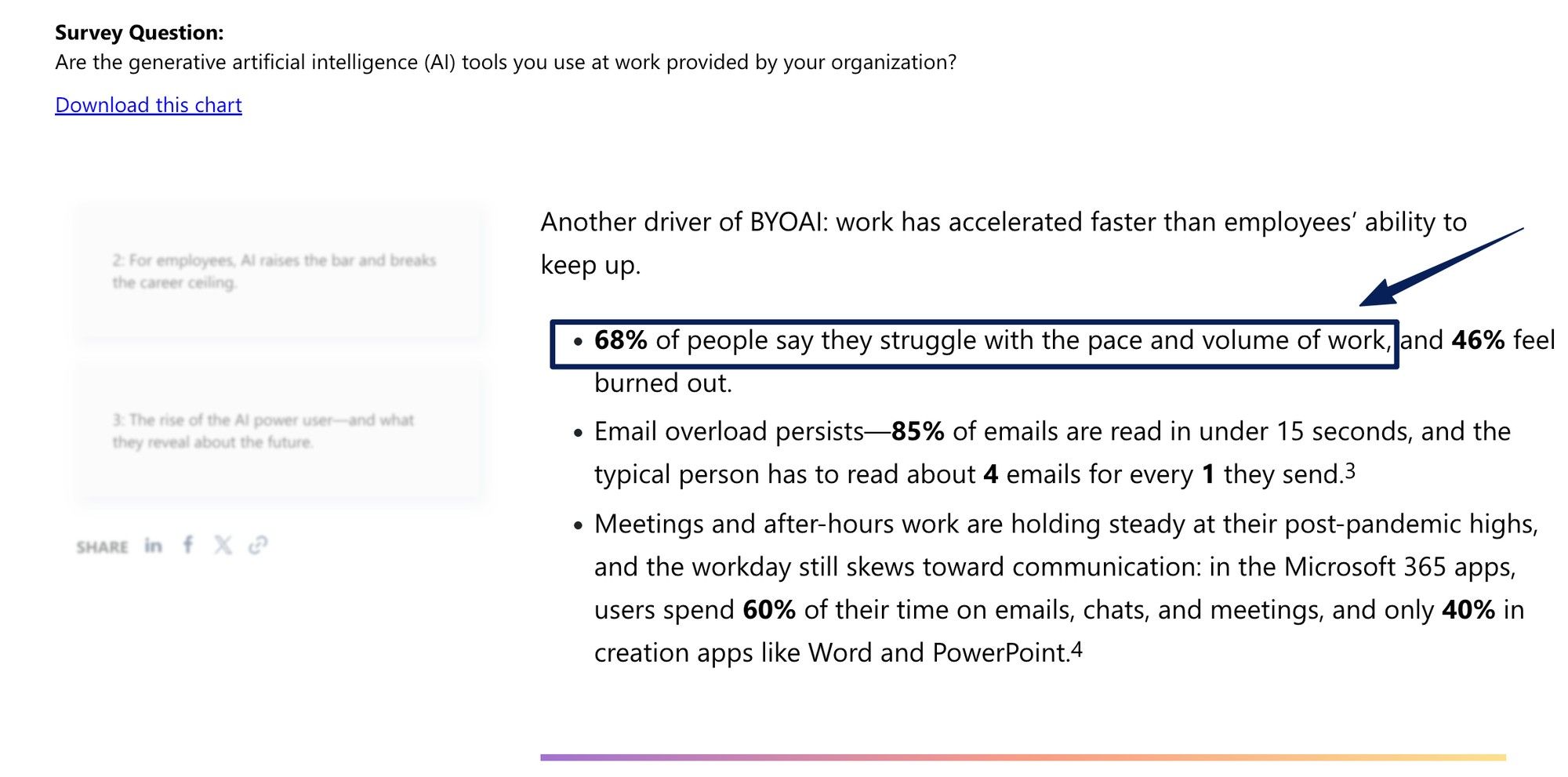
I am Vera. I read PILOT from a MoClaw workflow perspective on September 3, 2026. Microsoft and LinkedIn found that 68% of people struggle with the pace and volume of work. Founders add investors, customers, hiring, finance, and personal commitments. A briefing tool is useful only if it turns noise into better decisions.
What the Current PILOT Preview Shows
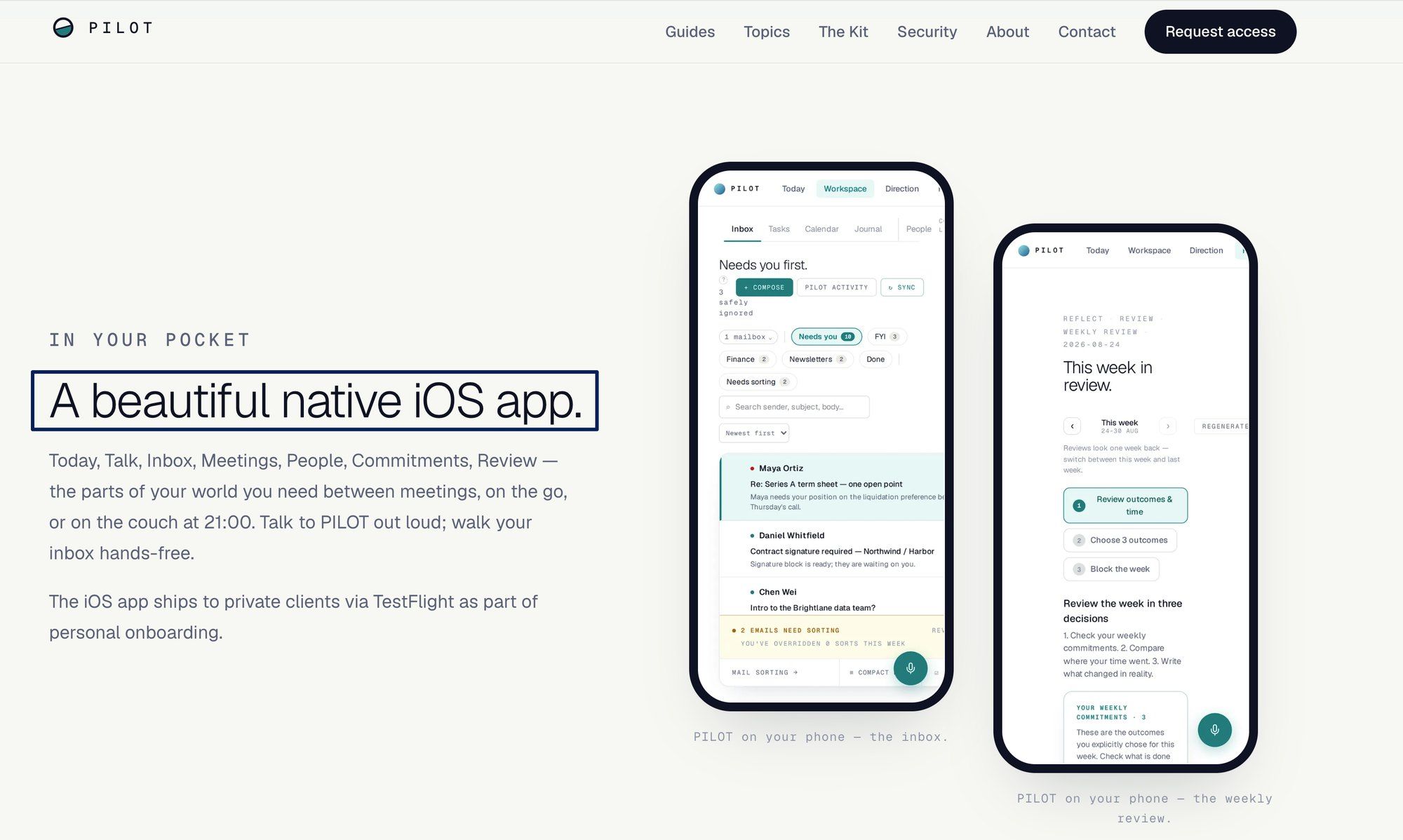
PILOT currently presents itself as a private AI chief of staff for founders and CEOs, with briefings, inbox triage, voice capture, meeting preparation, commitments, and weekly review at the center of the product.
That tells me what PILOT is designed to do. It does not yet tell me how reliably those pieces work together in a founder's real week.
Because access still runs through private onboarding rather than open self-serve signup, I would treat the first week as a verification period: test one briefing, inspect its sources, and see whether it reduces planning work instead of creating another layer to review.
Test One Founder Briefing
The cleanest trial is one weekly founder review. Start with a bounded briefing: the coming week, open promises, one priority relationship, and decisions that need attention.
What Information Goes In
For one trial, I would keep the input deliberately narrow: calendar events, a focused inbox sample, meeting notes, a few voice notes, key contacts, and open commitments. The PILOT founder story frames the original problem as multiple email accounts, Teams, Slack, WhatsApp, meetings, and too much information to sort manually.
For a trial, connect less than you think you need. Give PILOT enough data for one briefing, then ask which sources influenced each item. If evidence is unclear, keep the briefing advisory.
What Decisions Come Out
The output matters more than the number of features behind it.
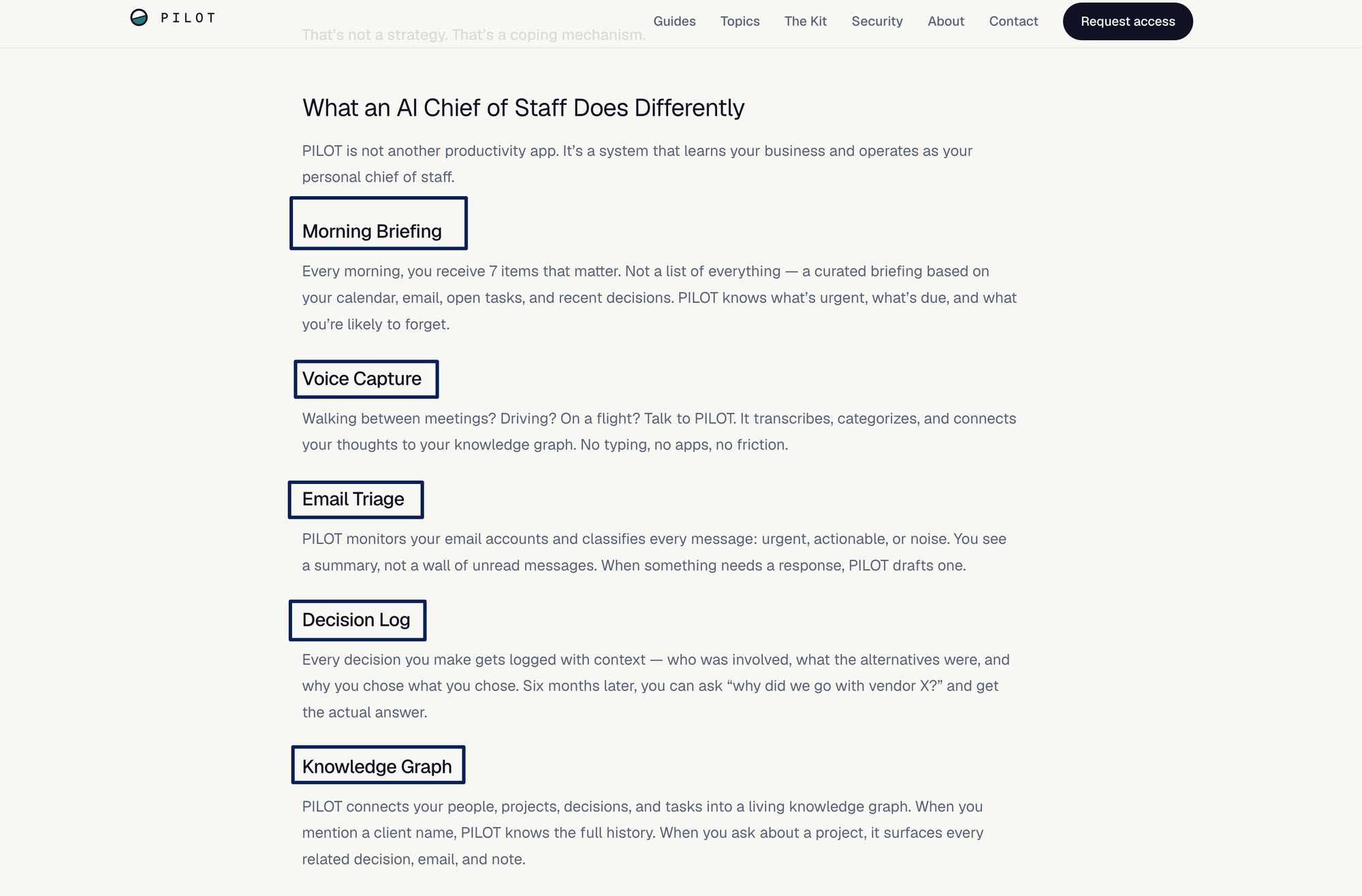
A useful founder briefing should separate four things clearly: what needs a reply, what needs a decision, what can wait, and what can be delegated. Each item should carry enough context to understand why it appeared.
I would test PILOT with questions such as: What should I do today? What did I promise and forget? Which relationship needs attention? Which decision is waiting on me? Which item looks urgent but can safely wait?
Then inspect whether the answer points back to usable evidence. If I have to reopen five tools just to understand why PILOT surfaced an item, the briefing has not reduced enough work.
Does the Briefing Improve Weekly Planning?
PILOT merits an early-access test if the weekly founder review makes planning sharper without creating a second inbox.
I would judge one briefing by three signals. Does it catch a real open loop? Does it show enough source context to accept or reject the item quickly? Does it leave a record of what changed since last week? A useful briefing keeps the reason, owner, and the next move together. If the briefing is clear but the follow-up still stalls, that is a different problem: see the chief-of-staff role compared with an always-on assistant.
Where Coordination Friction May Remain
Coordination friction may remain wherever a briefing crosses accounts, tools, or businesses. PILOT can only be judged after founders confirm which inboxes, calendars, communication tools, and notes are connected.
During onboarding, verify the connector list, read-only sources, approval points, pricing, and support. Also test ambiguity: vague calendar titles, similar client names, or conflicting notes.
What Still Requires Founder Judgment
Founder judgment remains the product boundary. PILOT may surface a stale promise, draft a reply, or score a week, but the founder still decides what matters and what gets sent.
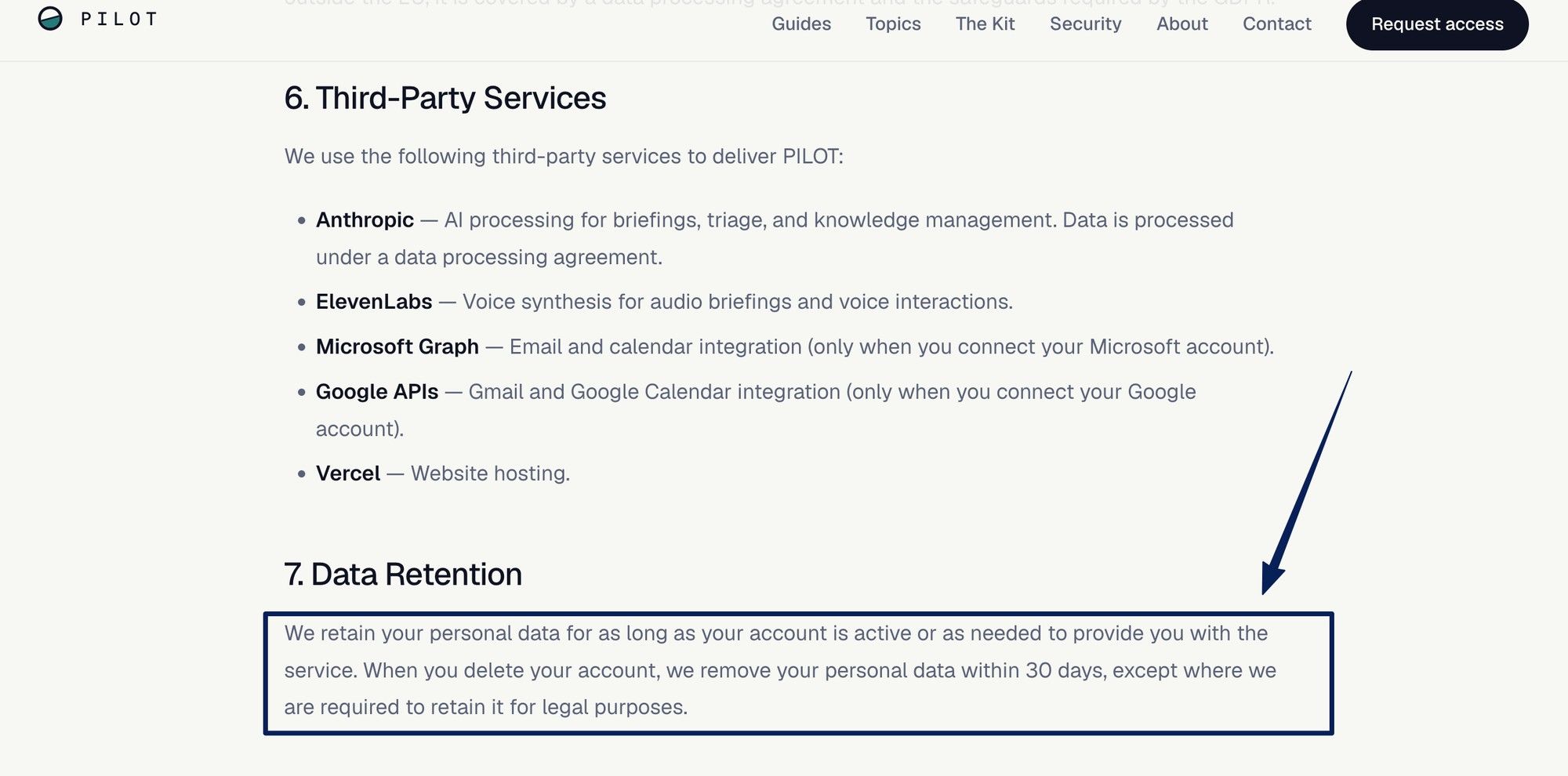
This matters because PILOT touches sensitive operating context. The public privacy materials say customer data is hosted on Microsoft Azure infrastructure within the European Union, account deletion removes personal data within 30 days except legal-retention cases, and users have GDPR rights including data portability. Before using real data, confirm export format, subprocessors, AI processing location, deletion workflow, and optional integration effects.
Who Should Consider an Early-Access Test
PILOT makes the most sense to test when briefing work has already become a recurring cost.
That may include founders juggling investor follow-ups, customer conversations, recruiting, board preparation, delivery commitments, and decisions scattered across several tools. In that environment, one useful weekly briefing could replace meaningful manual scanning.
I would be less interested if the operating context is still simple: one inbox, few meetings, limited follow-up, and no stable weekly review rhythm. In that case, the onboarding and verification work may exceed the coordination problem PILOT is trying to solve.
The useful question is not whether a founder wants an AI executive assistant. It is whether enough important work is already slipping between systems to justify one.
FAQ
Is PILOT available outside its founding-user program? The public flow points to request access and personal onboarding, not open self-serve signup. Treat availability as selective until PILOT publishes a broader launch path.
Can founders export a PILOT briefing before ending a trial? Ask before connecting sensitive data. PILOT's privacy language includes data portability, so export format, scope, timing, and deleted-account access should be confirmed during onboarding.
Does PILOT show which source supports each briefing item? Make this a trial requirement. A briefing should show whether an item came from email, calendar, voice, meeting notes, or a decision log.
What happens to connected data after account deletion? PILOT's privacy policy states that personal data is removed within 30 days after account deletion except where legal retention is required. Confirm OAuth revocation timing too.
Can PILOT separate two businesses within one account? Do not assume clean separation. Ask whether PILOT supports distinct workspaces, schemas, billing records, exports, and source filters before connecting both businesses.
Treat PILOT as a Briefing Trial, Not a Verdict
The right PILOT AI review question is narrow: can one weekly briefing make a founder's next decisions clearer, with source evidence and approval boundaries intact? If yes, early access may be worth the onboarding time. If it cannot explain sources, separate businesses, or export records cleanly, keep it in trial mode.
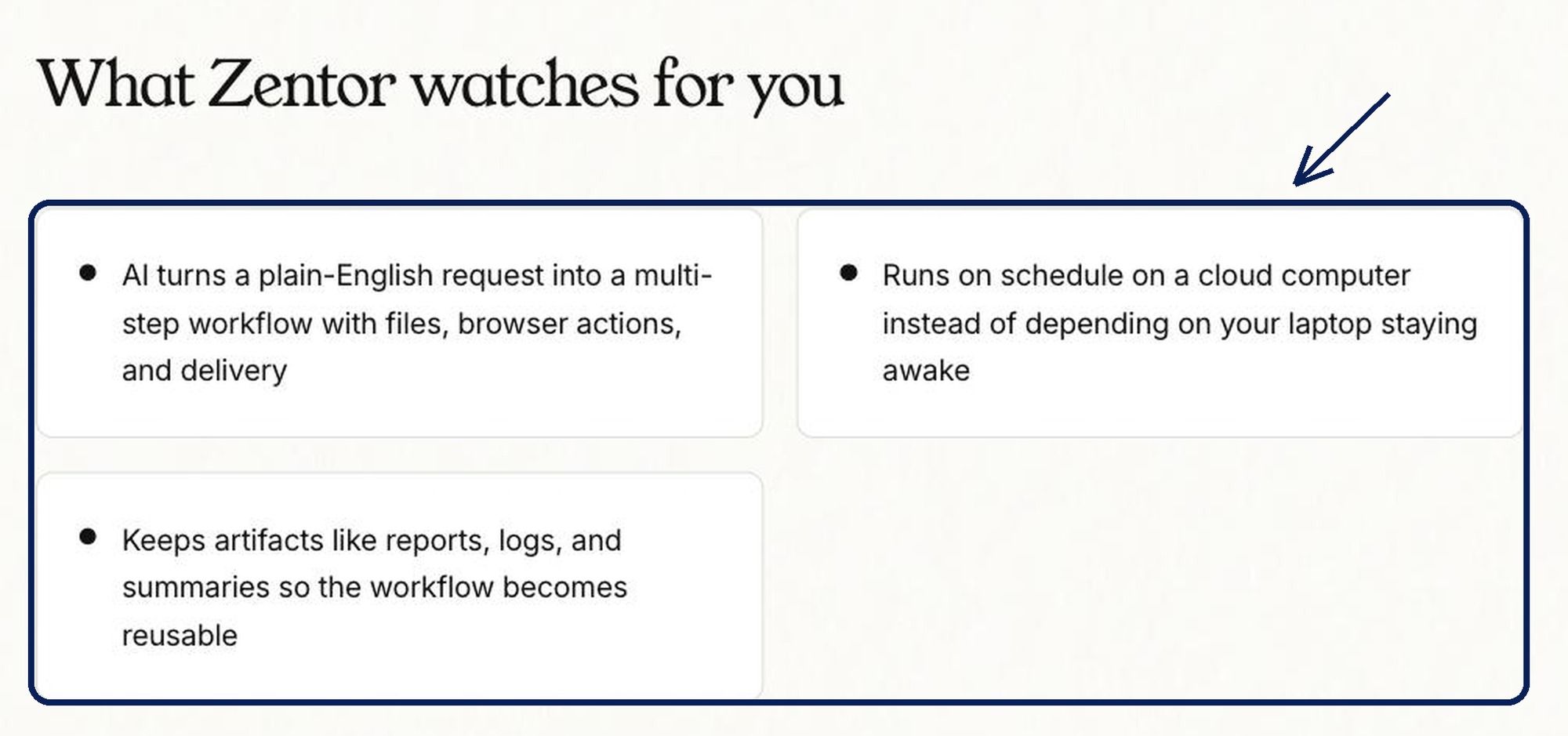
For founders who need work to continue after a briefing, MoClaw fits a different layer: recurring research, browser tasks, files, reports, and reviewable follow-through in an AI workflow automation workspace. A briefing can tell you what matters. Execution still needs somewhere to run.
This article is based on currently available information about an unreleased product. Details may change, and we will update this page when official information becomes available.
Continue Reading
More Guide
Turn a YouTube Video to Notes: course2md

How to Opt Out of Mistral AI Training

What Is M3E Canvas? Sketch UIs, Get AI Prompts

MiniMax M3 Free Ended: What to Use Instead

MarkItDown: When Your Markdown Comes Back Thin

Whisper-1 Deprecated: What Actually Breaks
The MoClaw editorial team writes about workflow automation, AI agents, and the tools we build. Default byline for industry overviews, listicles, and collaborative pieces.
Ready to put this into practice?
MoClaw runs browser tasks, research, and schedules automatically. Try it free.
References: Microsoft WorkLab — AI at Work Is Here. Now Comes the Hard Part · PILOT — private AI chief of staff · PILOT — About · PILOT — Privacy Policy