DeepSeek Harness vs MoClaw (2026)

An open agent runtime you operate versus a managed cloud AI workspace. Eight ownership questions that decide which one your team can actually run.
Table of Contents
DeepSeek Harness vs MoClaw is not a quality comparison. It is a category comparison: an open-source agent runtime you operate, against a managed cloud AI workspace where browser control, files, and scheduling arrive assembled. The real question is whether your team wants to run the environment or use one.
Key Takeaways:
- Harness fits teams with a technical operator, runtime ownership, and a need for low-level control
- MoClaw fits non-technical users who want a managed assistant for browser, file, research, and scheduled work
- Open source is not zero cost — hosting, model usage, updates, and contractor time still need an owner
- Managed software reduces setup, but humans still own approvals, credentials, budgets, exports, and risky actions
I ran into this during an agent-runtime review for a client research workflow. The demo looked simple: connect a model, open sources, save notes, draft a report.
But before the first usable draft, I counted eight ownership questions. Who stores the API key. Who pays the provider bill. Who updates the runtime. Who approves plugins. Who checks browser failures. Who reviews logs. Who exports records. Who gets called when a scheduled run breaks.
That reframed the comparison for me. DeepSeek Harness was not "too hard." It was just not ownerless. If a team can name a person for those eight responsibilities, an open runtime makes sense. If not, a managed workspace is the safer starting point — and that is the entire decision, compressed.
Quick Verdict
Choose DeepSeek Harness if you want a self-hosted agent runtime and can name the person responsible for setup, keys, updates, logs, and recovery. It is for teams assembling an agent environment, not for users looking for a finished app.
Choose MoClaw if your team wants a managed assistant that uses a hosted workspace, browser, files, and scheduled tasks with human review.
There is no universal winner here. Choose what your team can operate on a bad week.
Why These Are Different Product Categories
An open runtime that needs an operator
The DeepSeek Harness repository presents dsh as an open-source agent harness from DeepSeek AI, released under MIT and marked developer preview with compatibility-breaking changes expected.
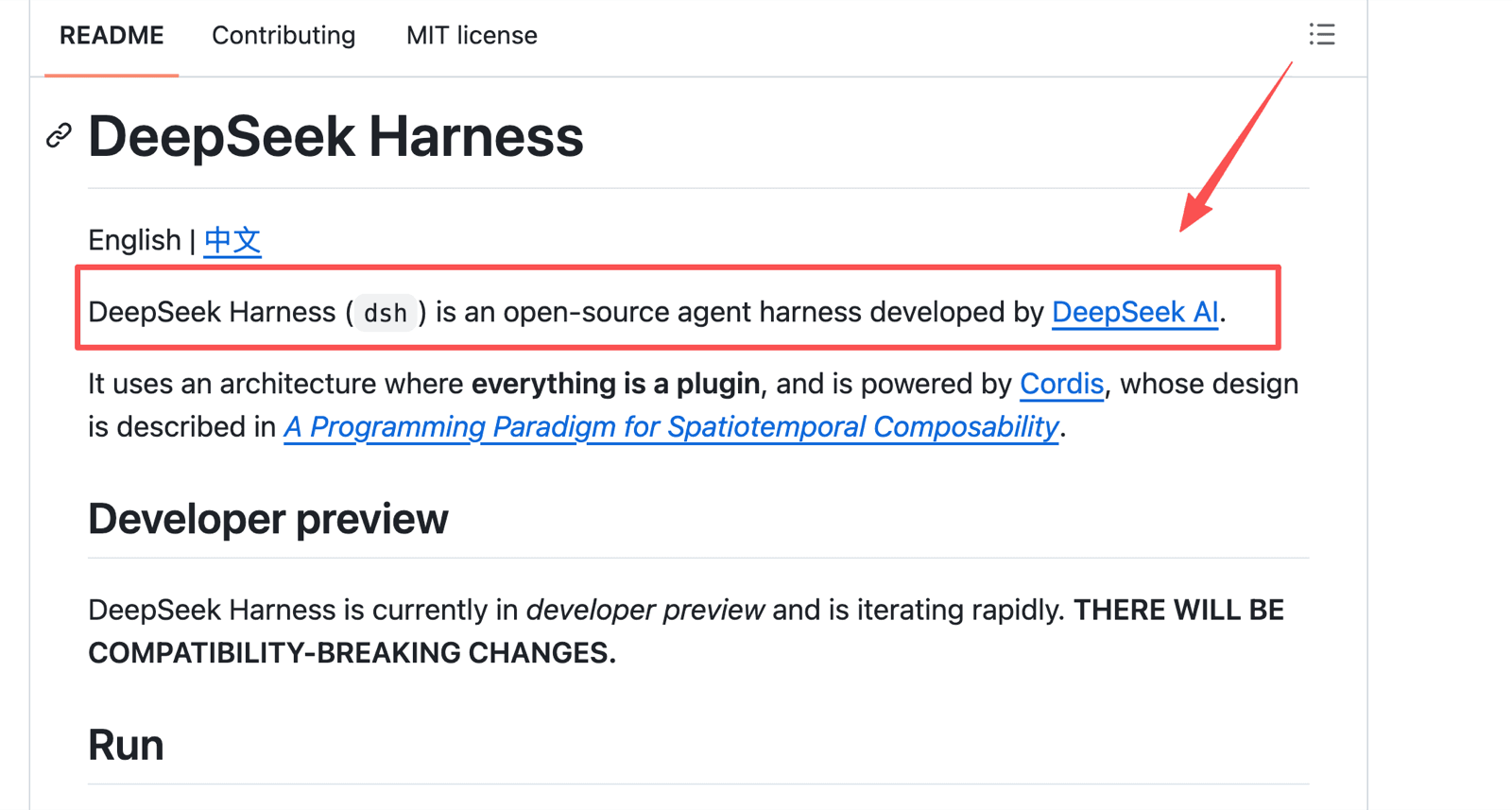
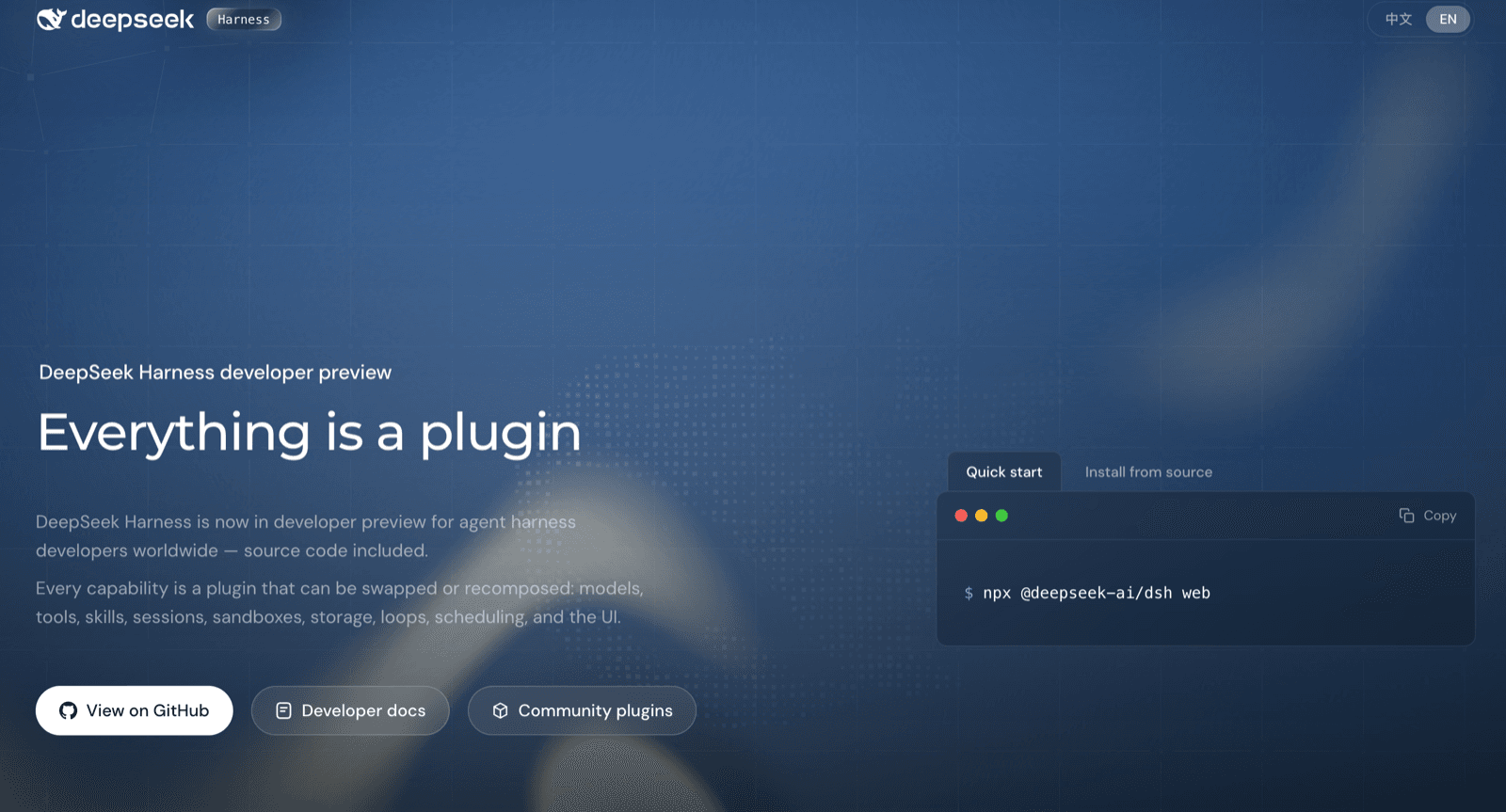
The architecture documentation describes a plugin-based design covering adapters, tools, sessions, and agent loops. That composability is the upside: a technical team can shape the runtime around its own policies and experiments.
A managed cloud AI workspace
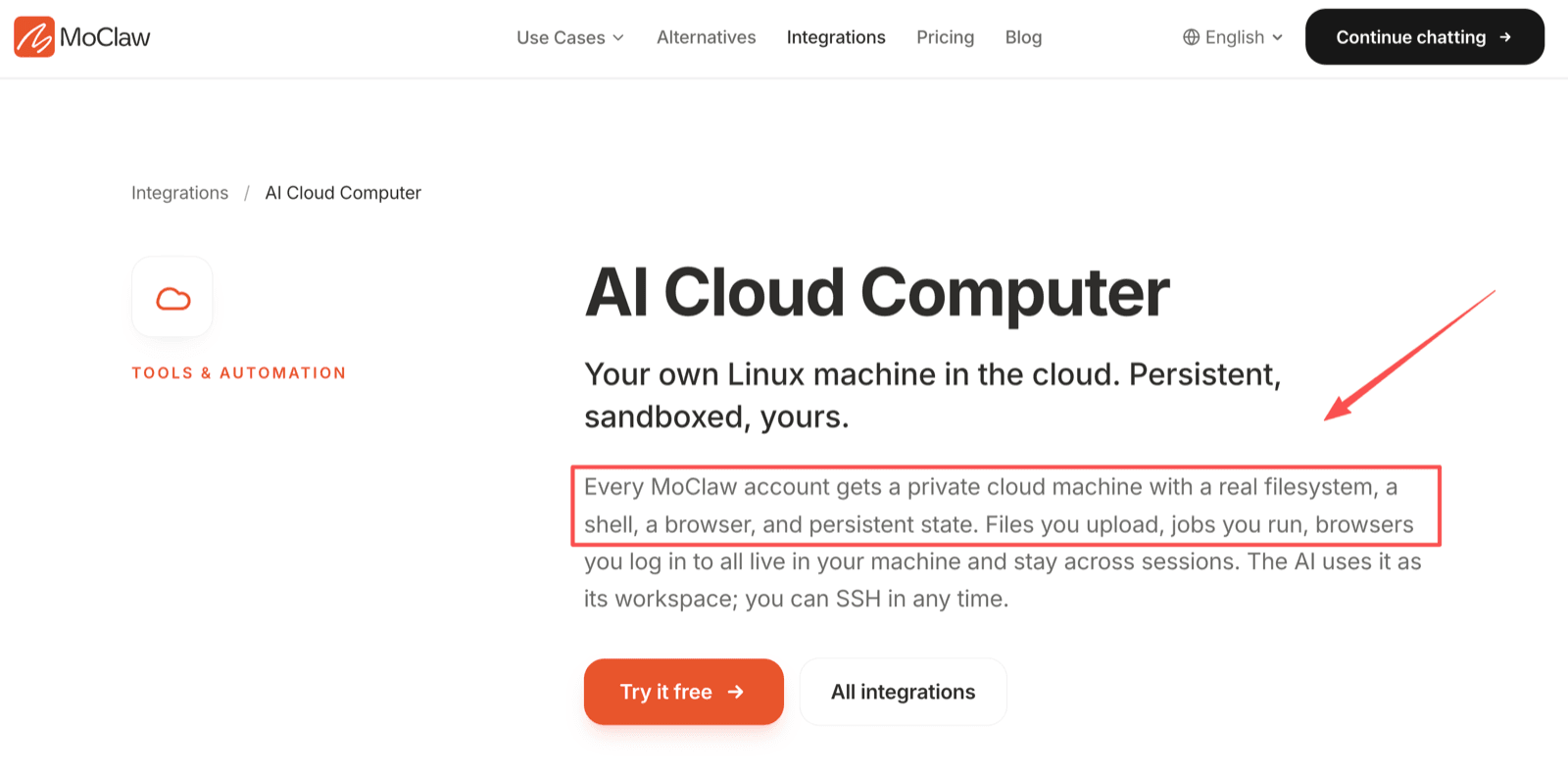
MoClaw sits at the other end. Its AI Cloud Computer is a private Linux machine with a real filesystem, shell, browser, and state that persists across sessions.
That convenience has limits. MoClaw should not be treated as an autopilot for payments, compliance approvals, account changes, or private data decisions. It is a managed workflow layer, not a replacement for human responsibility.
Time to the First Real Task
For non-technical teams, the first real task is a reviewable workflow with files, browser steps, account boundaries, and a record of what happened.
With DeepSeek Harness, that path starts with installation, provider configuration, runtime choices, and environment readiness. Its provider guide covers API keys, catalog providers, custom providers, and model selection, and saved sessions retain the model recorded in their log. That assumes somebody understands session state before the first deliverable.
With MoClaw, the first task depends on account access, plan limits, and workspace readiness. A consultant can upload files, request browser research, review the output, then approve or reject the next action.
What You Must Maintain
Maintenance is the biggest difference between the two.
Hosting, updates, and failure recovery
DeepSeek Harness requires someone to run the environment, protect credentials, update packages, watch compatibility changes, preserve sessions, and decide what happens when a tool call fails. That is the operating cost of an open runtime, and it does not appear on any pricing page.
Our always-on AI agent checklist is the useful companion read here, because hosting, recovery, observability, credentials, and retry behavior are all operating responsibilities rather than features.
Managed operations and support boundaries
MoClaw moves more setup and workspace maintenance behind a managed product boundary. Checked on 14 August 2026, MoClaw pricing lists a flat $20 per month with 1,000 credits included — publicly estimated at about 100 conversations or 50 images — plus optional credit packs at $10 per 1,000 credits, browser control, scheduled automation, chat channels, and a persistent workspace.
You still own the sensitive decisions. Assign one person to approve payments, exports, private files, and keys.
Everyday Workflow Fit
Use the everyday-work test: are you trying to complete work, or modify the runtime that completes work?
MoClaw fits recurring operations where the model needs a place to act — supplier research, document comparison, client-update drafts, web research, spreadsheet preparation, scheduled status checks. The value is the managed workspace around the response.
DeepSeek Harness fits custom runtime experiments: new plugins, provider adapters, approval policies, session behavior, tool pipelines, or internal research systems a managed app would never expose.
The trade-off is staffing. If nobody can read logs, rotate credentials, test updates, and document recovery, the advantage may not survive the first failure.
Control, Convenience, and Cost Responsibility
Harness gives more control at the bottom layer. MoClaw gives more convenience at the workflow layer. Neither removes cost responsibility.
DeepSeek Harness may require model API spend, hosting, storage, monitoring, support, and contractor time. Harness itself is MIT-licensed, so the software is free and the operation is not. MoClaw has a subscription surface and optional credit packs, with a single owner on the account.
If you want the self-hosted math in detail, the real cost of a self-hosted AI agent breaks down the line items that open-source comparisons usually skip.
Choose by the Technical Support You Actually Have
Pick DeepSeek Harness if you can name the operator before you start. That person should own setup, provider credentials, updates, logs, recovery, and handoff. Without them, Harness can still belong on your watchlist, but it should not carry client-critical work.
Pick MoClaw if you need a managed assistant to execute reviewable tasks in a cloud AI computer with fewer infrastructure decisions.
Before choosing either route, write down your workflows, approval points, credentials, cost owners, and the person responsible when a run fails. That list decides this more reliably than any feature table.
FAQ
Can files and records be exported before switching approaches?
Test export before migration. MoClaw lists one-click export, while Harness records depend on how your operator configured sessions, storage, and files. Rehearse with non-sensitive data before moving client records.
Do DeepSeek and MoClaw have an official partnership?
No official partnership appeared on the pages reviewed for this article. DeepSeek Harness is a separate open-source project from DeepSeek AI, and MoClaw supports DeepSeek models as one option among several.
Does either option require a long-term contract?
Harness is open-source software, so the code is not a subscription. Surrounding costs may include hosting, providers, support, and contractors. MoClaw lists cancel-anytime terms, but verify checkout and invoice terms yourself.
Does DeepSeek certify third-party Harness hosting providers?
No public certification program appeared in the official Harness materials reviewed here. If a vendor offers hosted Harness, evaluate security, updates, backups, uptime terms, incident response, and credential access.
Who owns configurations created by an outside contractor?
Write ownership into the agreement before setup starts. The client should control provider accounts, API keys, repositories, deployment access, and exported configuration files. At handoff, require a runbook, dependency list, rotation plan, and recovery walkthrough.
It Comes Down to Who Runs the Runtime
DeepSeek Harness vs MoClaw is a choice between self-managed control and managed convenience. Harness belongs on the shortlist when you have technical support and want an open runtime you can reshape. MoClaw belongs on the shortlist when you need a managed cloud AI computer for reviewable everyday work. Neither path removes human judgment; each just puts the operational weight in a different place.
Disclosure and verification note: written from MoClaw's editorial perspective and checked on 14 August 2026 against the DeepSeek Harness repository and documentation and MoClaw's live product pages. DeepSeek Harness is a developer-preview project, so compatibility, provider setup, and public product claims may change quickly. Verify live pages before budget approval or client-critical work.
Continue Reading
More Comparison
OpenClaw vs ChatGPT vs Managed Assistant

DeepSeek Harness Plugins vs Skills

Grok Bot vs Claude Cowork vs ChatGPT Work

Business Travel App vs AI Travel Agent Workflow

Free AI Agent: Where Each Free Tier Stops

Travel Agency App vs AI Workflow for Clients
The MoClaw editorial team writes about workflow automation, AI agents, and the tools we build. Default byline for industry overviews, listicles, and collaborative pieces.
Choosing between tools? Let MoClaw run the work.
Always-on AI assistant on its own cloud computer. No switching required, no setup.
References: deepseek-ai/deepseek-harness on GitHub · DeepSeek Harness architecture documentation · DeepSeek Harness provider guide · MoClaw pricing