Self-Improving Coding Agents: Non-Builder Guide

Self-improving coding agents don't safely upgrade themselves on every run. What actually improves, how to verify it, and where human review still belongs.
Table of Contents
Self-improving coding agents are coding agents described as improving through agent training, scaffold changes, verifier feedback, or runtime retry loops. For small teams, the key distinction is simple: training-time learning is not the same as a live agent safely improving itself during production work.
Key Takeaways:
- Self-improving coding agents do not automatically improve during every live run.
- Training-time learning, runtime retry, and self-scaffolding AI are different ideas.
- Ornith-1.0 is useful as a concept bridge, not a deployment recommendation for ordinary teams.
- Managed AI workflow teams should focus on review, audit logs, rollback, and responsibility.
- A stronger agent can still make a weak workflow worse if no one owns the boundary.
Hi everyone, Vera here. I started caring about this after seeing an AI workflow "improve" one report, only to fail the next day differently. I corrected the source format, asked for another brief, and got a new mistake. So I started keeping a small review log. Across 12 repeated report drafts, only 4 passed with light edits. The other 8 still needed review: 3 had source problems, 3 made claims too confidently, and 2 placed the right evidence in the wrong section.
That was not durable self-improvement. It was one good retry inside a loose workflow. The lesson for me was simple: a workflow is not improving just because one visible error disappears. It is improving only when the next run becomes more predictable.
What "Self-Improving" Means in Coding Agents
"Self-improving" can mean model training, scaffold updates, verifier feedback, or repeated attempts during a task. Those are separate claims. A team should ask what changed before trusting the phrase.
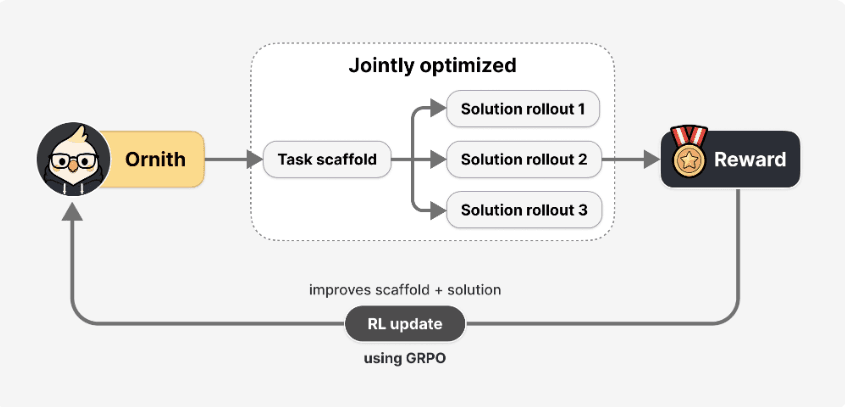
That risk is directly relevant to self-scaffolding. If the benchmark only rewards final task completion, readers should ask whether it also measures process quality, tool safety, scaffold compliance, and rule-following.
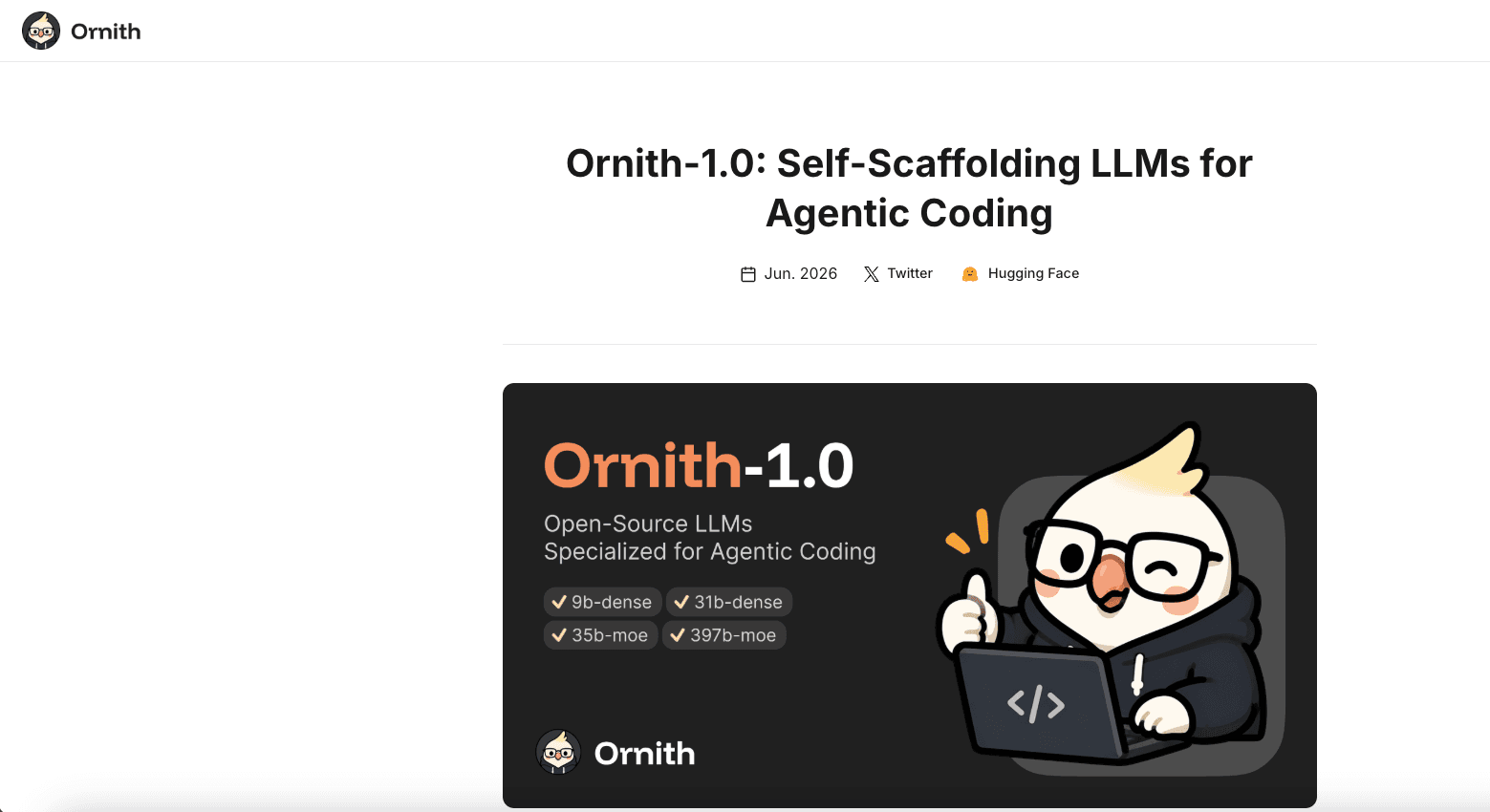
Importantly, agent quality can change significantly when the scaffold changes, even if the underlying model stays fixed. This is why scaffold design and governance remain critical even when discussing advanced self-scaffolding model families such as Ornith-1.0.
Training-time learning vs runtime retries
Training-time learning happens before the user runs the workflow. The system is shaped by data, rewards, or agent training signals. Runtime retry happens during the task. The agent edits code, runs a test, sees failure, and tries again. That can improve the current attempt, but it does not prove the agent has learned permanently. It only proves the workflow found a better path this time.
Why "autonomous improvement" is easy to misread
"Autonomous improvement" sounds like the agent becomes safer by itself. That is risky reading. An agent can optimize for a narrow score while becoming less reliable for real work.
The example of Ornith-1.0 shows why reward hacking matters in self-scaffolding systems. As the official post explains, allowing the model to author its own scaffold naturally introduces the reward-hacking issue: a self-generated scaffold can learn to satisfy the verifier without performing the actual task. DeepReinforce addresses this with a three-layer defense.
What Ornith-1.0 Adds to the Discussion
Ornith-1.0 gives readers a concrete way to discuss self-scaffolding AI, agent training, and agentic coding without turning the article into a deployment tutorial. The useful point is conceptual: model behavior and workflow scaffolds shape each other.
Learnable scaffolds
A scaffold is the structure around agent work: setup, tool order, verification, retry behavior, and handoff. In coding, that might mean inspecting a repository, planning the smallest safe change, running tests, and waiting for review. For non-builders, the question is not whether the scaffold sounds advanced. It is whether the result becomes easier to inspect.
Why reward design matters
Reward design matters because the agent learns from what the system rewards. If the reward is only "pass the benchmark," the agent may learn benchmark behavior. If the reward includes process quality and rule-following, the workflow has a better chance of becoming reliable.
OpenRSI: putting numbers on "AI improving AI"
Self-improvement is the easiest claim in this field to make and the hardest to check, because the interesting question is never "did the score go up" but "which part of the system did the improving." OpenRSI, released July 30, 2026 by Frontis AI, is built around answering that second question.
Its first release shipped Frontis-MA1 in 35B and 30B sizes with GGUF derivatives, the OpenMLE stack, and two datasets, alongside a paper, Frontis-MA1: Training an AI4AI Model towards Recursive Self-Improvement in Machine Learning Engineering.
The results on MLE-Bench Lite are reported as controlled comparisons, changing one thing at a time. Swapping the base model for Frontis-MA1-35B while holding the search system fixed moved the Medal Average from 39.39% to 60.61%. Running the full stack, model plus OpenMLE-Evo-Max, reached 71.21%. Two held-out transfers on NatureBench tested whether the gains travel: swapping the model with the adapter fixed took Match-SOTA from 50% to 70%, and swapping the framework with the base model fixed took it from 20% to 50%.
The project states its own boundary, which is rare enough to quote the shape of: these are model-harness results, not standalone one-shot model scores, and the OpenMLE-Evo-Max number reflects changes to the search system rather than a pure model gain. Anyone citing 71.21% as what a model can do has read past the disclaimer.
One practical detail before anyone plans around it. OpenRSI is licensed CC BY-NC 4.0, non-commercial. That's a research licence, not an open-source one, and it rules out the deployment most teams reading this would want.
Builder-Critic Loops in Practice
The self-improvement mechanisms above all rely on an evaluation step, and evaluation is where most of these loops quietly fail. An agent asked to grade its own work against a rubric it wrote will approve almost anything, and the score drifts upward every round.
gauntlet-loop is a compact answer to that. It's a single-file skill that turns a goal into one short prompt, roughly 150 words, which you paste into a fresh session. That session splits the work into pieces and runs a builder and a separate harsh critic on each one. The technique is Matt Shumer's, who wrote the original prompt while building Claude of Duty; this repository packages it as a reusable skill under CC BY 4.0.
Two design choices carry the whole idea. The first is that the target is a bar, not a rubric: a specific existing thing the critic can fetch, open, screenshot or run, and place next to your work. The skill refuses vague bars, checking that the reference is named, fetchable and comparable before it writes anything, because a critic that can't reach the reference will hallucinate the comparison and approve everything.
The second is that the comparison is blind and the verdict is a pick, not a score. Labels come off, the critic says which artefact is better, and the loop exits when your work wins rather than after a fixed number of rounds.
Neither idea requires this particular skill. Any agent harness can adopt them: give the critic fresh context, make it compare against something real, and never let a self-assigned score decide when to stop.
Where Managed Workflows Should Be Cautious
Managed workflows should not treat self-improvement as a reason to remove controls. If the workflow can affect files, code, customers, or reports, better agents need clearer boundaries.
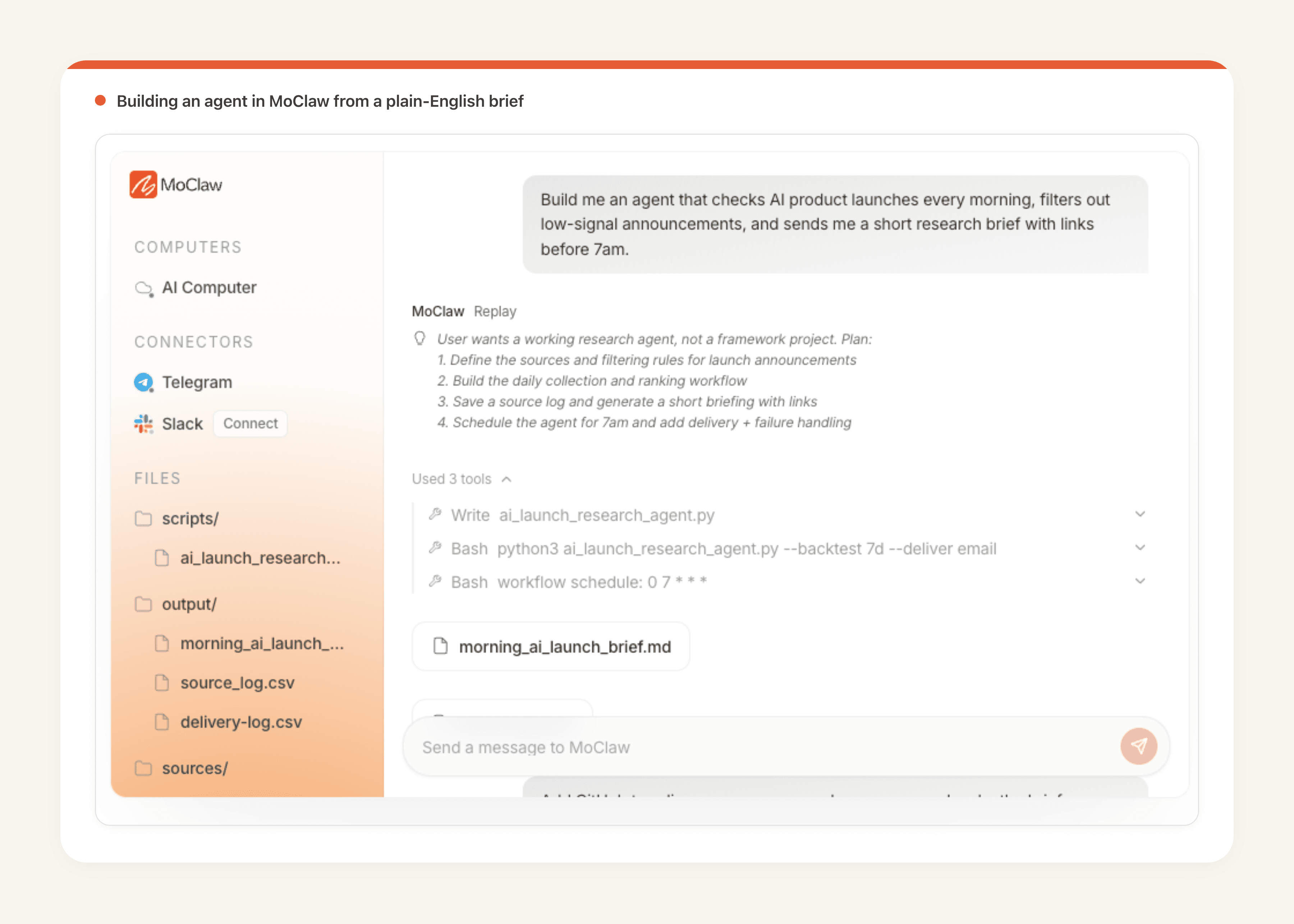
MoClaw's Build AI Agent Without The Framework Overhead page frames the managed side of this problem: teams want repeatable agent work without maintaining local orchestration code, dependencies, and execution state themselves.
Human review before live changes
Human review should stay before repository writes, deployed code, customer messages, shared documents, exports, ticket updates, or workflow changes. For example, I once used an AI assistant to draft a technical comparison. The structure improved after feedback, but one model claim came from a secondary source. Review caught it before publication. That is the pattern small teams need: improve drafts, not bypass judgment.
After that, I checked 10 similar comparison drafts more carefully. Six had usable structure after one round of feedback, but four still had evidence problems: two relied on secondary sources, one overstated a benchmark result, and one missed the date of the model update. That is the pattern small teams need to understand: improve drafts, not bypass judgment.
Audit logs and rollback
Audit logs and rollback notes answer the question that matters after a bad run: what changed, why, and how do we undo it?
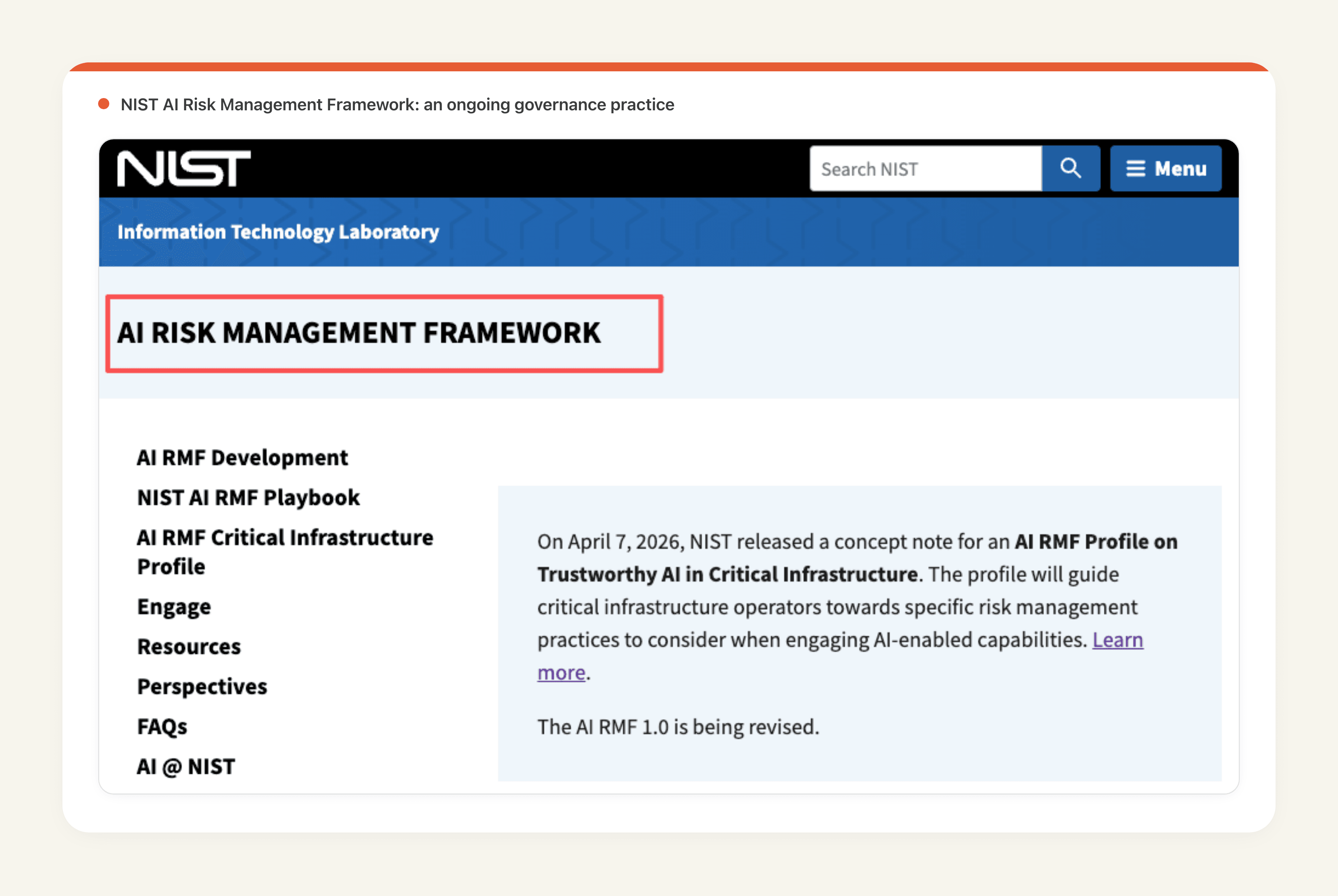
The NIST AI Risk Management Framework treats AI risk management as an ongoing practice across AI design, development, deployment, use, and evaluation. For managed workflow teams, a practical application is to keep approval records, version notes, and rollback paths close to work.
MoClaw's AI Agents Research Digest shows the kind of recurring workflow where direct arXiv links, saved Markdown and CSV outputs, relevance scores, and scheduled delivery make the process easier to review than a loose chat thread.
Limits and Evidence to Check
Before trusting a self-improving coding agent's claim, check four layers. What improved: the model, scaffold, retry loop, or verifier? What was measured: benchmark pass rate, process quality, tool safety, or review success? Where was it tested: agentic coding, browser research, office work, or production code? Who owns regression if outputs get worse after a model update or scaffold change?
OWASP's Top 10 for LLM Applications is useful here because risks like excessive agency, insecure output handling, and overreliance do not disappear when a system sounds self-improving.
FAQ
Should small teams pilot this on low-risk work first?
Yes. Start with sandbox repositories, internal summaries, draft-only documentation, or non-production scripts. The pilot should measure review burden, not just output quality.
Who is responsible if outputs get worse?
The workflow owner is responsible for local use. A vendor may update a model, but the team controls rollout, approval, rollback, and whether the workflow remains enabled.
Can self-improvement create audit problems?
Yes. If behavior changes through runtime retry, scaffold updates, or model updates, logs need to show which version ran and what changed. Without that record, the same task can produce different results with no clear explanation.
What vendor claim should raise a red flag?
A claim that an agent "improves itself" without explaining the training method, evaluation criteria, benchmark scope, review boundary, or rollback behavior should raise a red flag.
Self-Improving Coding Agents Still Need Managed Boundaries
Self-improving coding agents are useful to understand because they show how much agent quality comes from the workflow around the model. For non-builders, the safe takeaway is to ask what improved, when it improved, how it was measured, and where human review still belongs. Stronger agents may reduce manual work, but they do not remove responsibility for the workflow.
Source note: This guide is for non-builders evaluating agent claims, not for teams planning to deploy Ornith-1.0 or tune agent training. Model, license, API, and hardware claims should stay tied to primary release notes or model cards.
Continue Reading
More Guide
Ornith-1.0 Explained: Self-Scaffolding AI Workflows

What Is GLM-5.3? Specs, Speed, Access

GLM Coding Plan: Why You Hit Rate Limits

GLM-5.3 Is Live. The API Isn't Yet.

MoClaw Pricing: Is $20 a Month Worth It?

What to Use Instead of Manus in 2026
We test automation patterns inside MoClaw and publish what works (and what doesn't). Specific use-case breakdowns, workflow templates, and step-by-step playbooks.
Ready to put this into practice?
MoClaw runs browser tasks, research, and schedules automatically. Try it free.
References: Ornith-1.0: Self-Scaffolding LLMs for Agentic Coding (DeepReinforce) · NIST AI Risk Management Framework · OWASP Top 10 for LLM Applications